

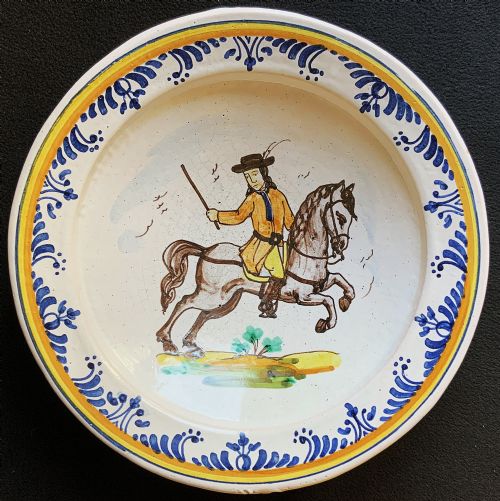


Delft Blue White Dish
A delft blue white dish brings centuries of painted tin-glazed earthenware into the home, prized for its distinctive cobalt imagery.
Delft Blue White Dish
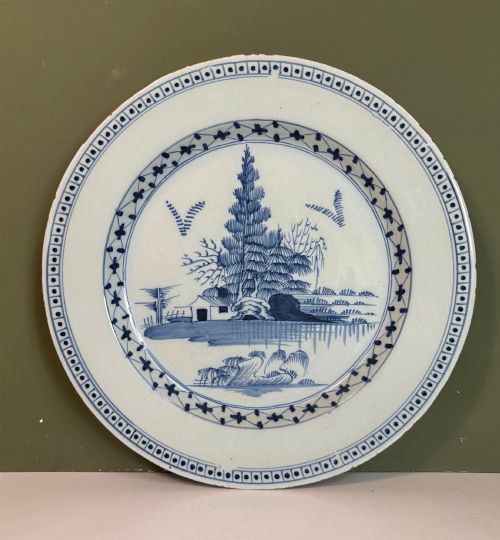
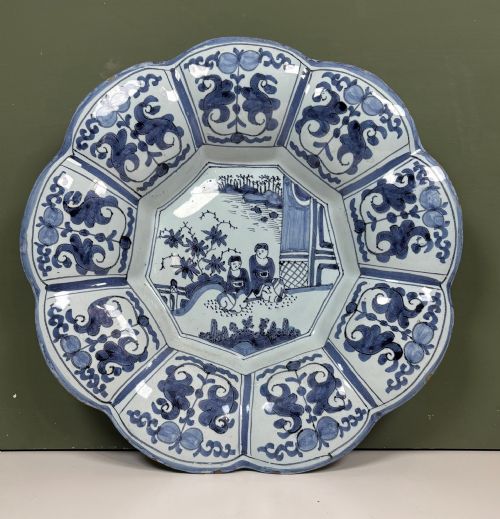
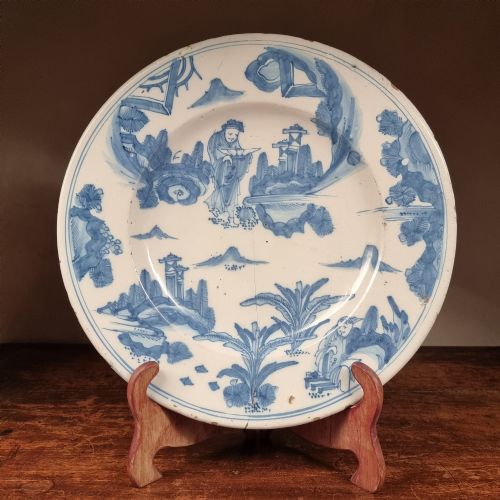
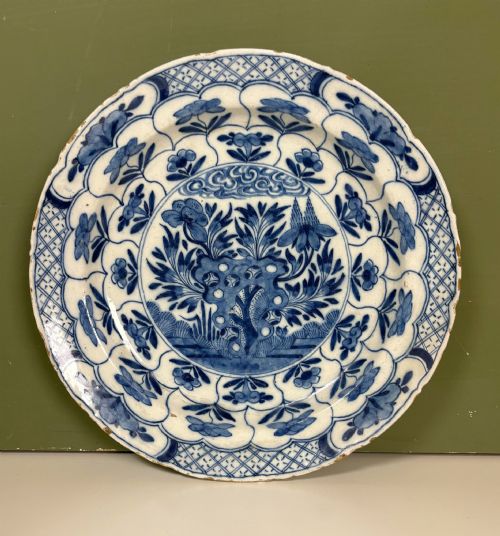
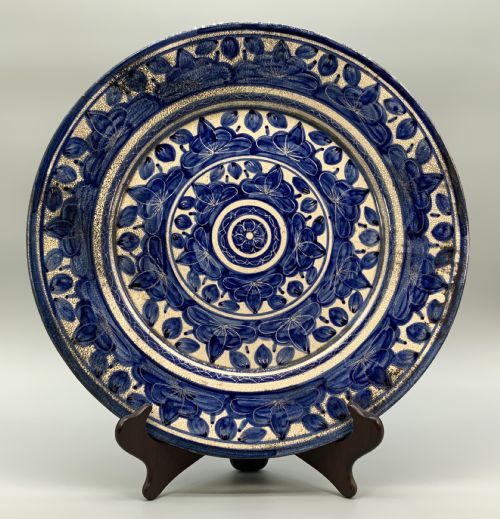
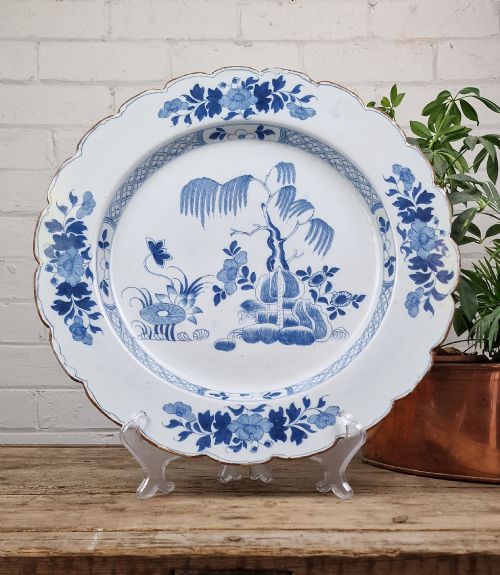
A delft blue white dish encompasses chargers, decorative plates, shallow bowls, and bleeding dishes originating across the seventeenth and eighteenth centuries, with English and Dutch examples appearing frequently. These pieces range from modest plates to large display chargers.
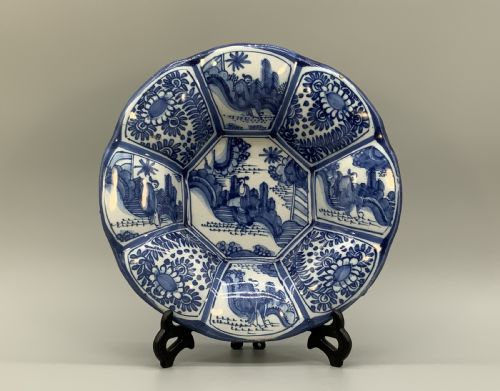
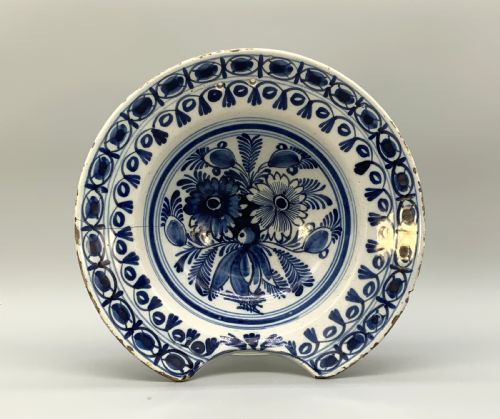
The forms extend to lobed dishes, barber's bowls, and Chinese-inspired plates reflecting seventeenth-century Kraak styles and Georgian Chinoiserie. Eighteenth-century pieces dominate the selection, spanning Dutch, English, and Spanish production centres.
Materials and construction methods
Makers utilised ceramic earthenware bodies coated in tin glaze to create a smooth, opaque white surface suitable for painting. Artisans applied cobalt oxide pigment directly onto the unfired or raw glaze, where the mineral absorbed into the tin layer during firing to achieve its signature deep blue tone.
Production techniques involved throwing or moulding clay into plates and chargers, followed by meticulous hand-painting often drawing on oriental motifs and European baroque designs. The pieces underwent high-temperature kiln firings to set the tin glaze and cobalt decoration.
Object forms span decorative plates, chargers, shallow bowls, and barber's bowls reflecting Dutch, English, and Spanish origins.
Factors that distinguish examples
The clarity and detail of the cobalt brushwork dictate the visual hierarchy among pieces, with crisp lines and deliberate compositions standing apart from hurried or blurred painting. The smoothness and opacity of the tin glaze also influence the overall refinement of the surface.
Proportion and scale play roles in quality, particularly in large chargers where maintaining a balanced rim and stable body during firing demands high technical skill. Intricate moulding, such as lobed edges or deep cavettos, adds complexity to the form.
The Delft Blue White Dish Glossary
- Tin Glaze
- An opaque white glaze containing tin oxide applied to earthenware pottery to provide a ground for painted decoration. This coating created the characteristic milky background associated with delftware.
- Charger
- A large decorative plate intended for display on walls or sideboards rather than dining use. These substantial vessels often measure over thirty centimetres in diameter.
- Cobalt Pigment
- A metallic oxide colourant yielding deep blue shades when fired at high temperatures on ceramic glazes. It remained the primary pigment for traditional delft decoration.
- Kraak Style
- A Chinese porcelain design style characterised by panelled borders and central motifs of flora and fauna, heavily imitated by European delftware makers. The style originated during the late Ming dynasty.
- Barber's Bowl
- An oval or circular basin featuring a semicircular cutout designed to fit against a customer's neck during shaving or bleeding treatments. These utilitarian vessels often received careful tin-glazed decoration.
Delft Blue White Dish: Frequently Asked Questions
How are delft dishes dated?
Dating relies on stylistic markers, potting techniques, and the composition of the ceramic body and tin glaze. Comparing brushwork motifs to documented pieces helps narrow the production period.
Changes in palette and glaze thickness over the seventeenth and eighteenth centuries provide further clues for chronological placement.
Were chargers used for food?
Large chargers served primarily as decorative wall hangings or display pieces on sideboards rather than tableware. Their size and tin-glazed surfaces made them vulnerable to surface wear.
Smaller plates saw functional use during meals, though surviving examples often show preservation due to their decorative appeal.
How do I display a dish safely?
Displaying chargers and plates securely requires specialised wall hangers designed to distribute weight evenly across the rim without causing pressure points. Avoid wire springs that might bite into the earthenware.
For cabinet display, use stable plate stands that support the base and prevent tipping during gentle vibrations.
What is the difference between English and Dutch delft?
English and Dutch delftware share tin-glazed earthenware techniques, but subtle differences in clay bodies, glaze opacity, and painting styles often distinguish their origin. English bodies tended to be slightly heavier and softer.
Dutch makers frequently drew closer inspiration from imported Chinese porcelain, while English potteries in London, Bristol, and Lambeth developed distinct local patterns.