


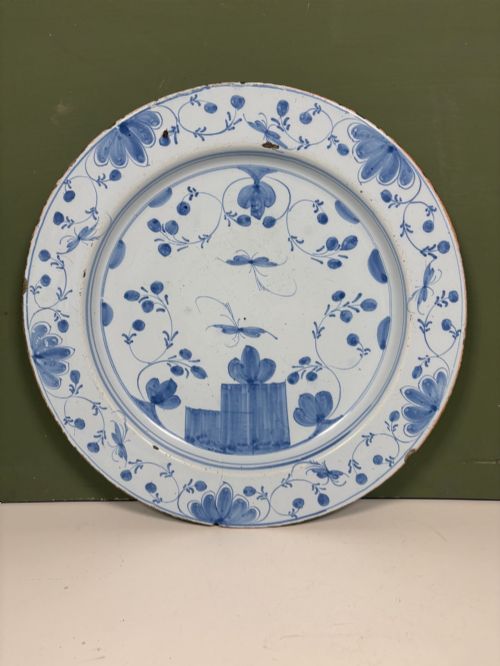


Delft Blue Display Plate
These delft blue display plate examples span centuries of tin-glazed earthenware, offering hand-painted blue and white or polychrome decoration for wall display or table use.
Delft Blue Display Plate
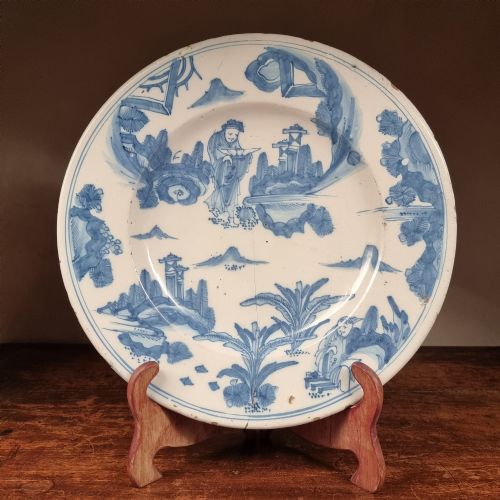
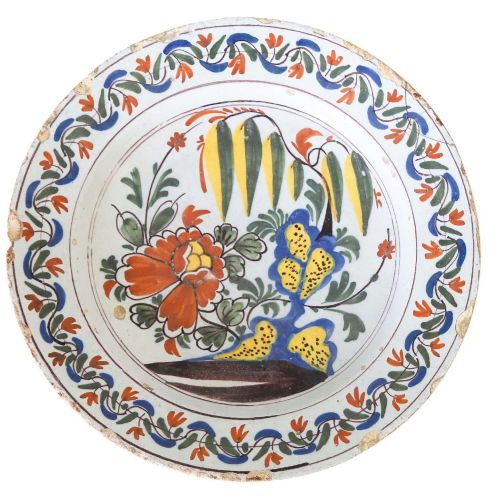
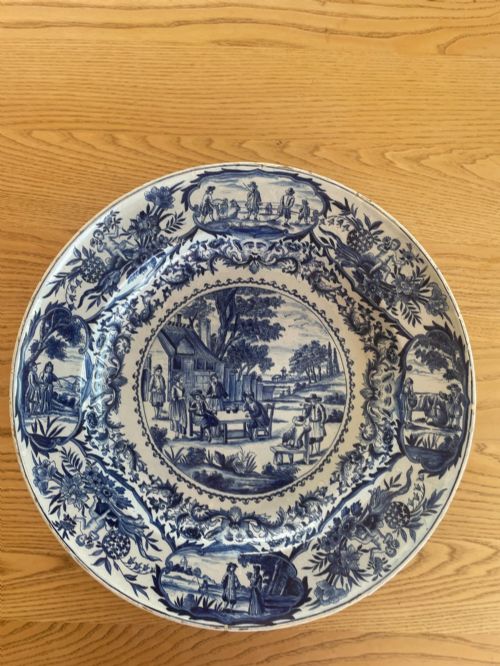
A delft blue display plate encompasses chargers, wall plates, and dishes produced across the seventeenth, eighteenth, and nineteenth centuries. These earthenware objects served primarily for display or formal dining, showcasing painted ornamentation ranging from floral motifs to Chinoiserie and Kraak styles.
The pieces appearing most frequently on this page take the form of eighteenth-century chargers and plates originating from English and Dutch workshops. Collectors encounter both large wall-hung chargers and smaller dining plates, often featuring blue and white or polychrome palettes.
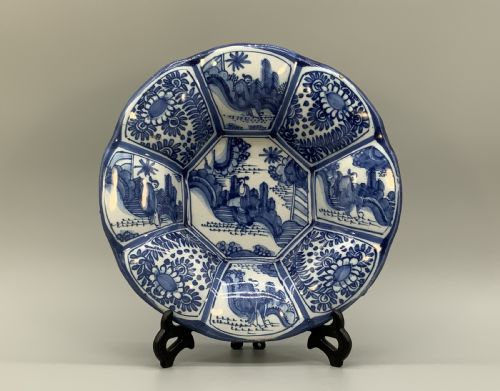
Examples span Dutch Baroque and Georgian periods, alongside specific regional interpretations such as English Delftware and Dutch Delftware. The forms include lobed dishes, chargers, and standard plates displaying hand-painted cobalt pigment.
Distinctions in quality
Quality in a delft blue display plate rests upon the crispness of the hand-painted decoration and the opacity of the tin glaze. Superior examples display confident, fluid brushwork in the cobalt pigment, whereas lesser pieces show rushed or heavy-handed execution.
The handling of the earthenware body and the stability of the glaze during firing also determine distinction. Plates with minimal distortion from the kiln and rich, deep cobalt blue tones represent the upper end of the material range.
Several eighteenth-century chargers bear the scars of kiln furniture, where small tripod spurs left tiny unglazed dots on the decorated surface.
The Delft Blue Display Plate Glossary
- Tin-Glazed Earthenware
- Earthenware pottery covered with a glaze made opaque by the addition of tin oxide. This surface provides a white background for hand-painted cobalt pigment.
- Charger
- A large decorative plate, typically exceeding thirty centimetres in diameter, designed for wall display or formal table presentation during earlier centuries.
- Polychrome
- Decoration utilising multiple colours rather than a single hue. In these listings, this typically involves greens, yellows, and reds alongside cobalt blue.
- Chinoiserie
- European artistic styles reflecting Chinese motifs and landscapes. Artisans adapted these oriental designs onto seventeenth and eighteenth-century earthenware.
- Kraak Style
- A type of Chinese porcelain design imitated by European potteries, characterised by panelled borders and central motifs of flowers, birds, or aquatic scenes.
Delft Blue Display Plate: Frequently Asked Questions
How do I hang a heavy charger safely?
Chargers require dedicated wall-mounting hardware that supports the entire base rather than relying solely on a wire rim grip. Professional framers or specialist shops provide secure brass spring clips sized specifically for earthenware dimensions.
Position the plate away from direct sunlight and areas subject to sudden temperature fluctuations to protect the historical tin glaze from environmental stress.
Were these plates used for daily dining?
Larger chargers functioned primarily as ornamental display pieces on sideboards or walls during the seventeenth and eighteenth centuries. Standard plates saw service during formal meals, though surviving examples often owe their survival to careful preservation.
Modern owners generally continue this tradition of display rather than utilising antique earthenware for active dining purposes.
How can I tell English from Dutch pieces?
English and Dutch potteries shared many decorative motifs, but glaze composition and body weight often offer clues. English delftware commonly utilises a slightly softer pinkish or buff earthenware body.
Dutch pieces frequently exhibit distinct blue tones and specific factory markings, though many surviving chargers remain unmarked by their makers.
What causes crazing on the surface?
Crazing appears as a fine network of microscopic cracks across the tin glaze caused by the natural ageing of the earthenware body beneath. This condition develops over centuries as the underlying clay and glass surface expand and contract at different rates.
Such characteristics reflect the genuine age of the tin-glazed earthenware and form part of the history of the object.