




Decorative Wooden Storage Chest
A decorative wooden storage chest brings tactile warmth and period craftsmanship into a room while keeping belongings neatly tucked away.
Decorative Wooden Storage Chest
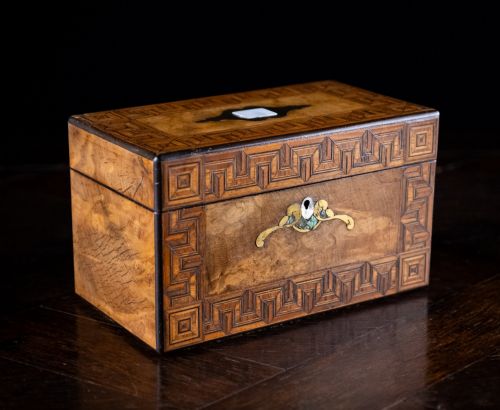
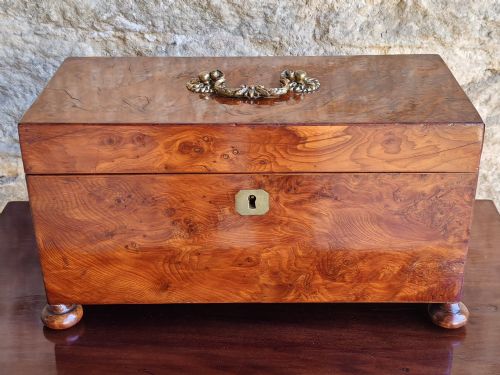
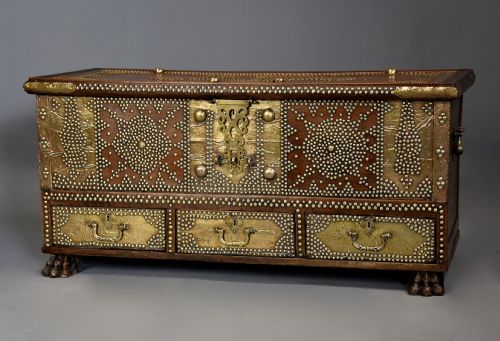
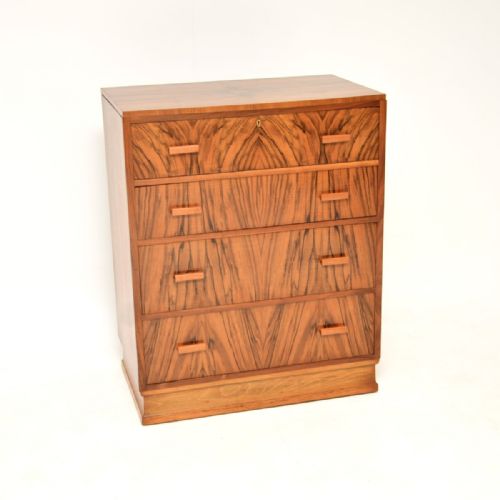
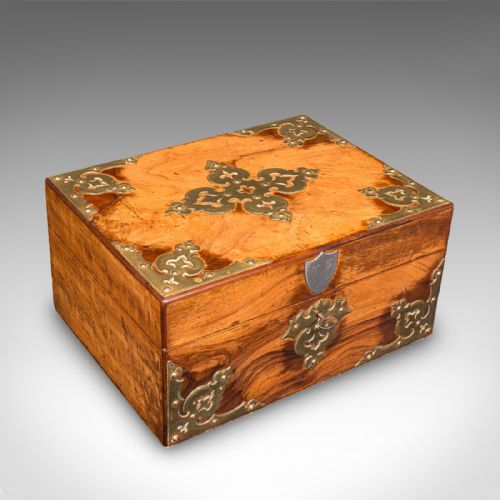
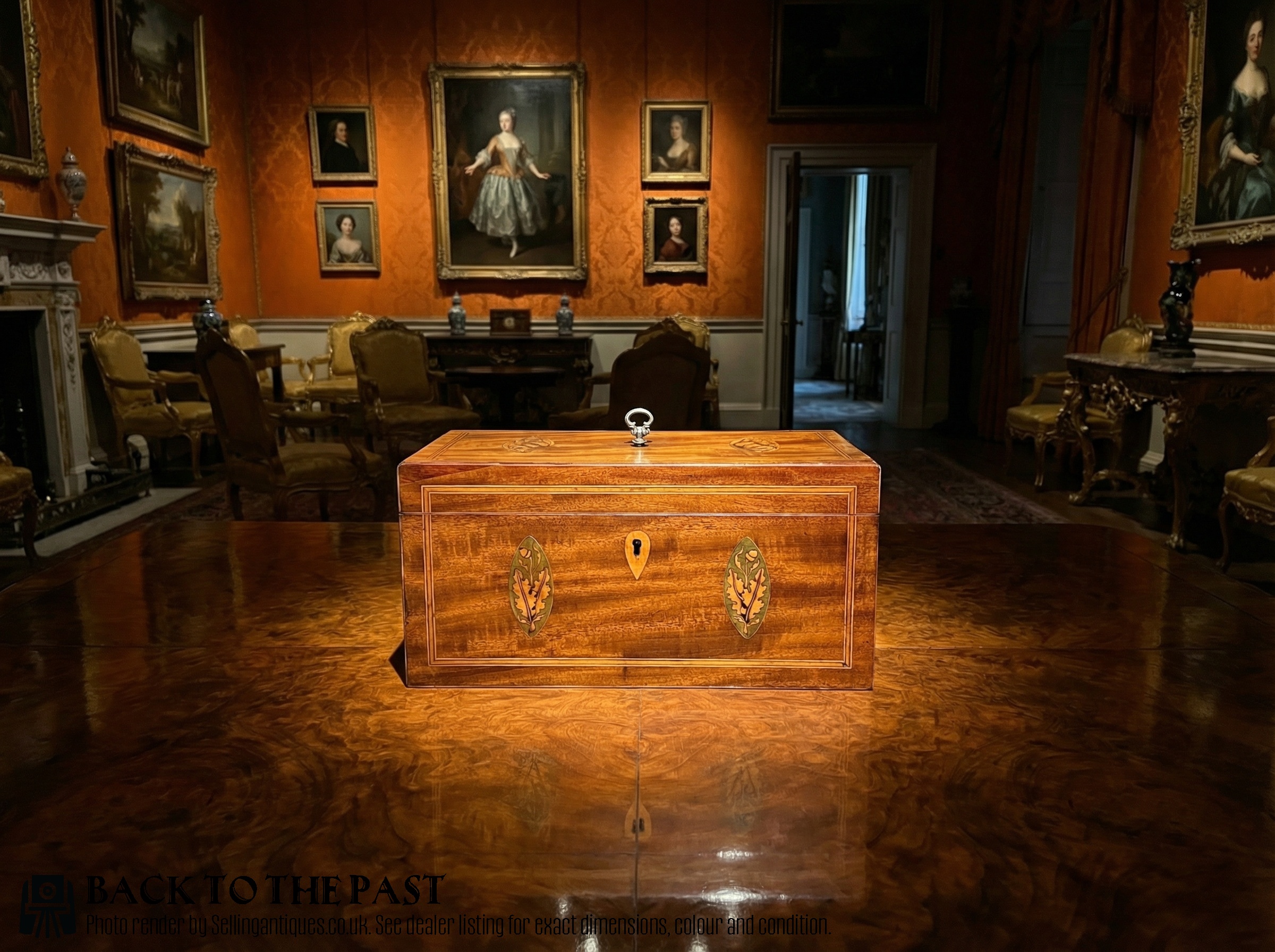
A decorative wooden storage chest encompasses a wide range of antique containers, from small tabletop tea caddies and trinket boxes to larger coffers, trunks, and cabinets.
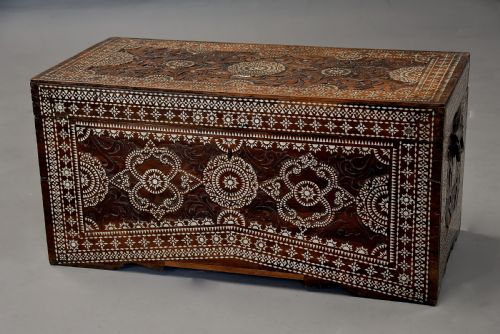
The versions most commonly met on this page span the eighteenth, nineteenth, and early twentieth centuries, reflecting diverse regional origins including British, French, Middle Eastern, and Asian workshops.
These pieces served practical household roles for storing valuables, tea, documents, and clothing while displaying intricate surface ornament suited to period interiors.
Materials and construction methods
Cabinet makers utilised a rich selection of timbers such as mahogany, rosewood, walnut, satinwood, and pine, often applied as veneers over sturdy foundational woods.
Surface decoration frequently relied on contrasting materials, incorporating brass studs, mother of pearl, bone, tortoise shell, and intricate marquetry or parquetry patterns.
Joinery techniques varied from traditional dovetailing on boxes and drawers to pegged framing on larger trunks and coffers.
Listings feature woods including rosewood, mahogany, walnut, satinwood, boxwood, and amboyna alongside brass and iron hardware.
Distinctions in quality
The standard of a piece depends on the choice of timber figures, such as flame mahogany, burr walnut, or amboyna, and the precision of the grain matching.
The intricacy and preservation of decorative inlays, hand-painted details, and metal mounts dictate the overall refinement of the item.
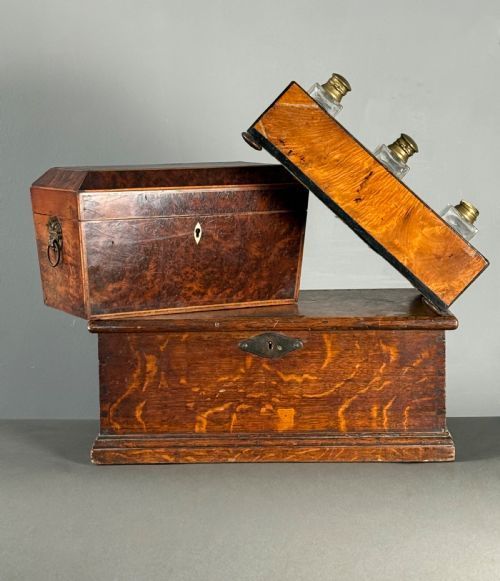
Original internal fittings, such as glass mixing bowls, removable canisters, and functioning locks with matching keys, elevate the integrity of the piece.
Tahan of Paris
The Decorative Wooden Storage Chest Glossary
- Tea caddy
- A small box designed specifically for storing loose tea leaves, often featuring internal compartments or canisters.
- Marquetry
- Decorative veneer work formed by fitting together small pieces of wood, shell, or bone to create pictorial or geometric designs.
- Parquetry
- A geometric mosaic of wood pieces used for surface decoration, commonly seen on tabletops and box lids.
- Tunbridge ware
- A specific type of British woodwork decorated with mosaic patterns built from tiny wood blocks to form detailed pictorial motifs.
- Sarcophagus
- A term describing a box or tea caddy shape with a sloping, domed lid tapering upward, popular during the Regency period.
Decorative Wooden Storage Chest: Frequently Asked Questions
What were tea caddies used for?
Tea caddies served to store expensive tea leaves securely under lock and key in the formal rooms of eighteenth and nineteenth century homes.
Because tea was a valuable commodity, these boxes often included internal compartments and mixing bowls to prepare the brew before serving.
How do I identify a Regency box?
Regency boxes typically display classical architectural influences, rich rosewood veneers, and precise brass or marquetry inlays dating from the early nineteenth century.
Sarcophagus shapes and sarcophagus-inspired proportions are also common markers of this distinct design period.
What is Tunbridge ware?
Tunbridge ware refers to wooden items decorated with intricate mosaic patterns assembled from thousands of tiny tinted wood segments.
This meticulous technique produced highly detailed surface imagery, including floral and geometric motifs characteristic of Victorian craftsmanship.
How should I clean an antique box?
Maintenance requires gentle dusting with a soft, dry cloth to protect delicate veneers, inlays, and historical polish.
Harsh chemical cleaners or excess moisture must be avoided entirely to preserve the original wood and metal surfaces.