


Georgian Marquetry Tea Box
A georgian marquetry tea box holds the leaves that once dictated polite society, combining utility with intricate wood artistry.
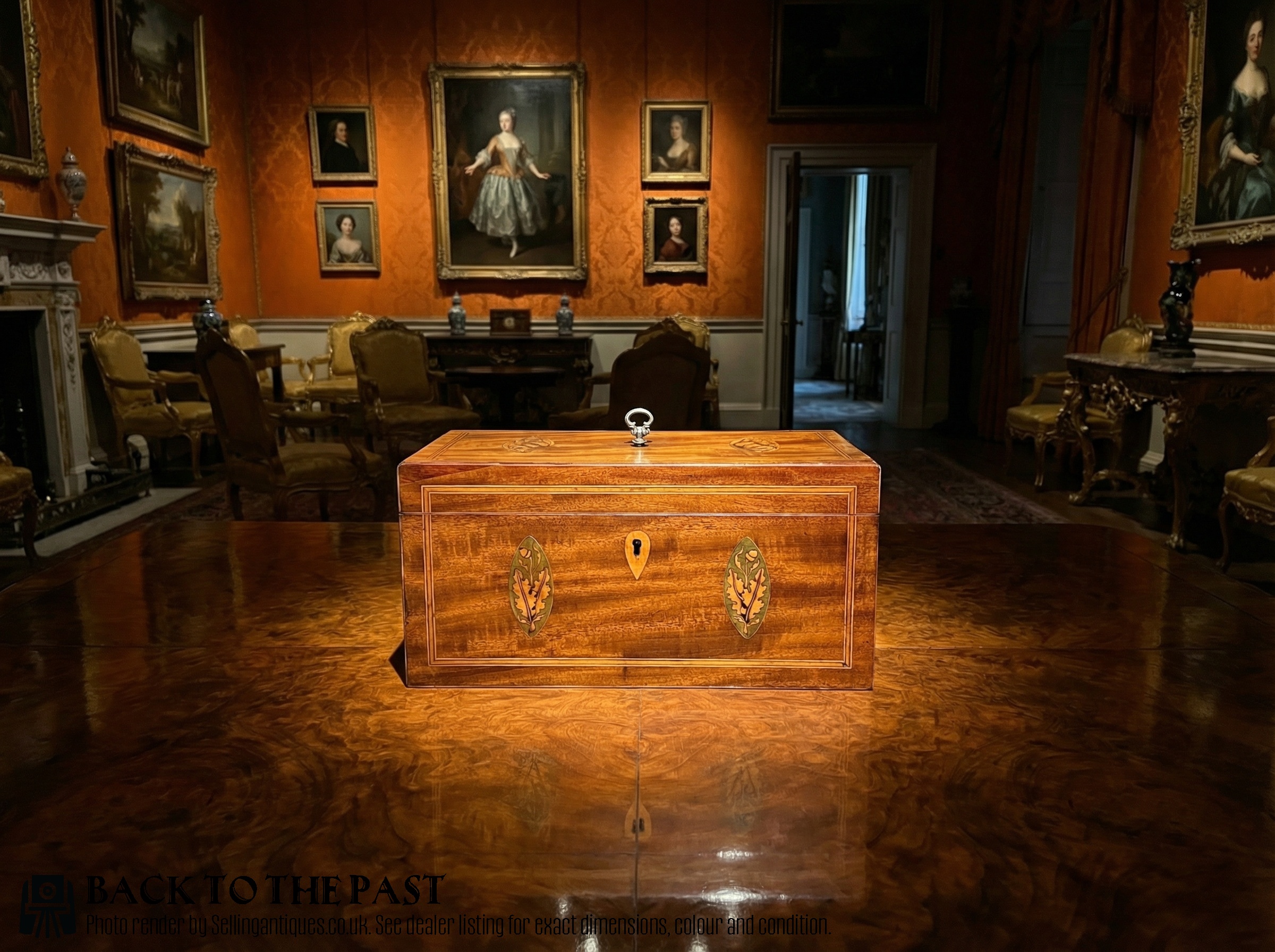
Georgian Marquetry Tea Box
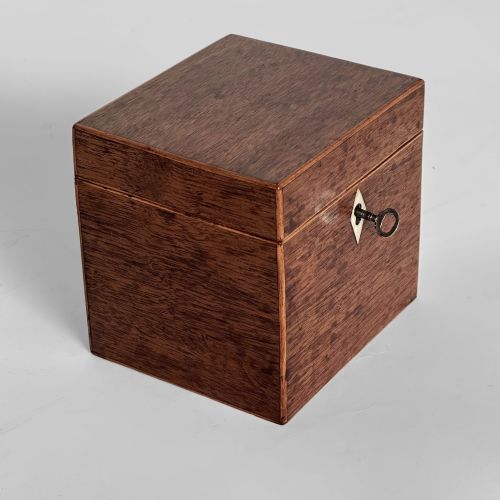
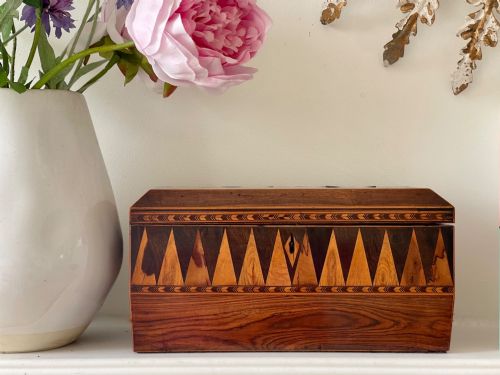
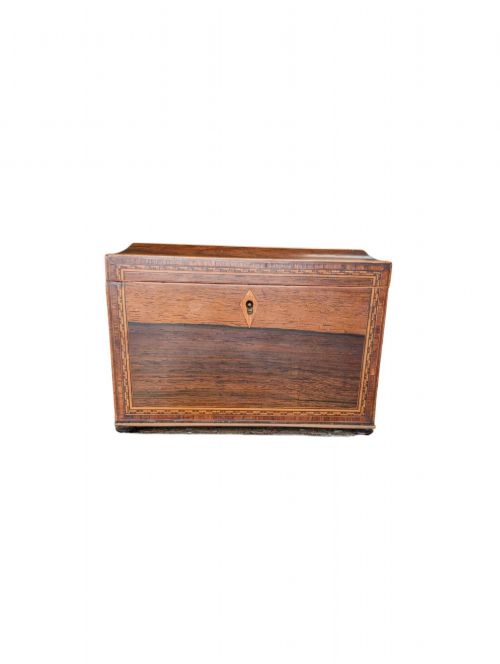
A georgian marquetry tea box brings together practical storage for precious leaves and meticulous decorative craft. These pieces appear across the eighteenth and nineteenth centuries, spanning Georgian, Regency, and Victorian periods.
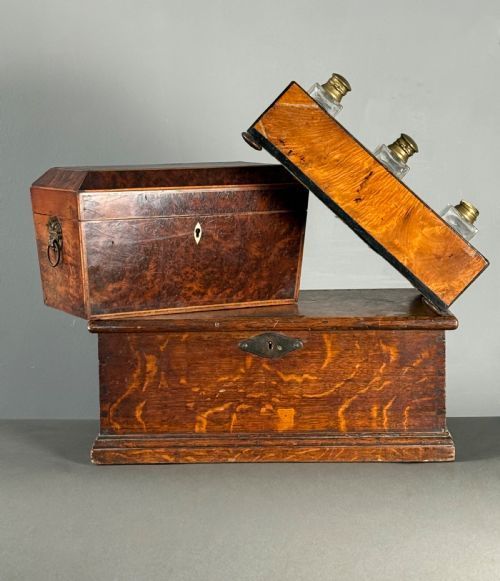
Forms range from simple tea caddies and decorative boxes to substantial teapoys. The selection relies heavily on satinwood, mahogany, and rosewood constructions.
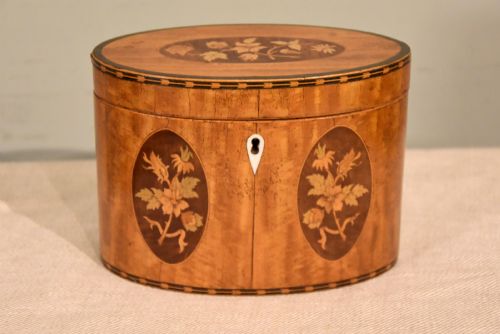
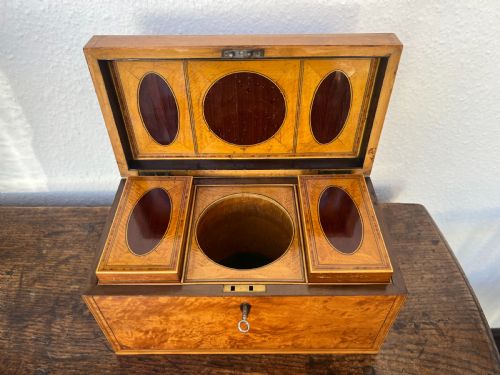
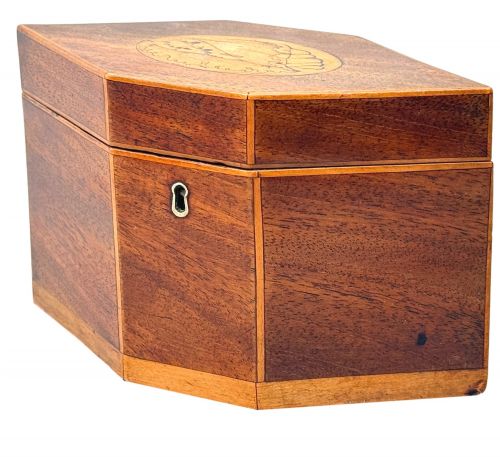
Oval, hexagonal, and octagonal shapes dominate the surviving examples. Many incorporate fitted interiors that once separated different tea varieties.
Materials and construction
Cabinetmakers utilised dense timbers such as mahogany, rosewood, and satinwood as foundations for decorative schemes. Boxwood, harewood, and bone provide contrasting tones for detailed motifs.
Wood inlay techniques create pictorial scenes and geometric borders across surfaces. Metal elements like brass inlay and bone details complete the decorative vocabulary.
Listings feature woods such as satinwood, mahogany, rosewood, harewood, and burr yew across eighteenth and nineteenth-century forms.
Variations in quality
The precision of the wood inlay dictates the standard of execution. Sharp lines in geometric patterns and naturalistic shading in floral or butterfly motifs separate fine examples from simpler work.
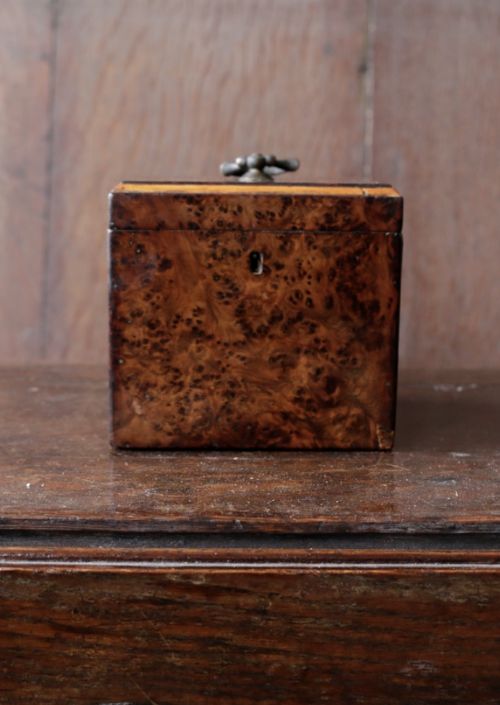
Choice of timber underpins the overall impact, with burr yew, partridge wood, and figured satinwood elevating the presence of the box. Intact fitted interiors and original hardware contribute further to the integrity of the piece.
The Georgian Marquetry Tea Box Glossary
- Marquetry
- The art of forming decorative patterns by fitting together small pieces of wood veneer. It creates complex pictures and geometric designs on the exterior surfaces.
- Teapoy
- A small stand or large caddy designed to hold tea canisters and mixing bowls. These often rest on central pillars or dedicated legs.
- Tunbridge Ware
- A type of woodworking featuring tiny mosaic tiles made from natural coloured woods. This technique creates detailed pictorial designs, particularly geometric bands and motifs.
- Caddy
- A small container used for storing tea leaves. These boxes frequently included interior lids and divided compartments.
Georgian Marquetry Tea Box: Frequently Asked Questions
What is a georgian marquetry tea box?
These containers served to store high-value tea leaves securely in the domestic parlour. Cabinetmakers fashioned them from dense hardwoods and decorated the surfaces with contrasting wood veneers.
Inside, compartments kept different varieties separated and protected from moisture. Many include fitted interior elements such as mixing bowls or lidded canisters.
How do I date these boxes?
Stylistic shifts and timber choices help establish the period of manufacture. Eighteenth-century pieces frequently employ satinwood and harewood with neoclassical motifs.
Later Regency and Victorian examples lean towards rosewood with brass inlay or darker woods. Shape also provides clues, as octagonal and hexagonal formats gained favour during specific decades.
How were they used historically?
Tea was an expensive commodity in the Georgian period, requiring secure storage under lock and key. The lady of the house typically kept the key and measured out the leaves for guests.
These boxes sat on the table during social gatherings to display the household status and taste. The fitted interior often included a central space for blending leaves before brewing.
What timbers appear most often?
Mahogany and satinwood form the foundation of many eighteenth-century specimens. Rosewood gains prominence in Regency pieces alongside contrasting exotic woods like amboyna and gonçalo alves.
Inlay work frequently incorporates boxwood, harewood, and bone to achieve tonal variation. Burr yew and partridge wood supply distinctive grain patterns.