

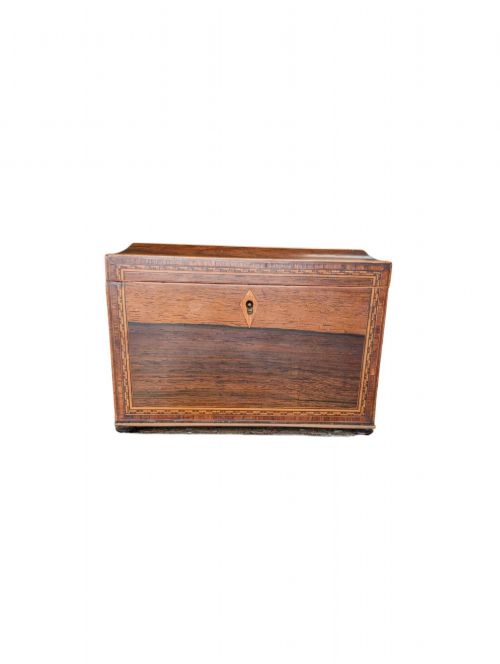
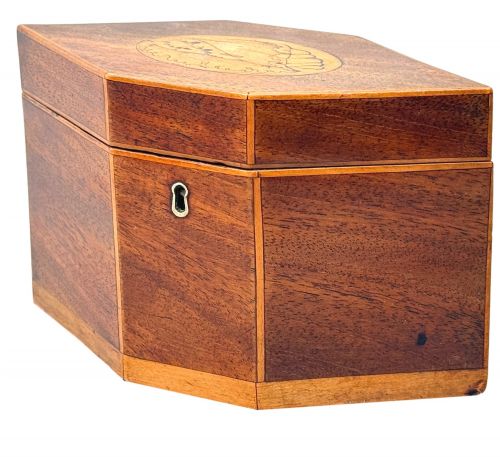


Marquetry Inlaid Tea Chest
A marquetry inlaid tea chest is a refined wooden box crafted for storing dry leaves safely, offering collectors intricate timber work and period elegance.
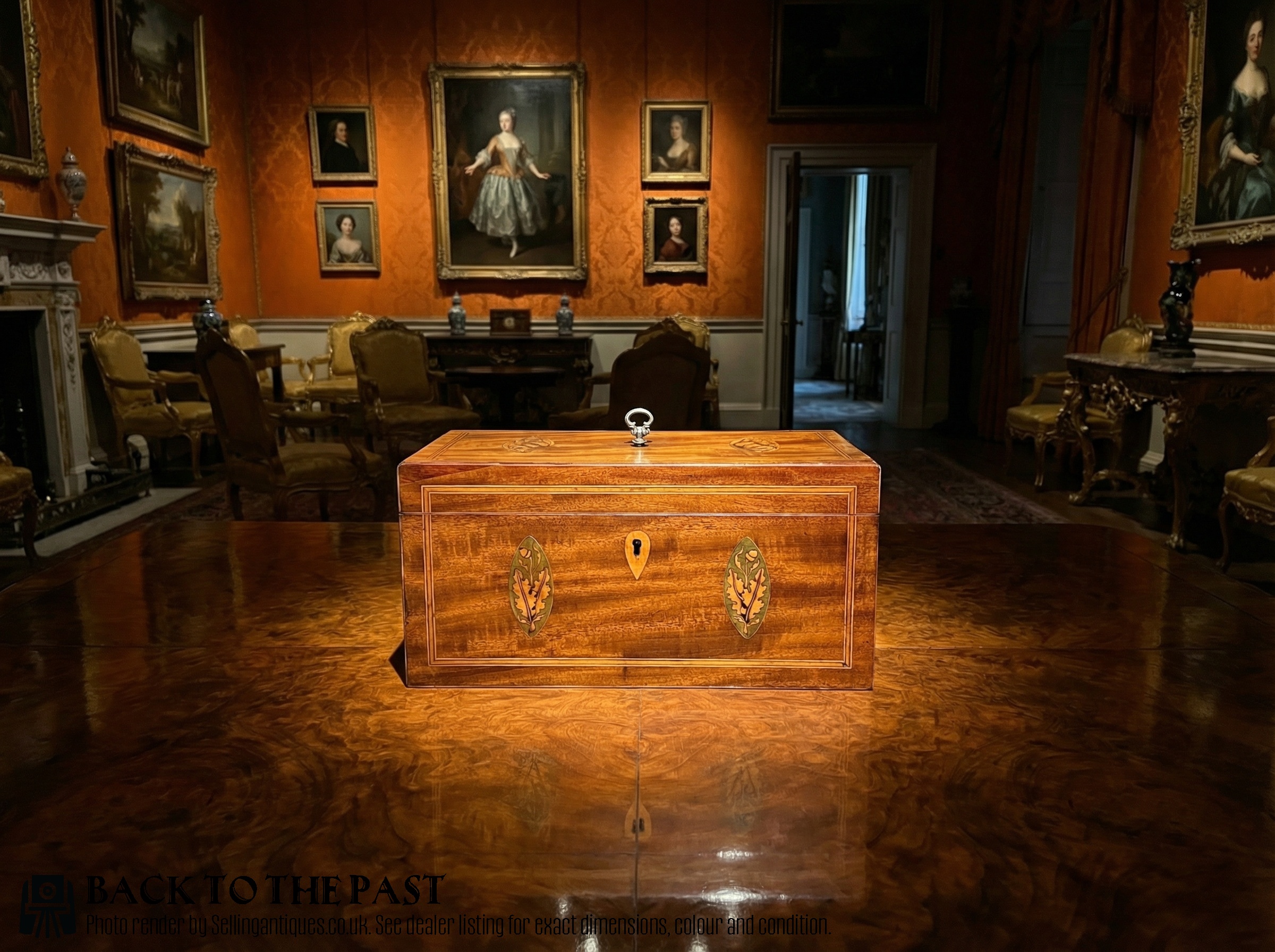
Marquetry Inlaid Tea Chest
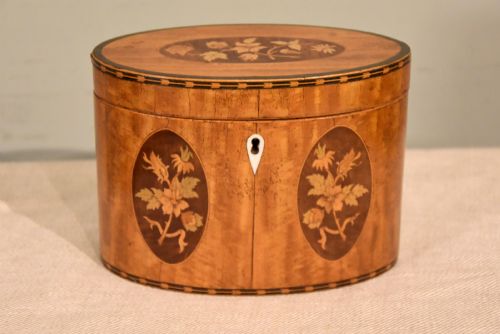
A marquetry inlaid tea chest spans several distinct periods, most frequently appearing in Georgian and Victorian iterations. These objects range from simple rectangular mahogany caddies to elaborate hexagonal and oval forms fashioned in satinwood, rosewood, and harewood.
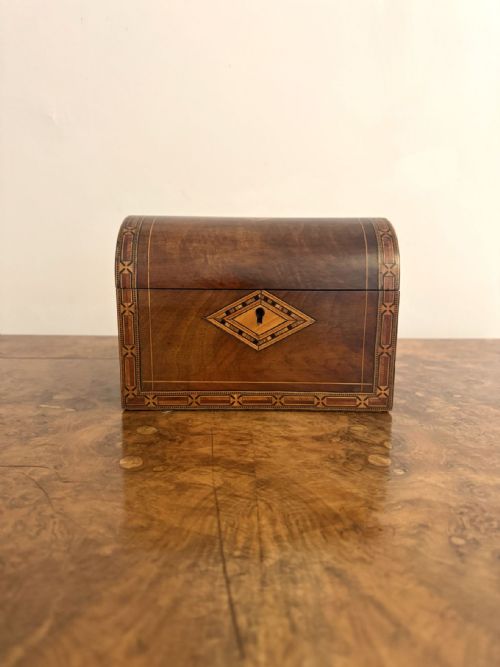
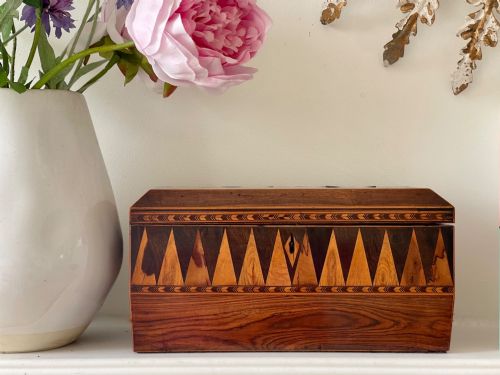
Makers often shaped these containers as caddies, teapoys, or larger decorative boxes designed to sit securely on a parlour table. Buyers encounter variations featuring shell motifs, butterfly inlays, geometric parquetry, and detailed Tunbridge Ware panels.
How they were made
Craftsmen utilised foundational timbers such as mahogany, walnut, and rosewood, applying contrasting veneers of satinwood, boxwood, and harewood to form elaborate surface patterns. Specialised workshops integrated bone, brass, and tortoiseshell details alongside precise wood inlay and parquetry.
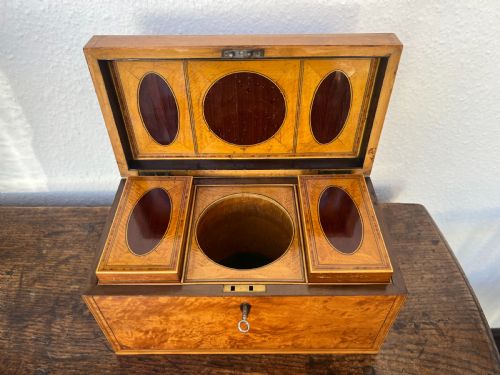
Many examples incorporate fitted interiors with internal canisters and sugar dishes, demonstrating careful carpentry. The integration of boulle work and pictorial wood mosaics required patience and specialised cutting techniques.
The selection includes pieces spanning the Georgian, Regency, and Victorian periods, utilising rosewood, satinwood, mahogany, and tortoiseshell.
What varies in quality
The sophistication of the timber selection and the precision of the veneer work dictate the standard of a marquetry inlaid tea chest. Examples featuring balanced pictorial inlays, such as shells, butterflies, or complex Tunbridge scenes, demand greater skill from the artisan.
Condition of the internal fittings, retention of original keys, and the integrity of the secondary woods distinguish superior specimens from simpler utility boxes.
Henry Hollamby
The Marquetry Inlaid Tea Chest Glossary
- Marquetry
- Decorative veneer applied to a wooden structure to form pictorial patterns or designs. This technique uses contrasting woods and organic materials.
- Tunbridge Ware
- A form of mosaic woodwork produced in Kent using thousands of tiny tinted wooden blocks. It creates detailed geometric or pictorial surface patterns.
- Teapoy
- A small stand or large container traditionally used to hold tea and sugar canisters. These pieces often feature elaborate inlaid surfaces and lidded compartments.
- Boulle
- A decorative technique involving tortoiseshell and brass inlay, often associated with French furniture and luxury boxes. It provides a striking metallic contrast against dark woods.
Marquetry Inlaid Tea Chest: Frequently Asked Questions
What were tea chests used for?
These boxes stored precious tea leaves securely under lock and key when tea was an expensive commodity. The fitted interior compartments kept different leaf varieties separate.
Servants or hosts would bring the container to the drawing room for tea preparation. The boxes served a practical storage function while displaying the owner's taste.
How do I date a tea chest?
Dating relies on timber choices, construction methods, and cabinet styles corresponding to known periods like the Georgian era or Victorian times. Oval satinwood caddies often point to the late eighteenth century, while sarcophagus shapes frequently indicate the Regency period.
Examining the interior fixtures, hinges, and secondary woods provides further clues. Lock designs and key escutcheons also shift across the decades.
What is Tunbridge Ware?
Tunbridge Ware is a specialised form of mosaic woodwork originating from Kent. Artisans glued together tiny pieces of naturally coloured woods to create intricate pictorial designs.
These mosaics typically decorated the lids and panels of nineteenth-century boxes and tea caddies. Collectors value the high level of geometric precision required in this craft.
How should I care for wood inlay?
Wooden inlays require stable indoor humidity away from direct sunlight to prevent veneer lifting or timber cracking. Gentle dusting with a dry cloth maintains the polished surface without moisture damage.
Avoiding harsh cleaning products preserves the delicate contrasting timbers and shell details. Natural wax applications can occasionally nourish the antique wood finish.