



Decorative Umbrella Holder
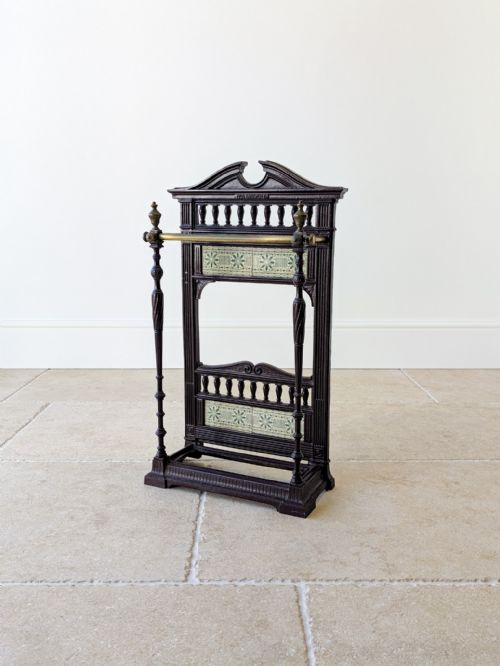
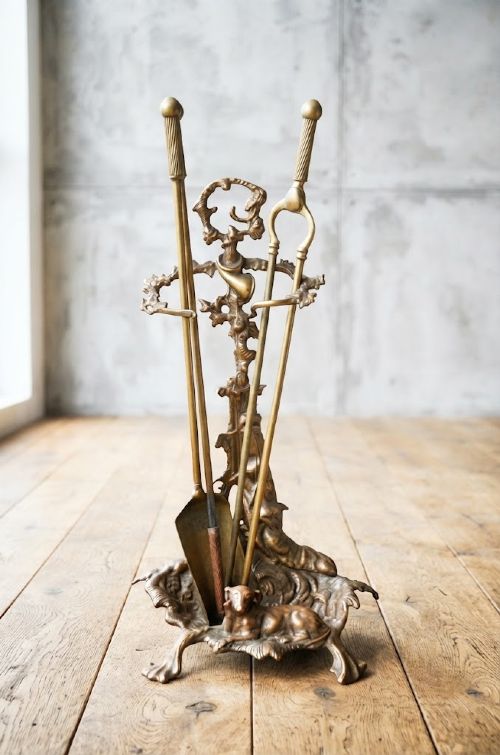
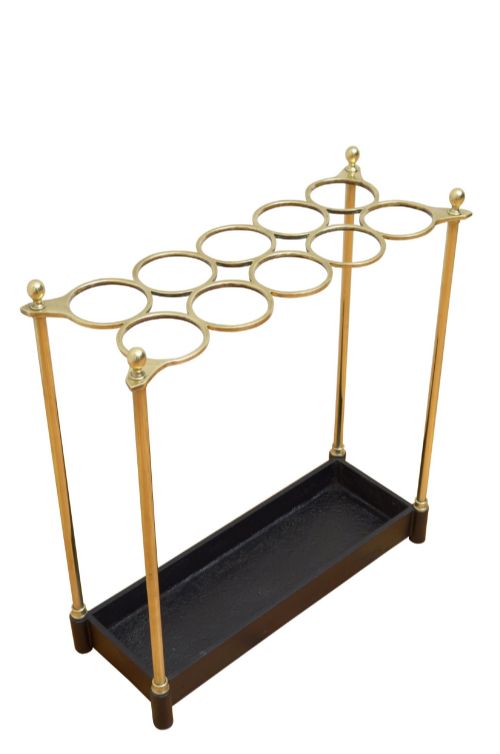
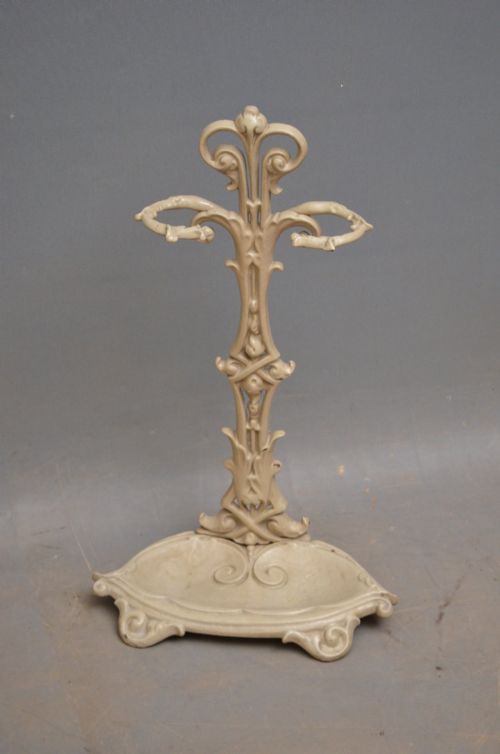
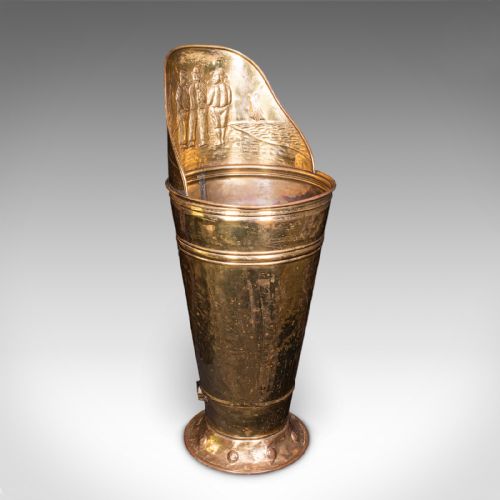
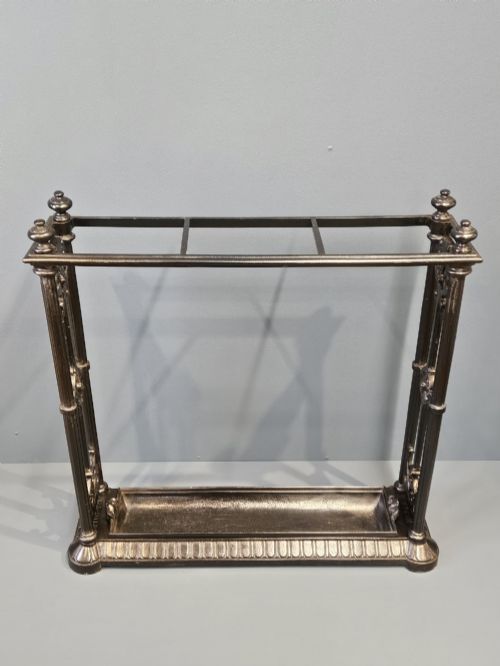
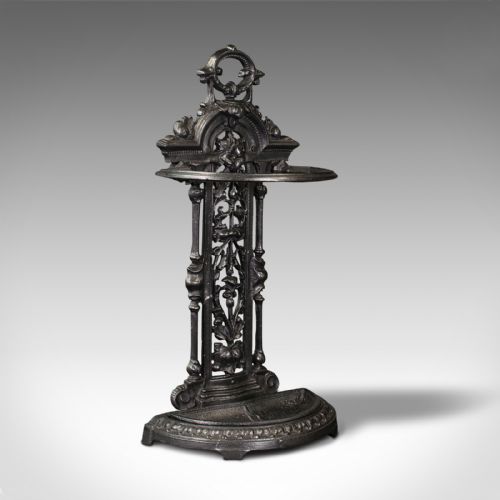
These decorative umbrella holder examples range from sturdy Victorian cast iron to brass and earthenware, keeping hallways orderly with unmistakable presence.
Decorative Umbrella Holder
A decorative umbrella holder gathers walking sticks, canes and wet umbrellas in the hallway, protecting floors while providing an immediate visual statement upon entering a home. When you search for this phrase, you encounter heavy metal frames, glazed ceramics and unusual rural vessels adapted for utility.
The selections span the Victorian, Edwardian and mid-century periods, alongside French and Dutch influences. Cast iron and brass predominate, often styled in the Aesthetic Movement, Art Nouveau or Gothic Revival taste.
Forms include dedicated umbrella stands, stick stands, and multi-purpose fire companion combinations. Simpler country house examples use turned wood or leather buckets to achieve a similar functional purpose.
Materials and construction
Metal pieces rely on foundry techniques, utilising cast iron and cast brass to achieve complex structural framing and decorative relief patterns. Iron stands frequently incorporate removable drip pans at the base to catch moisture from wet brollies.
Ceramic examples employ glazed earthenware and faience, shaping clay into robust cylindrical pots or umbrella shapes before applying decorative surface glazes. Alternative rural items utilise natural forms such as dug-out tree trunks or painted milk churns.
Assessing quality and character
Quality rests in the crispness of the casting detail on iron and brass pieces, where finer examples display sharp relief work rather than softened edges. The presence of makers or foundry marks adds historical clarity to the metalwork.
Ceramic standards depend upon the depth of the glaze and the integrity of the earthenware body. Structural soundness is essential, particularly for heavier iron stands that must support the weight of numerous wet sticks without wobble.
Coalbrookdale·Burmantofts Faience
The Decorative Umbrella Holder Glossary
- Faience
- Tin-glazed earthenware, often richly coloured and decorated, used for ceramic umbrella pots and jardinières. This technique provides a smooth, impervious surface suitable for catching water.
- Aesthetic Movement
- A late nineteenth-century design style emphasising visual beauty over narrative subject matter. Pieces from this movement display stylised floral or geometric motifs.
- Drip pan
- The metal or ceramic tray positioned at the base of a stand to protect hallway flooring from rainwater. These are often removable for easy emptying.
- Gothic Revival
- An architectural and decorative style inspired by medieval forms, featuring pointed arches and quatrefoil patterns. Iron umbrella stands frequently adopt these heavy architectural motifs.
Decorative Umbrella Holder: Frequently Asked Questions
How do I stop rust on iron stands?
Keep the removable drip pan clean and dry so standing water does not sit against the base of the frame. Regular dusting and occasional light waxing help protect the iron surface from household moisture.
Ensure umbrellas are reasonably dry before placing them inside the holder for extended periods. Good hallway ventilation also prevents moisture accumulation around the metal.
Are these stands suitable for modern hallways?
These pieces fit contemporary spaces by providing practical storage with genuine historical character. Their compact footprint works well in narrow entrance areas.
Different metal and ceramic finishes complement various interior styles, from industrial brick to minimalist plaster walls. They handle daily household use while serving as a distinct focal point.
How do I date a cast iron stand?
Examine the surface casting quality, bolt construction and stylistic cues such as Gothic revival or Art Nouveau motifs. Victorian and Edwardian examples often display registration numbers or foundry stamps on the reverse.
Heavier casting and intricate drip pan designs typically point toward nineteenth-century production. Comparing relief patterns with known catalogue designs helps narrow the manufacturing period.
Can ceramic pots hold heavy walking sticks?
Glazed earthenware and faience vessels easily accommodate standard walking sticks and umbrellas when placed steadily on a level floor. Their heavy clay construction provides a stable centre of gravity.
Avoid dropping heavy metal-tipped canes forcefully into ceramic pots to prevent interior chipping. Distributing items evenly around the opening maintains balance.