



Decorative Trumeau Mirror
A decorative trumeau mirror brings architectural presence and painted panels to a room, combining a wall glass with a classical upper section.
Decorative Trumeau Mirror
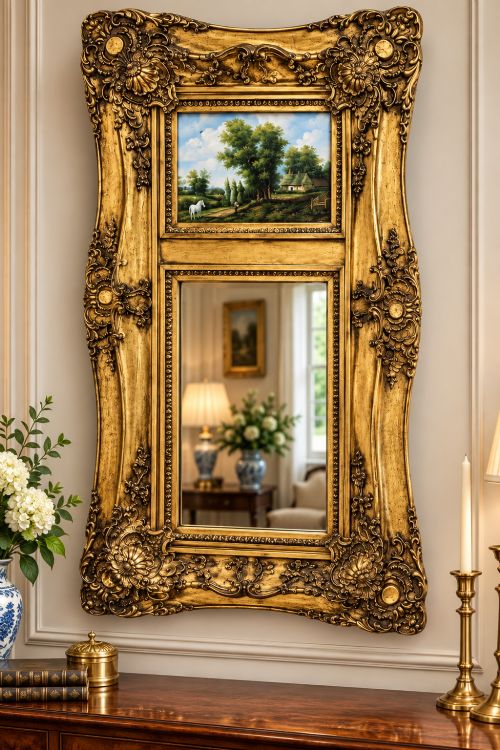
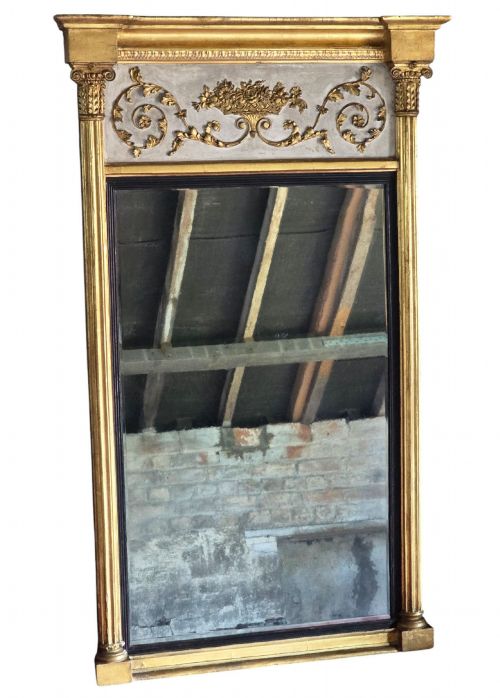
When you examine a decorative trumeau mirror, you look at a combined form consisting of a vertical wall glass beneath an integrated painting, relief panel, or carved wood motif. The pieces on this page span the nineteenth century, the Victorian era, and the early twentieth century, drawing heavily on French Empire, Louis XVI, and Regency design vocabulary. Overmantel mirrors and pier mirrors frequently share this designation when they incorporate an upper decorative section built into a single frame.
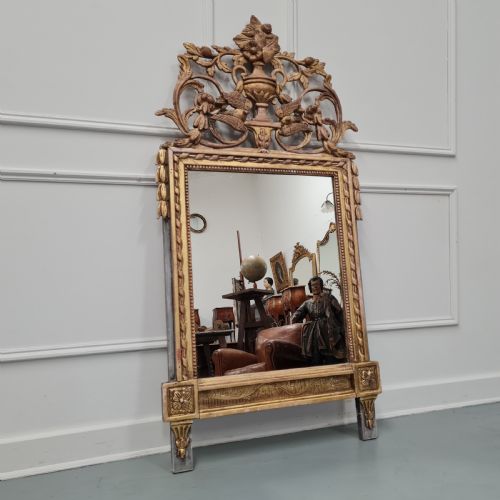
The most common versions encountered here originate from French workshops or follow traditional French provincial styles, often finished in cream paint, parcel gilt, or full gilding. Makers incorporated oil paintings on canvas, hand-painted foliate panels, or gesso relief carvings depicting classical figures directly above the mirror plate. These items served traditionally to fill the pier space between tall windows or to sit grandly above a fireplace mantel.
How they were made
Carpenters and joiners constructed the primary frames using solid woods such as walnut or pine, which provided a stable base for subsequent decoration. Craftsmen applied layers of gesso onto the wooden mouldings to build up crisp architectural details, acanthus leaves, and classical relief ornaments before applying gold leaf or paint finishes.
Upper panels were treated in diverse ways depending on the regional style and workshop tradition, utilising canvas for inserted oil paintings, eglomise glass techniques, or carved wooden reliefs. The lower mirror plates were set securely into the rebated frames, often accompanied by secondary wooden backing boards to protect the fragile silvering and glass from atmospheric moisture.
Listings feature items dated from the nineteenth century, the Victorian period, and the early decades of the twentieth century.
What varies in quality
The sophistication of the carved gesso ornament and the depth of the gilding set the standard across these pieces, distinguishing robust architectural modelling from simple surface decoration. Superior examples display crisp hand-carved relief work and finely proportioned frames where the junction between the mirror plate and the upper decorative panel feels entirely integrated.
Artistic execution within the inset panel dictates the upper tier of quality, whether through the brushwork of an integral oil painting or the precision of a classical relief depicting figures like Bacchus. Original glass plates showing authentic oxidation and hand-applied gold leaf add considerable distinction compared to later replacements or flat modern paints.
The Decorative Trumeau Mirror Glossary
- Trumeau
- An architectural term for the wall space between windows, which became the designated spot for tall mirrors incorporating painted or carved panels above the glass.
- Gesso
- A plaster mixture applied to wood frames and sculpted to create raised decorative mouldings, scrolls, and classical motifs before gilding or painting.
- Pier mirror
- A tall vertical glass designed specifically to hang on the narrow pier of wall between two windows, frequently matching the height of the room's proportions.
- Eglomise
- A decorative technique involving the application of gold or silver leaf to the reverse side of glass, often combined with painted details for panels.
- Parcel gilt
- A finish where specific raised portions or carved details of a painted wooden frame are highlighted with gold leaf, leaving the base colour visible elsewhere.
Decorative Trumeau Mirror: Frequently Asked Questions
Where should I hang a trumeau mirror?
These mirrors suit locations where their vertical height can be appreciated, such as above a drawing room fireplace or on a principal reception wall.
Historically placed between windows to reflect natural light into darker interiors, they work well in modern spaces above low console tables or sideboards.
How do I identify a French style mirror?
Look for neoclassical design elements, Louis XVI proportions, or Empire motifs such as urns, cherubs, and classical relief panels integrated above the glass.
Painted wooden frames in cream, soft grey, or parcel gilt finish also point directly to traditional French provincial and chateau aesthetics.
What is the difference between a pier mirror and an overmantel mirror?
Pier mirrors are traditionally tall and narrow to fit the specific wall space between windows, whereas overmantel mirrors are wider to span the horizontal width of a fireplace.
Many antique examples blur these distinctions by incorporating trumeau panels above the glass plate regardless of their primary architectural placement.