
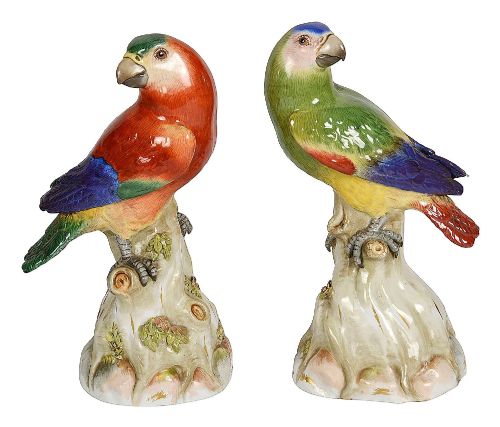
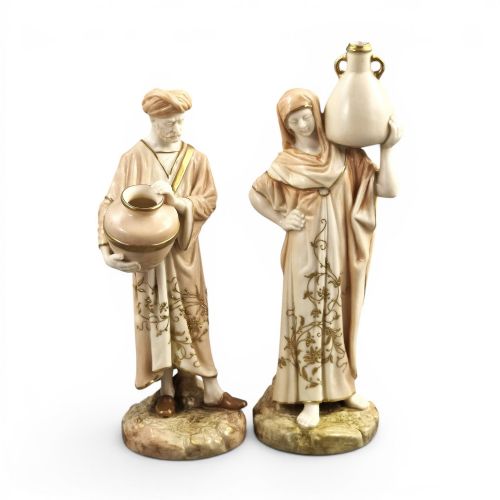
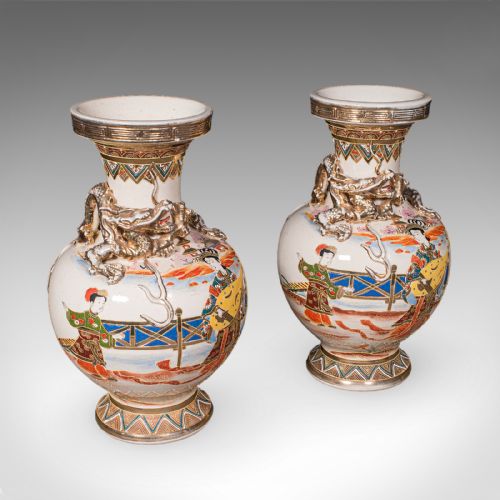
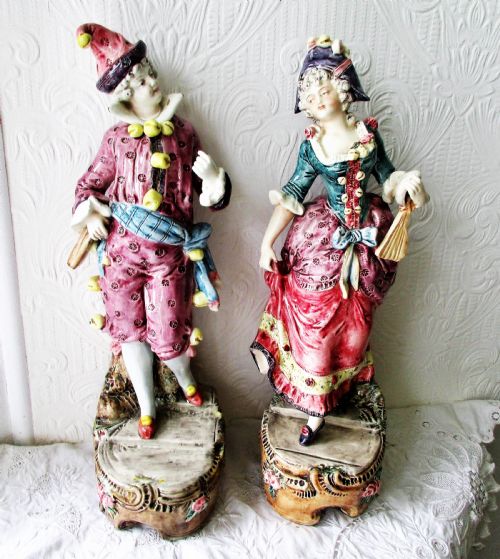


Decorative Porcelain Figure Pair
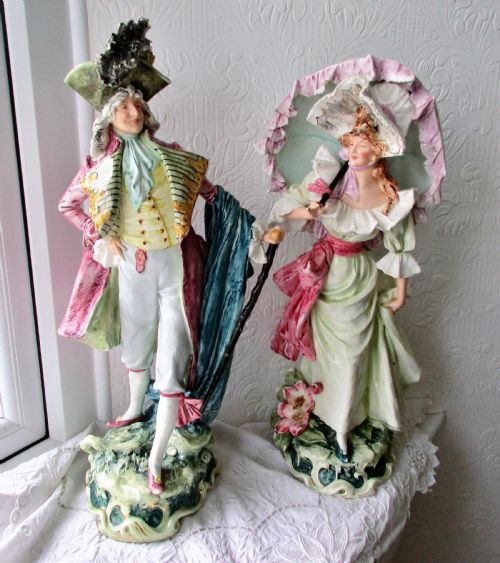
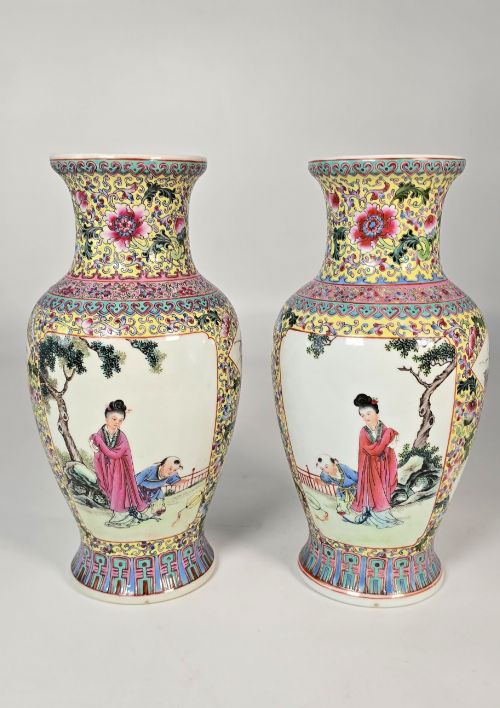
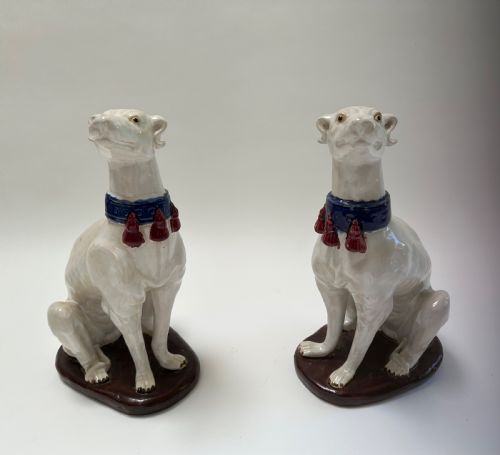
A decorative porcelain figure pair brings symmetry and character to a room, offering matched counterparts modelled as humans, animals or mythological subjects.
Decorative Porcelain Figure Pair
A decorative porcelain figure pair comprises two matched mantel or table ornaments created to sit together in balance, often depicting human figures, animals or birds.
The selections available span from eighteenth-century English bocage figures and continental hard-paste models to nineteenth-century Staffordshire, French earthenware and Japanese ceramic pairs.
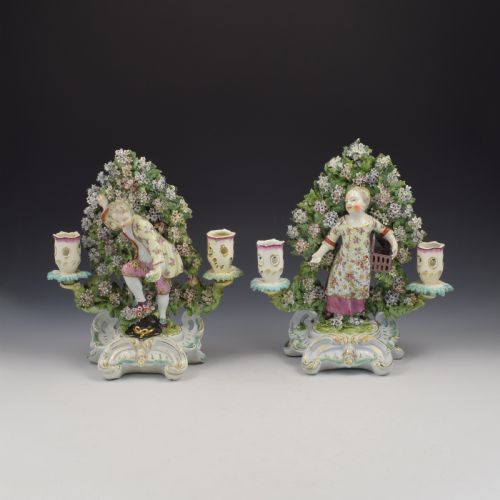
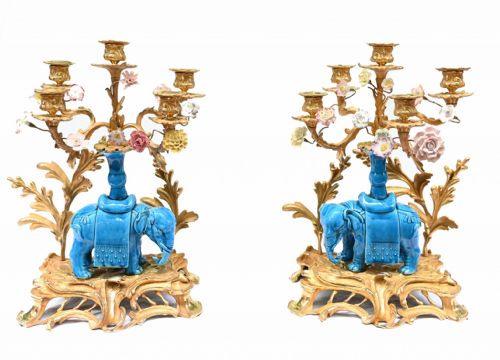
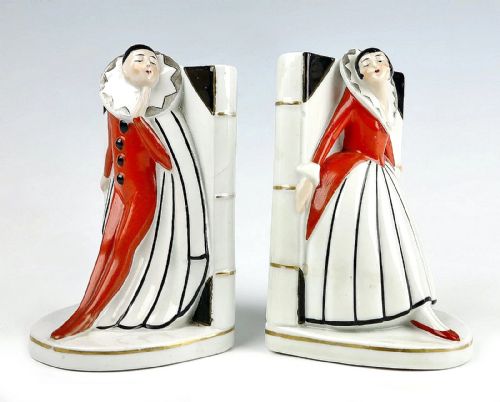
Most examples function as sculptural display pieces, though some incorporate candle sockets or serve as bookends.
Materials and production methods
Makers utilised porcelain, bisque porcelain, earthenware and ceramic bodies, often shaping them through moulding before hand-finishing the details.
Surfaces received applied enamel paints, coloured glazes, sancai glazes or gold leaf and gilding to accentuate garments and textures.
Bocage work involved applying delicate applied foliage leaves and flowers around the central figures, particularly in eighteenth-century English traditions.
Listings feature items spanning the eighteenth, nineteenth and early twentieth centuries, utilising porcelain, earthenware and bisque.
Distinctions in quality
Quality rests upon the crispness of the modelling and the precision of the hand-painting on garments, faces and decorative grounds.
The survival of fragile applied elements like floral bocage or delicate extremities distinguishes superior examples from heavily restored or simplified pairs.
Meissen·Royal Worcester·Edme Samson·C. G. Schierholz·Sitzendorf
The Decorative Porcelain Figure Pair Glossary
- Bisque porcelain
- Unglazed porcelain with a matte, biscuit-like texture that highlights fine sculptural detail. It gained popularity for neoclassical and Victorian figures.
- Bocage
- An ornamental background of applied leaves and flowers made of porcelain, framing eighteenth-century figures. It requires careful handling due to its fragility.
- Hard-paste
- A durable type of porcelain fired at high temperatures, composed of kaolin and petuntse. European factories such as Meissen utilised this composition.
- Faience
- Tin-glazed earthenware produced in France and other European regions. It provides an opaque white surface for painted decoration.
- Sancai
- A three-colour glaze technique associated with Chinese ceramics. It typically combines green, amber and cream tones.
Decorative Porcelain Figure Pair: Frequently Asked Questions
What were these figures used for?
These pieces served as decorative ornaments on mantelpieces, sideboards and dining tables, often arranged symmetrically to frame a clock or mirror.
Some specialised pairs incorporated candlesticks or served practical roles as bookends.
How do I display a pair safely?
Place them on stable surfaces away from high traffic areas and direct sunlight to protect painted enamels and delicate applied details.
Original glass domes, where present, help shield vulnerable porcelain surfaces from dust and accidental knocks.
How are different periods identified?
Stylistic clues such as Rococo curves, Victorian ornamentation or Art Deco forms help narrow down the date of manufacture.
Factory marks, paste composition and glaze characteristics also provide evidence of origin and age.
Are all pairs completely identical?
Many pairs were modelled as mirror images, showing complementary poses rather than exact duplicates.
Hand-painting and individual firing results ensure subtle variations remain visible between the two pieces.