




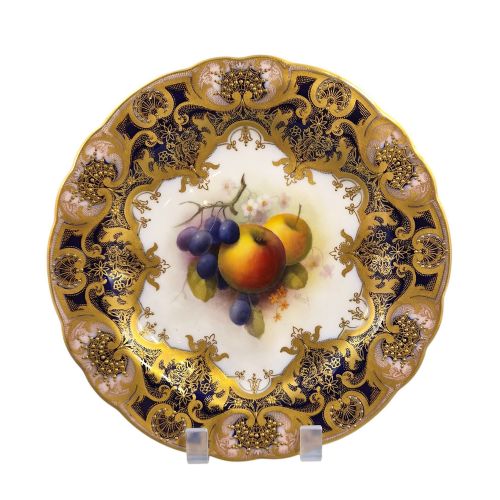
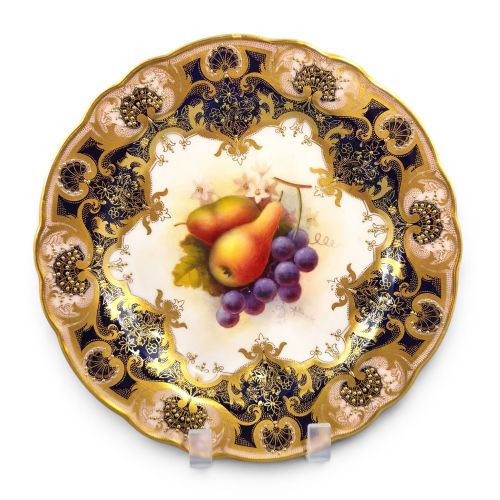
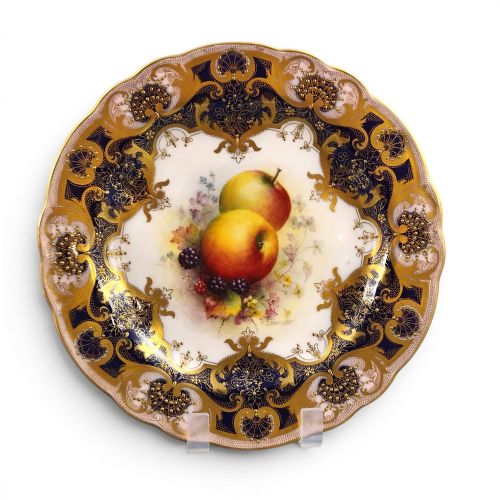
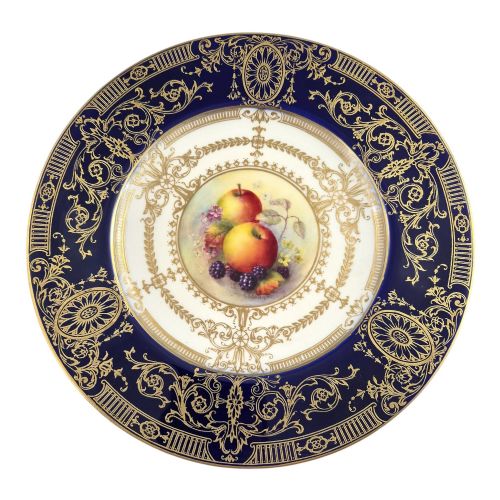
Decorative Porcelain Display Dish
A decorative porcelain display dish brings hand-painted colour and intricate design to a wall or cabinet.
Decorative Porcelain Display Dish
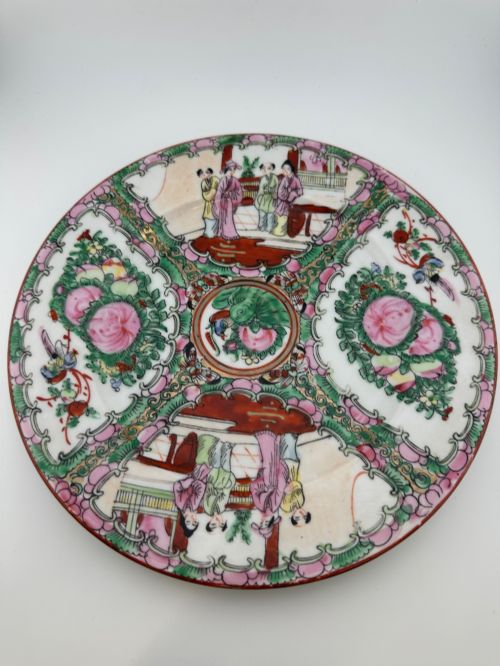
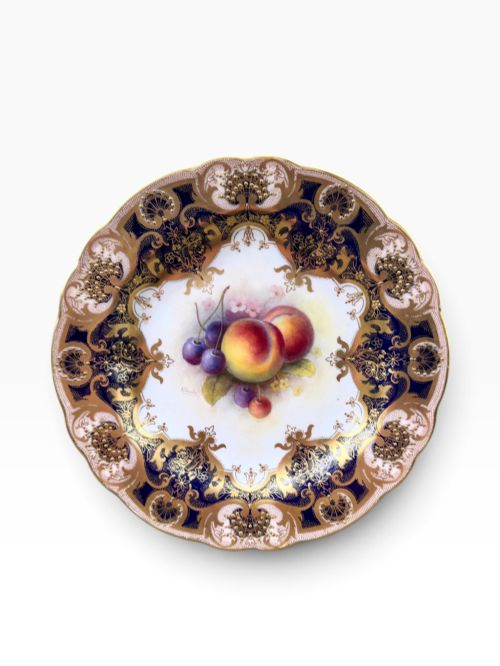
A decorative porcelain display dish encompasses cabinet plates, chargers, and bowls intended primarily for visual display rather than dining. The examples gathered under the decorative porcelain display dish heading range from nineteenth-century European factories to Japanese export kilns.
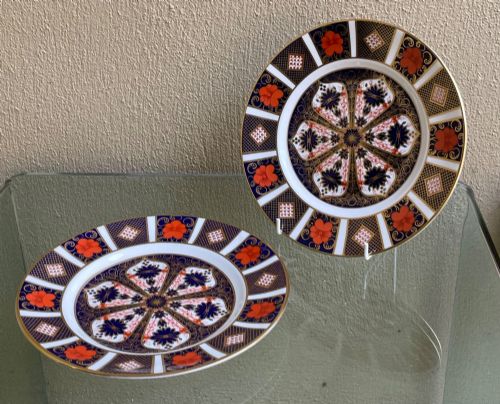
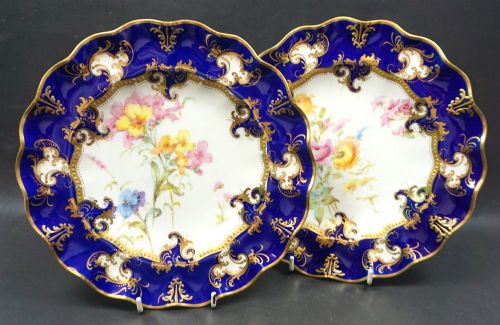
Buyers most frequently encounter large Imari chargers and painted English cabinet plates from the Victorian and Edwardian eras. These forms often feature scalloped edges, cobalt blue and iron red palettes, or detailed botanical and figural scenes.
How they were made
Potters shaped porcelain, bone china, and earthenware before applying underglaze blue, polychrome enamel, and gilding. Artisans fired these pieces multiple times to fuse the metallic gold leaf and intricate enamel pigments to the hard paste surface.
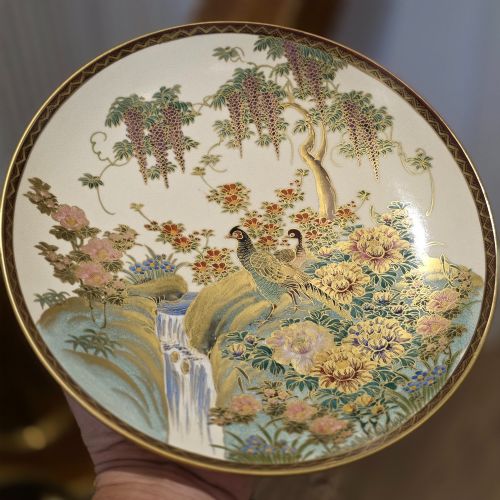
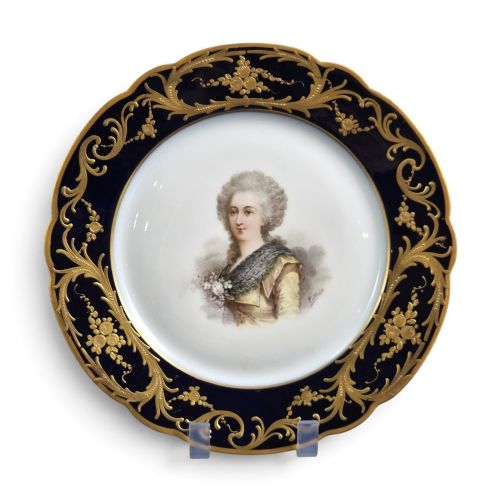
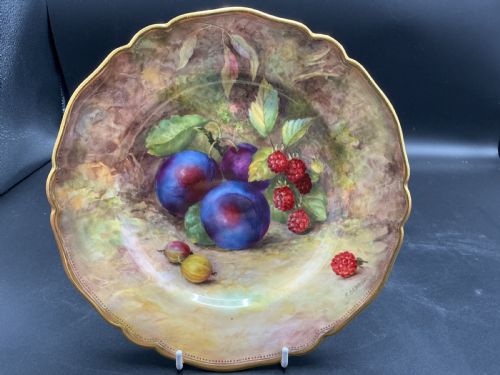
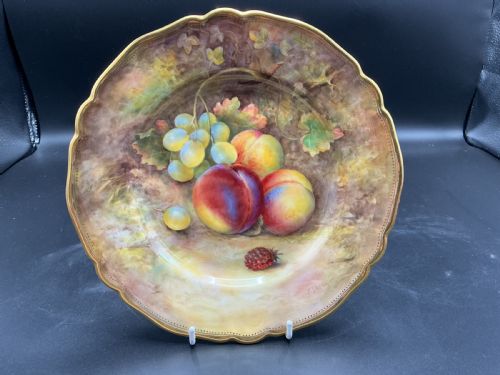
Japanese workshops utilised traditional hand-painting techniques for Satsuma and Kutani wares, while European factories employed skilled artists to paint detailed portraits, landscapes, and fruit studies.
Japanese Meiji period wares and Victorian English cabinet plates form the core of the available decorative dishes.
What varies in quality
The standard of painting heavily dictates the hierarchy of these objects, separating factory-produced transfer prints from master-signed brushwork. Pieces executed by named artists command greater attention due to the precision of the miniature compositions.
The crispness of the porcelain body, the richness of the gilding, and the complexity of the glaze layer distinguish standard production wares from exhibition-grade pieces.
Royal Worcester·Royal Crown Derby·Royal Doulton·Coalport·Minton
The Decorative Porcelain Display Dish Glossary
- Charger
- A large decorative plate intended for display on a sideboard or wall rather than for table service. These substantial vessels often display the most complex painted schemes.
- Cabinet plate
- A fine porcelain plate created specifically for display in a glass-fronted cabinet. They frequently depict hand-painted fruit, landscapes, or historical portraits.
- Imari
- A Japanese export porcelain style characterised by a palette of cobalt blue, iron red, and gold. This aesthetic heavily influenced European ceramic design.
- Satsuma
- A type of earthenware originating from Japan, featuring a ivory crackle-glaze decorated with polychrome enamels and raised gold.
Decorative Porcelain Display Dish: Frequently Asked Questions
How were display dishes used?
These pieces served as ornamental items in nineteenth-century drawing rooms and dining parlours. Wealthy households mounted large chargers on walls or arranged cabinet plates on specialised display stands.
Unlike everyday tableware, they remained protected from functional wear. This careful preservation keeps the hand-painted surfaces and delicate gilding intact for modern interiors.
How do I hang a heavy charger?
Hanging a large porcelain charger requires a secure, professionally fitted spring hanger that distributes the weight evenly across the rim. Ensure the wall fixing anchors directly into solid masonry or a timber stud.
Avoid wire-only setups that rely on friction alone. Checking the stability of the mounting hardware periodically protects the piece from accidental slips.
How do I tell Japanese and European pieces apart?
Japanese pieces from this selection typically feature distinctive regional aesthetics such as Imari or Satsuma, employing iron red, cobalt, and dense gold detailing. The clay bodies and glaze textures also differ noticeably from Western porcelain.
European factories like Royal Worcester or Sèvres rely on neoclassical motifs, transfer printing, or European portraiture. Factory backstamps on the reverse often confirm the exact Western origin.
Can I wash porcelain display dishes?
Washing should be avoided unless absolutely necessary, and immersion in water must be strictly prevented. Moisture can seep into fine crackle-glazes or weaken old adhesives on repaired areas.
Dust the surface gently with a soft, dry brush instead. This maintenance routine prevents abrasive particles from scratching delicate gold leaf and enamel.