




Decorative Metal Pedestal Bowl
A decorative metal pedestal bowl brings classic form and substance to a room, drawing the eye instantly.
Decorative Metal Pedestal Bowl
A decorative metal pedestal bowl combines elevated form with cast or beaten metalwork, often taking the shape of a classical tazza, coupe or urn. These pieces function as striking centrepieces or ornamental vessels, designed primarily for display rather than heavy domestic use.
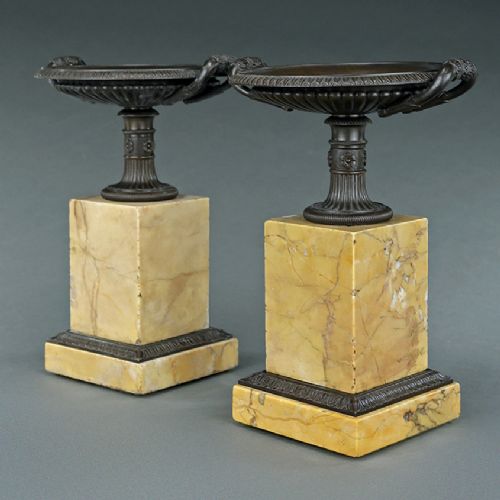
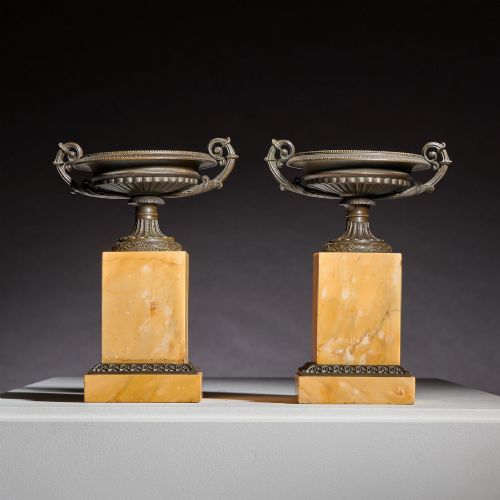
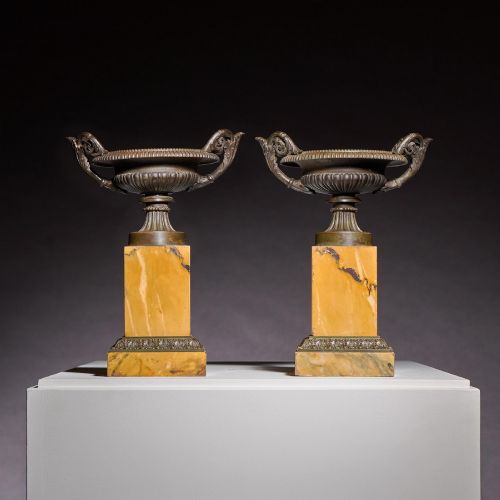
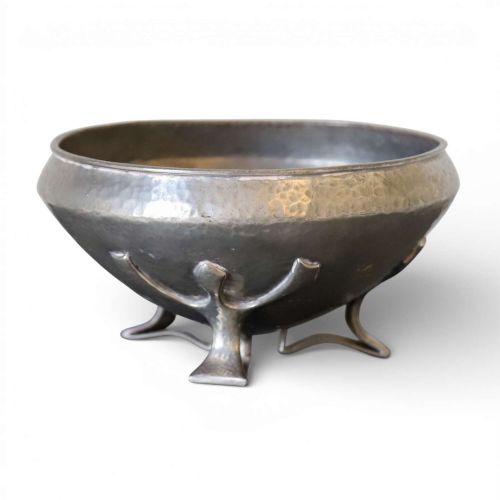
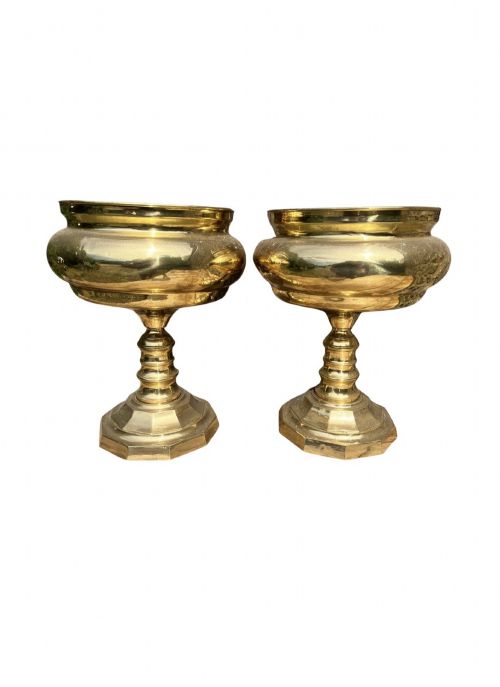
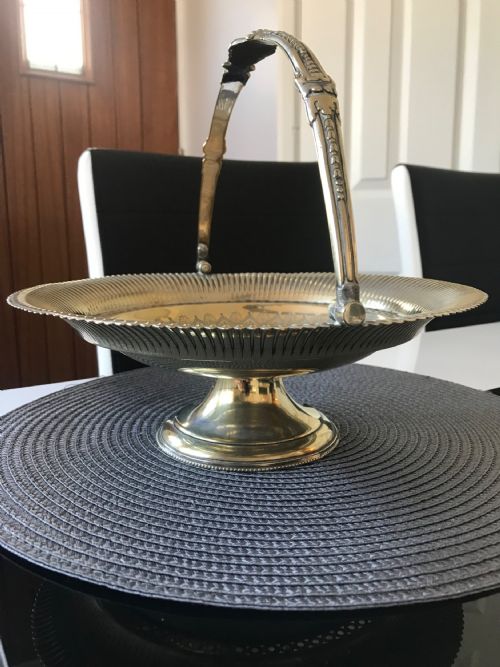
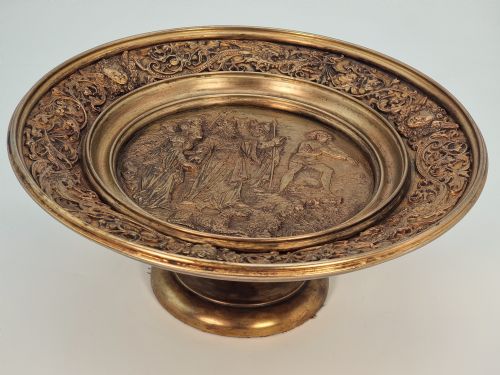
Buyers seeking a decorative metal pedestal bowl will most frequently encounter nineteenth-century European examples, particularly French bronze and marble Grand Tour souvenirs alongside British Arts and Crafts pewter or copper works. Brass goblets and silver-plated neoclassical fruit baskets also appear regularly within this category.
Origins span nineteenth-century France, Britain and Italy, reflecting diverse stylistic movements from French Empire and Neoclassical designs to Victorian Gothic Revival and Arts and Crafts simplicity.
Materials and Construction
Foundry casting forms the foundation of many pieces, utilising bronze, brass, ormolu and gilt bronze to create sturdy pedestals and detailed rims. These metals often receive chased surface decoration or bright gilding to enhance their visual weight.
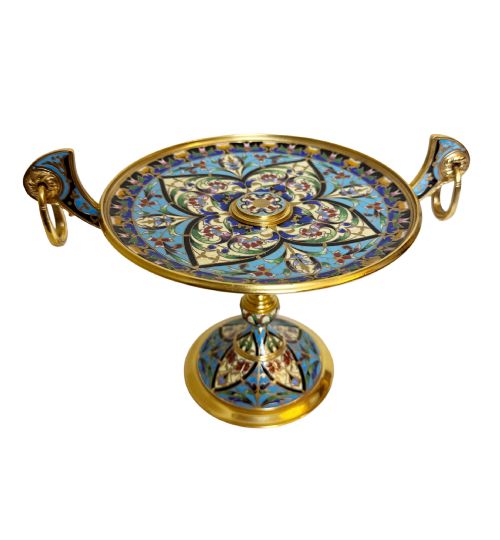
Combinations of mixed media define the finer examples, pairing cast metals with contrasting bases of Siena marble or setting bowls with vibrant enamel plaques, champleve work and semi-precious agate cabochons.
Arts and Crafts pieces rely on hand-beaten copper and pewter, showcasing visible hammer marks and patinated finishes that celebrate honest craftsmanship rather than high polish.
Periods represented span the nineteenth century, including specific dates from eighteen hundred through to nineteen hundred and twenty.
Distinctions in Quality
The refinement of the casting and chasing separates standard production from exceptional work, visible in the crispness of classical foliage, figural details and architectural mounts on bronze and ormolu pieces.
Material selection dictates overall merit, particularly the richness of the underlying metal patina, the depth of the Limoges enamel work, and the quality and grain of associated marble plinths.
Design integrity and maker attribution elevate certain works, such as documented Arts and Crafts models or well-proportioned Grand Tour souvenirs executed after antique prototypes.
Liberty & Co·Oliver Baker
The Decorative Metal Pedestal Bowl Glossary
- Tazza
- A shallow bowl mounted on a stem and foot, frequently utilised for display in classical and nineteenth-century interiors. The plural form is tazze.
- Ormolu
- Gilt bronze produced by applying a finely ground mercury and gold amalgam to a bronze base, creating a rich golden surface. This technique was widely employed in French decorative arts.
- Champleve
- An enamelling technique where troughs or cells are hollowed out of the metal surface and filled with vitreous enamel before firing. It creates bold coloured patterns across bronze objects.
- Grand Tour
- A cultural journey undertaken by nineteenth-century Europeans to view classical antiquities, inspiring the creation of bronze and marble souvenir pieces. These objects were often modelled after ancient architecture and sculpture.
- Cabochon
- A gemstone or piece of glass polished to a convex, rounded shape rather than faceted, often set into metal bowls as decorative accents.
Decorative Metal Pedestal Bowl: Frequently Asked Questions
Where were most nineteenth-century bronze tazzas made?
France produced a significant portion of these works, particularly in workshops crafting Grand Tour souvenirs and neoclassical bronzes.
Italian makers also contributed heavily to the classical souvenir market during the same period.
How should bronze and marble pieces be cleaned?
Dusting with a soft, dry cloth suffices for routine maintenance to protect the delicate patination and underlying metal surfaces.
Harsh chemical polishes and abrasive cleaners must be avoided, as they strip away historical patinas and damage stone bases.
What is Tudric pewter?
Tudric represents the trade name for a specific range of pewter wares introduced by Liberty and Company during the early twentieth century.
These pieces typically embraced Arts and Crafts aesthetics, incorporating stylized plant motifs and cabochon stones.