




Decorative Majolica Dish
A decorative majolica dish brings rich colour and figurative modelling to a table, spanning Dutch, Italian, French, and Victorian ceramics.
Decorative Majolica Dish
A decorative majolica dish comprises chargers, comports, and plates shaped from earthenware and finished with tin glazes or lead glazes. These pieces appear across the seventeenth, eighteenth, and nineteenth centuries, including Victorian examples.
The selection ranges from Dutch Baroque and Spanish faience to Italian Renaissance Revival pieces and Victorian naturalism. Forms include deep charger plates, centrepiece bowls, and figural compotes.
Makers and regional potteries from Italy, France, Austria, Portugal, and England produced these wares, employing rich polychrome pigments and sculptural relief.
How they were made
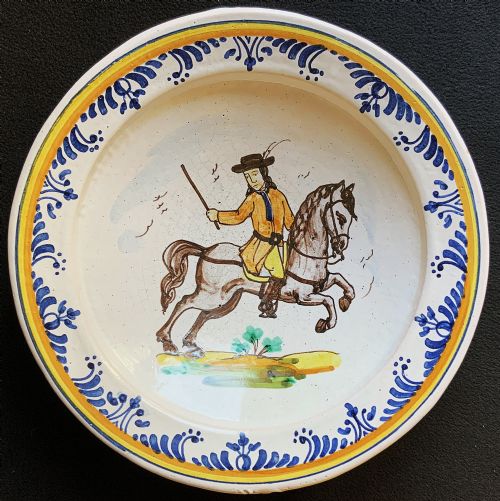
Potters shaped terracotta and earthenware bodies before applying tin glazes or lead glazes to create smooth surfaces for painting. Pigments were brushed directly onto the unfired or fired glaze to form complex polychrome scenes.
Moulding techniques allowed workshops to produce high-relief naturalistic forms such as begonia leaves, birds, sunflowers, and cherubs. Firing fixed the mineral colours into the lustrous glaze.
Decorative Majolica Dish Retail Price Guide 2026
Typical asking prices for decorative majolica dish among the pieces listed under this phrase on Sellingantiques today, from the lower quarter to the upper quarter. They describe what is for sale here now, not the wider market.
A Moorish-style basket held aloft by a glazed blackamore or supported by cherubs brings unexpected drama to the dining table.
What varies in quality
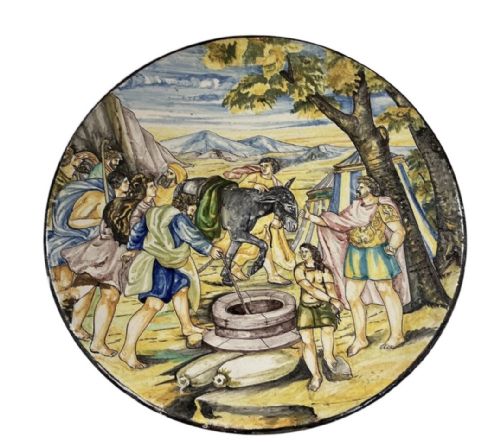
The sophistication of the painted surface defines the upper tier, seen in detailed istoriato historical scenes and precise hand-painted polychrome decoration. Mastery of the brushwork elevates standard vessels into accomplished works of art.
Sculptural depth and the crispness of moulded elements, such as fruit, foliage, and figures, distinguish finer compotes and platters from simpler productions. The integration of glaze tones across complex reliefs dictates visual balance.
Gien faience pottery·Jose Alvez Cunah·Minton
The Decorative Majolica Dish Glossary
- Majolica
- Opaque tin-glazed earthenware decorated with colourful metal oxides. It encompasses various European traditions from the Renaissance onwards.
- Charger
- A large decorative plate or shallow bowl typically displayed on walls or tables rather than used for dining. These form a major part of early ceramic output.
- Istoriato
- A style of ceramic decoration featuring narrative historical, mythological, or biblical scenes painted across the entire surface. It is closely associated with Italian majolica.
- Comport
- A raised dish or bowl used for serving fruit or sweetmeats, often standing on a formal foot or pedestal. Victorian examples frequently incorporate figural supports.
- Tin glaze
- An enamel glaze rendered white and opaque by the addition of tin oxide. It provides a bright background for painted pigments.
Decorative Majolica Dish: Frequently Asked Questions
What is a majolica dish?
A majolica dish is a ceramic vessel made from earthenware and coated with an opaque tin glaze or lead glaze. These pieces are painted with bright mineral pigments and often feature modelled reliefs.
They encompass diverse regional styles, from seventeenth-century Dutch chargers to nineteenth-century Victorian naturalism.
How were chargers used?
Large chargers served primarily as decorative display pieces on buffets and walls rather than for everyday dining. Their substantial size made them ideal canvases for narrative painting and heraldic designs.
Over centuries, wealthy households used them to showcase ceramic artistry.
How do I date a dish?
Dating relies on stylistic markers, glaze characteristics, and regional manufacturing traits. Seventeenth-century pieces often display Dutch Baroque patterns, while nineteenth-century works frequently show Victorian revivalism or naturalistic leaf motifs.
Physical examination of the earthenware body and glaze shrinkage provides further clues.
Are these dishes waterproof?
While glazed earthenware is generally sealed, older tin-glazed and lead-glazed ceramics can be porous and sensitive to moisture. It is best to keep them dry and avoid submerging antique pieces in water.
Gentle dusting preserves the fragile glaze and painted surfaces.