



Decorative Mahogany Caddy
These decorative mahogany caddy items are timber tea containers designed to store precious leaves, offering rich grain and period character for any interior.
Decorative Mahogany Caddy
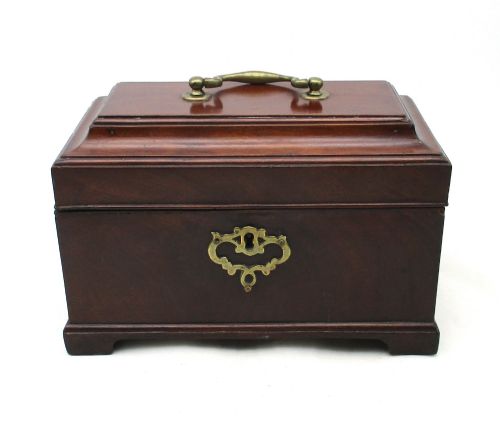
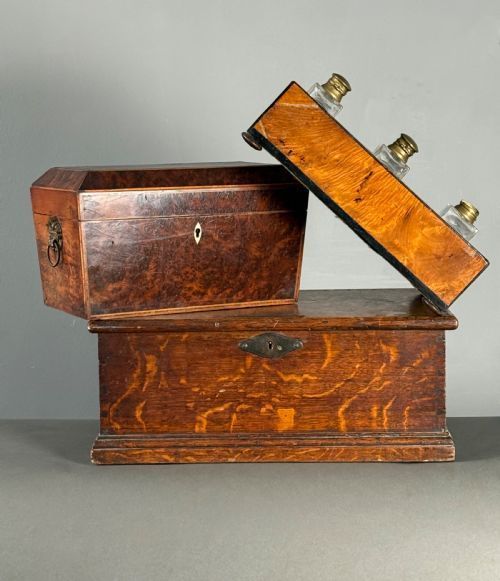
When you search for a decorative mahogany caddy, you encounter timber tea containers designed in 18th Century, Georgian, 19th Century, and Victorian periods. These pieces take the form of tea caddies, tea caddy examples, decorative boxes, and decanter boxes.
The most common items on this page are mahogany tea caddies shaped in Georgian and Victorian styles, alongside related boxes incorporating boxwood, satinwood, and wood inlay.
How they were made
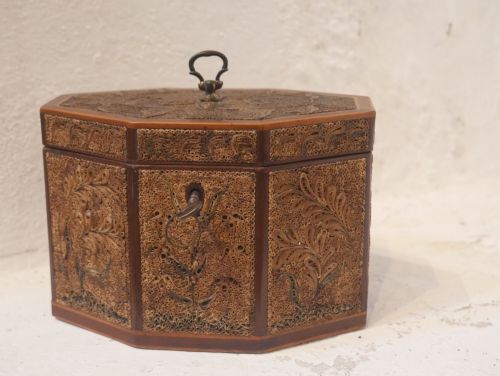
Maker's workshops built these containers using solid mahogany and mahogany veneers, frequently embellished with boxwood, satinwood, and paper filigree details.
Hardware elements such as brass locks, hinges, and metal canisters completed the construction, paired with internal compartments for dry leaves.
Decorative Mahogany Caddy Retail Price Guide 2026
Typical asking prices for decorative mahogany caddy among the pieces listed under this phrase on Sellingantiques today, from the lower quarter to the upper quarter. They describe what is for sale here now, not the wider market.
Some eighteenth-century boxes hid tea leaves behind tiny paper scrolls while keeping the lock key safely hidden away.
What varies in quality
Quality rests upon the selection of timber grain, the precision of wood inlay, and the integration of secondary materials like boxwood and satinwood.
Condition of internal metal canisters and paper filigree details distinguishes finer examples from simpler utilitarian boxes.
The Decorative Mahogany Caddy Glossary
- Tea caddy
- A small box or chest designed to store loose tea leaves securely. They often featured internal compartments and locking lids.
- Mahogany
- A durable tropical hardwood prized for its rich reddish-brown colour and smooth grain. It served as the primary material for case furniture and boxes.
- Wood inlay
- The technique of embedding contrasting pieces of timber into a surface to create decorative patterns. Boxwood and satinwood were commonly used for this purpose.
- Paper filigree
- Decorative scrollwork created from thin strips of rolled paper. This delicate technique appeared on eighteenth-century containers.
- Decanter box
- A fitted wooden container built to hold glass bottles securely. Examples range across the nineteenth century.
Decorative Mahogany Caddy: Frequently Asked Questions
What is a decorative mahogany caddy?
It is a wooden storage chest originally built to keep expensive tea leaves dry and secure under lock and key.
Today, these containers function as decorative objects on side tables or display cabinets.
How were they used historically?
Households used them in the parlour or dining room when tea was an expensive commodity requiring careful rationing.
Servants or the master of the house would unlock the box to measure out leaves for each pot.
How do I date a Georgian caddy?
Dating relies on timber selection, construction methods, and hardware styles characteristic of the eighteenth century.
Georgian pieces often feature mahogany veneers, brass escutcheons, and simple geometric inlay.
Can I use them for storage?
Many people continue to use them for small keepsakes, jewellery, or modern tea bags.
Their sturdy wood construction and internal compartments remain practical for desktop organisation.