
Antique Tea Box Chest
An antique tea box chest is a small, secure receptacle for dry leaves, designed to protect precious imports in the drawing room.
Antique Tea Box Chest
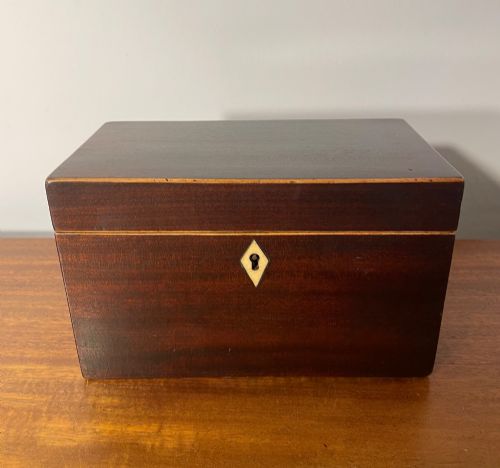
The antique tea box chest groups domestic containers designed to keep dry leaves dry and secure in the drawing room. Most pieces seen here originate from the Georgian, Regency, and Victorian periods, taking forms from simple rectangular caddies to elaborate sarcophagus shapes.
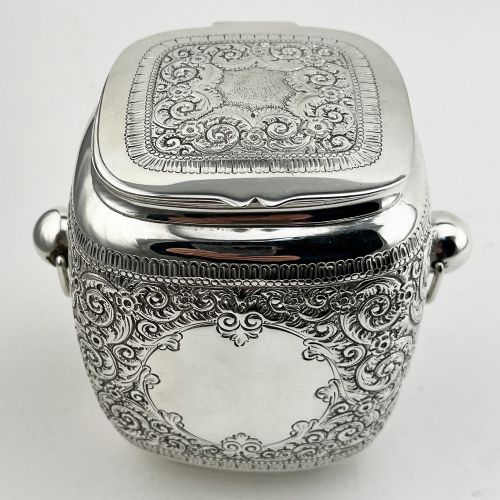
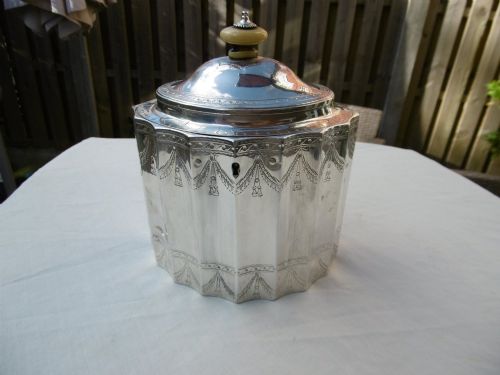
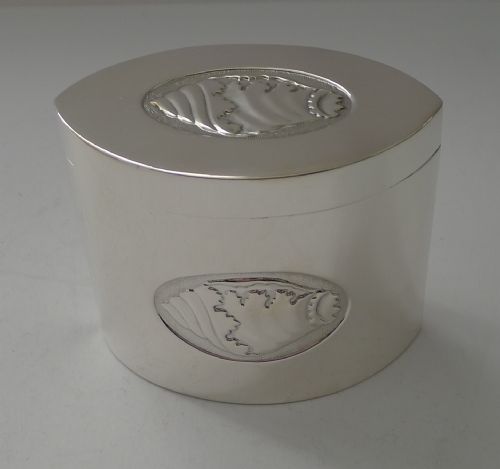
The version most commonly met on this page is the wooden tea caddy or table-standing box, often furnished with internal lidded canisters and mixing bowls. Alongside these, buyers find larger storage chests, campaign boxes, and occasional silver canisters.
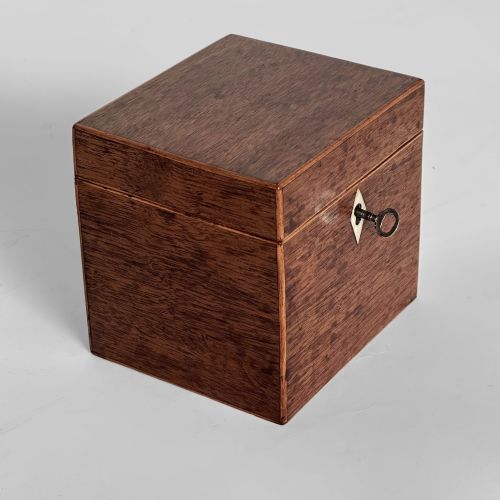
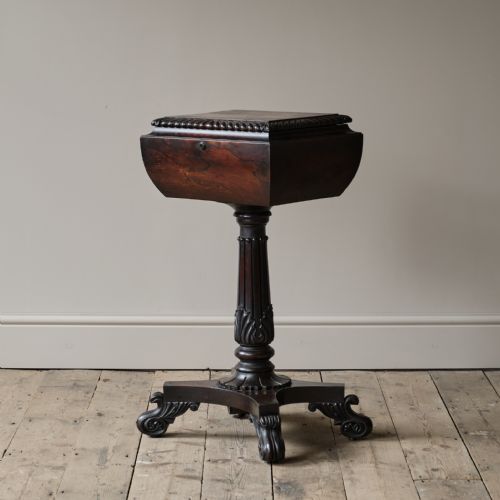
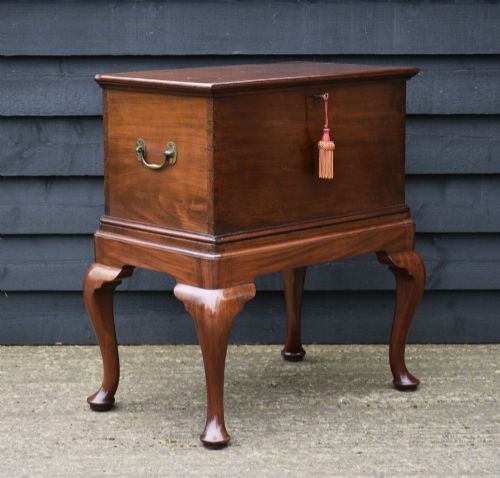
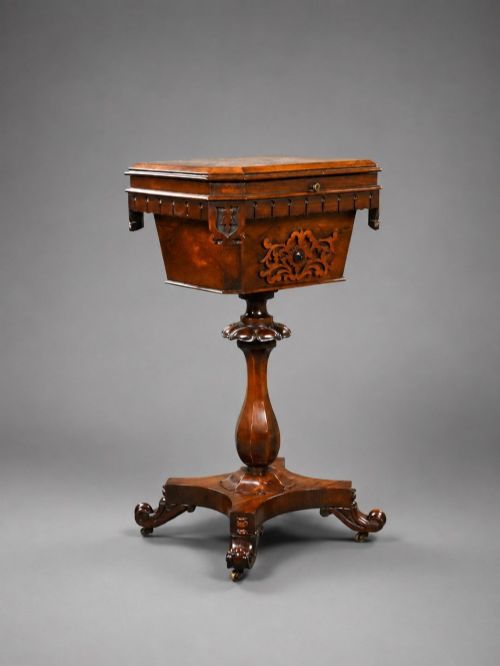
Makers shaped these boxes from dense hardwoods like mahogany, rosewood, and walnut, frequently elevating them on bracket feet or slender stands known as teapoys. Many examples incorporate compartments for leaf storage alongside glass or ceramic bowls.
How They Were Made
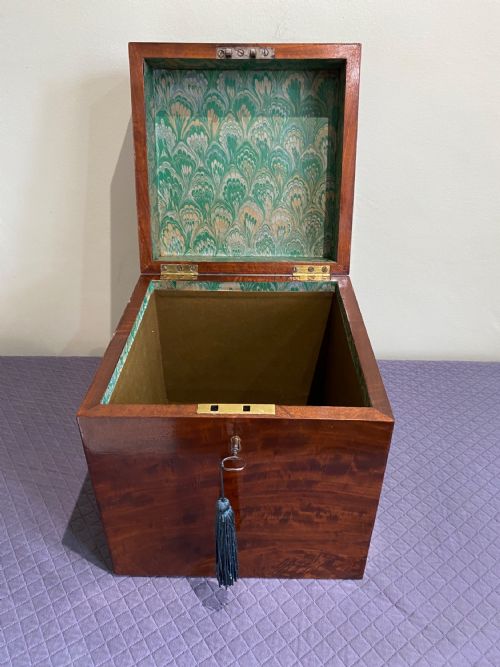
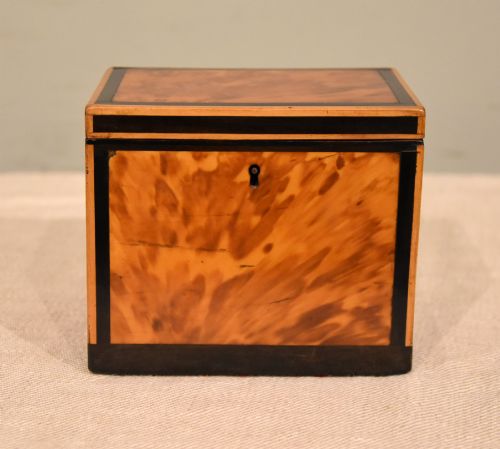
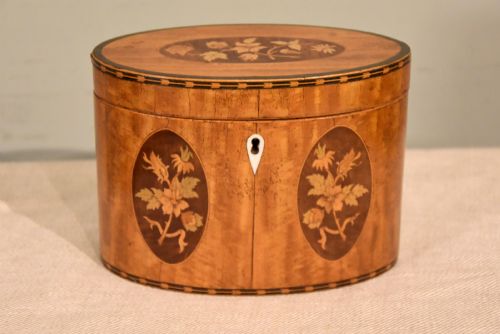
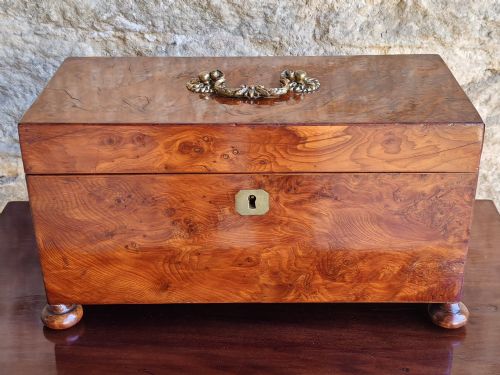
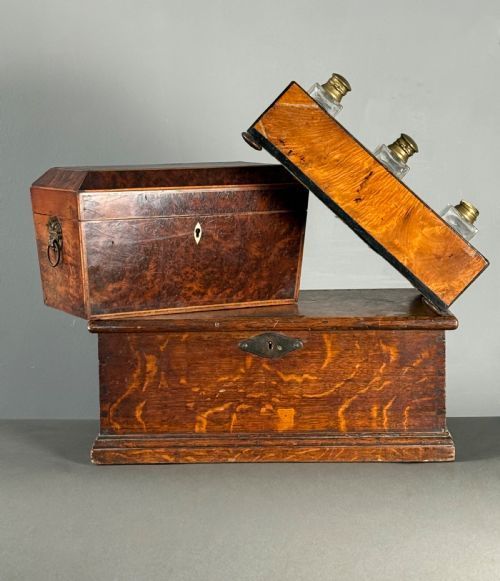
Cabinet makers utilised solid and veneered timbers such as mahogany, rosewood, walnut, satinwood, and yew, often selecting burr cuts for striking surface grain patterns. Carcases were joined with precision, housing fitted interiors lined with foil or secondary woods.
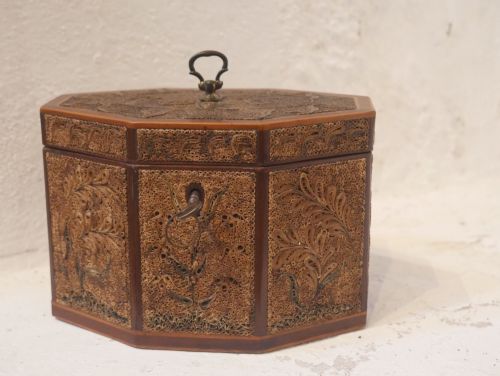
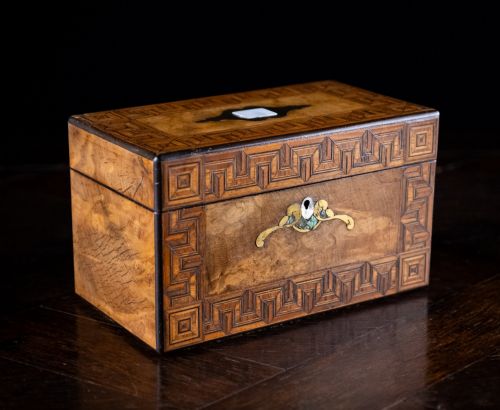
Decorative surface techniques included intricate Tunbridge ware mosaic woodwork, brass stringing, mother of pearl inlay, and paper filigree. Metal components such as escutcheons, lion mask handles, and lockable brass hardware were cast and fitted by hand.
Paper filigree tea caddies from the eighteenth century demonstrate that intricate decoration could be fashioned entirely from rolled paper strips.
What Varies in Quality
Quality rests upon the selection of timber figures, the precision of parquetry or inlay work, and the preservation of original internal fittings. Superior examples display seamless mitred joints, intact foil linings, and matching interior canister lids.
The sophistication of the mechanism and hardware elevates certain specimens, particularly those retaining working locks with matching keys and cast brass handles. Finer boxes balance external decorative ornament with structurally sound, unwarped carcases.
Martin Hall And Co·Robert Hennell·Henry Hollamby·Jones Bros
The Antique Tea Box Chest Glossary
- Teapoy
- A pedestal table or large chest designed to hold tea canisters, often fitted with internal compartments and a mixing bowl.
- Tunbridge Ware
- Woodwork decorated with mosaic patterns built from tiny tinted wood blocks to form pictorial or geometric motifs.
- Sarcophagus
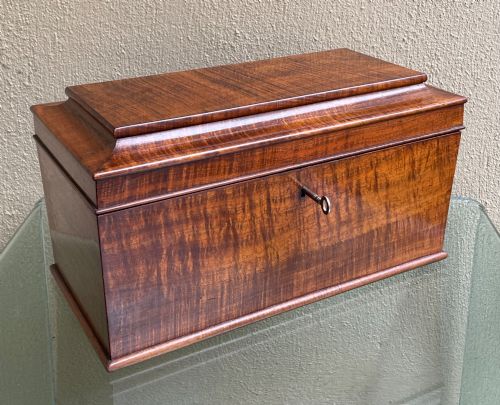
- A box form featuring a steep-sided, domed lid reminiscent of a stone coffin, popular during the Regency period.
- Parquetry
- Geometric mosaic woodwork formed by fitting small veneer tiles together to create repeating patterns across the surface.
- Escutcheon
- A protective plate surrounding the keyhole, frequently cast in brass or inlaid with bone and mother of pearl.
Antique Tea Box Chest: Frequently Asked Questions
What is a tea chest?
A tea chest is a lidded box designed to store loose leaves securely away from moisture and odours in the home.
These vessels often featured internal compartments and small locks to protect expensive imported leaves from household servants.
Why did caddies have two compartments?
Two compartments allowed households to store both green and black tea side by side in the same container.
A central mixing bowl sat between them for blending leaves to the drinker's preferred taste before serving.
How do I date a tea box?
Dating relies on timber choices, construction methods, and decorative styles characteristic of specific periods like Georgian or Victorian.
Regency boxes often display sarcophagus shapes and brass inlay, whereas earlier Georgian pieces favour clean mahogany lines and simple bracket feet.
Are these boxes still usable today?
Many collectors continue to utilise these lidded chests for jewellery, trinkets, or modern dry goods storage.
The sturdy internal compartments make them well suited for organising small personal items on a dressing table.