

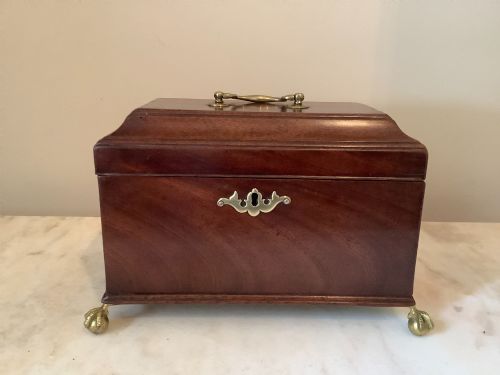


Chippendale Wooden Box
These chippendale wooden box items are mahogany tea caddies, chests, and storage pieces built to hold precious stores in Georgian and later interiors.
Chippendale Wooden Box
When you search for chippendale wooden box, you encounter a selection of tea caddies, cellarettes, silver chests, and storage trunks predominantly from the Georgian period alongside Edwardian and later interpretations. The form you are most likely to meet on this page is the mahogany tea caddy, often featuring period details such as secret drawers or quilted grain.
The objects range from refined tabletop tea containers to larger floor-standing pieces like cellarettes, mule chests, and jardiniere stands. Materials span rich mahogany, satinwood, and oak, reflecting the practical storage needs of wealthier households across the eighteenth, nineteenth, and early twentieth centuries.
How they were made
Makers utilised dense timbers such as mahogany and oak, frequently embellished with satinwood or boxwood inlay to create contrasting decorative borders. Grain selection mattered greatly, with craftsmen choosing quilted mahogany for its visual depth on key surfaces.
Hardware played an integral functional and aesthetic role, incorporating solid brass handles, escutcheons, and hinges to secure heavy lids and compartments. Joinery techniques ensured sturdy construction for heavy contents like silver, wine bottles, and loose tea leaves.
Chippendale Wooden Box Retail Price Guide 2026
Typical asking prices for chippendale wooden box among the pieces listed under this phrase on Sellingantiques today, from the lower quarter to the upper quarter. They describe what is for sale here now, not the wider market.
Secret drawers lurk quietly inside these wooden boxes, designed to outsmart tea-fingered servants.
What varies in quality
Quality rests upon the selection of timber and the precision of the cabinetmaker's joinery rather than mere age alone. Superior pieces display harmonious grain matching across all sides and immaculate internal compartmentalisation.
The integration of secondary elements like secret drawers and original brass hardware distinguishes finer workshops from standard production. Later revival pieces in the Chippendale style vary according to how faithfully they replicate eighteenth-century proportions.
The Chippendale Wooden Box Glossary
- Tea Caddy
- A small lidded box designed to store tea leaves safely away from moisture and air. These vessels often contained internal lidded canisters and sometimes secret compartments.
- Cellarette
- A lockable container used for storing wine bottles near the dining table. They frequently appeared as large mahogany floor-standing pieces lined for temperature control.
- Mule Chest
- A traditional storage chest featuring one or more drawers at the base beneath a primary lift-lid compartment. They served domestic storage needs in Georgian households.
- Satinwood
- A lustrous, fine-grained yellow timber utilised for contrasting inlay work and banding on mahogany furniture. It added brightness to cabinet surfaces.
Chippendale Wooden Box: Frequently Asked Questions
What did a tea caddy hold?
A tea caddy held expensive loose tea leaves under lock and key within the home.
Tea was a precious commodity in the Georgian period, requiring secure storage away from domestic staff.
How do I tell Georgian from Edwardian pieces?
Georgian pieces date from the eighteenth century and display period-specific timber patination and hand-cut joinery.
Edwardian items reflect later nineteenth- and twentieth-century revival manufacturing methods and lighter internal construction.
Where were cellarettes kept?
Cellarettes stood beneath sideboard tables or in dining rooms during formal meals.
They provided immediate access to bottled wine without requiring constant trips to the cellar.
What is a mule chest used for?
A mule chest served as a general household trunk for linens, garments, and personal documents.
The addition of bottom drawers allowed access to stored items without removing objects from the top compartment.