


Decorative Lion Head
These decorative lion head pieces span centuries of metalwork and carving, offering bold classical presence for any room.
Decorative Lion Head
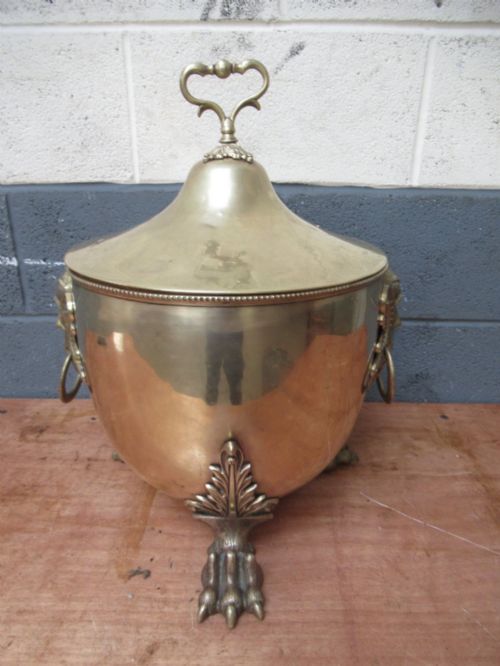
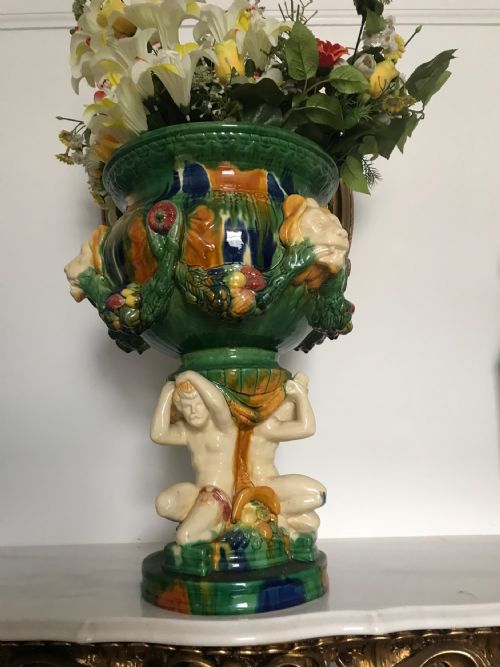
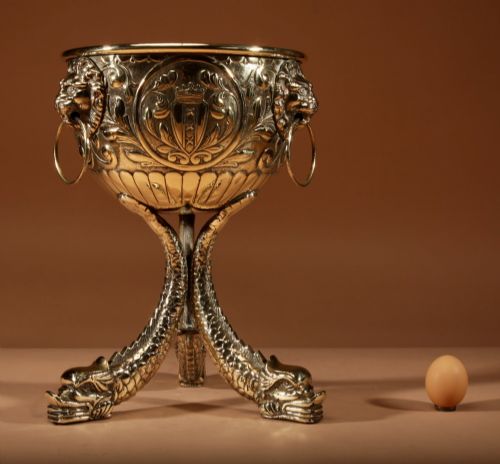
When you search for decorative lion head, you encounter a striking range of furnishings and architectural ornaments rooted in classical motifs. The selection commonly includes heavy brass jardinieres, carved wall masks, and fireside accessories bearing the powerful feline visage.
The pieces appearing here lean heavily into nineteenth century production, alongside eighteenth century Italian mirrors and Dutch wine coolers. Forms swing from practical log bins and planters to purely decorative wall carvings and sconces.
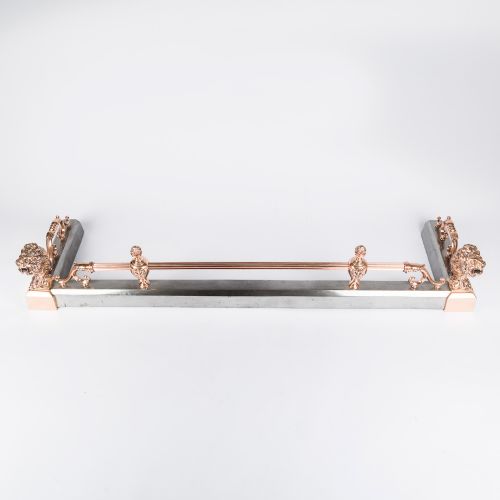
Regency trunks and Victorian fenders also feature the motif as functional handles or mounts. Buyers will find that brass and carved wood dominate the available selection, often channeling Renaissance and Baroque revivals.
How they were made
The metalwork relies on casting, embossing, and piercing, particularly evident in the brass and copper jardinieres and fenders. Dinanderie techniques appear in vessels shaped from sheet brass and enriched with hammered details.
A nineteenth century terracotta mask stares down the room with an expression that suggests it has endured quite enough Sunday visitors.
What varies in quality
Quality rests in the crispness of the casting or carving, where finer examples preserve deep relief and sharp anatomical detail around the mane and muzzle. Lesser pieces show softening from worn moulds or hurried hand finishing.
The choice of materials also dictates the tier, with heavy gauge brass and seasoned carved wood sitting above lighter plated metals and composite gesso. Integration of the motif matters too, distinguishing items where the head is an organic structural element from those where it is a superficial add-on.
The Decorative Lion Head Glossary
- Dinanderie
- An early term for various articles of brass, copper, or bronze, often embossed or cast. It describes medieval and later domestic vessels produced in centres like Dinant.
- Jardiniere
- An ornamental pot or stand for holding plants or flowers. These vessels frequently feature cast handles or decorative mounts.
- Gesso
- A plaster mixture used as a surface for painting or gilding on wood frames and mirrors. It allows for intricate moulded relief work.
- Scagliola
- A composite material made from selenite, glue, and pigments, used to imitate marble and other fine stones. Artisans shape and polish it to create decorative architectural elements.
Decorative Lion Head: Frequently Asked Questions
What were lion head jardinieres used for?
These vessels held large plants or floral displays in principal rooms and conservatories during the nineteenth century and earlier.
They also doubled as heavy log bins or wine coolers, using the sturdy metal construction to contain peat or ice.
How do I distinguish eighteenth century brass from later pieces?
Earlier brass work often shows distinct hand hammering marks, patination, and construction methods characteristic of Dutch and English workshops.
Nineteenth century revival pieces typically exhibit cleaner machine assistance and heavier standardised casting.
Where should I place a wall mask?
Carved wooden or terracotta masks suit placement above architectural doorways, mantelpieces, or as standalone focal points in a hallway.
Their projection demands adequate wall space and balanced lighting to cast deep shadows across the mane.
Are brass fenders purely decorative?
While the lion heads provide a striking visual anchor by the hearth, the steel and brass structures protected carpets from stray embers.
They served as a functional boundary while displaying the refined metalwork favored in Victorian and Regency interiors.