


Decorative Glazed Ceramic Pedestal
These decorative glazed ceramic pedestal pieces bring dramatic height and rich colour to interior spaces.
Decorative Glazed Ceramic Pedestal
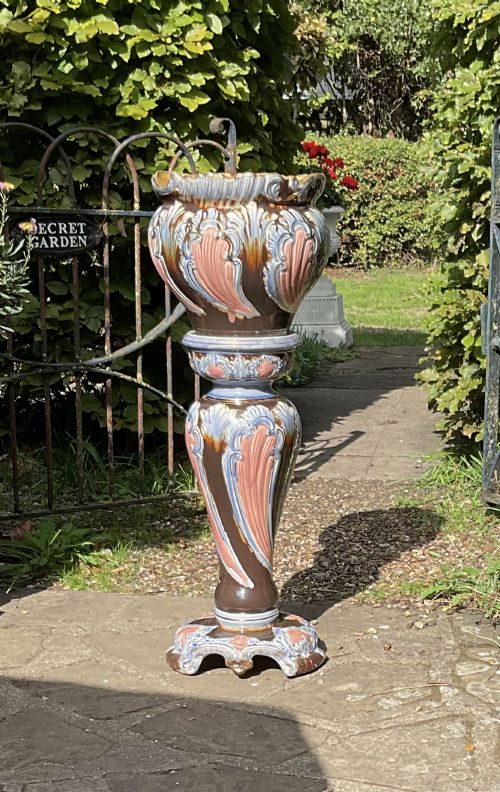
A decorative glazed ceramic pedestal brings architectural presence to a room, carrying plants, comports, and jardinières aloft on sculpted clay columns and stands. When searching for a decorative glazed ceramic pedestal, collectors encounter tall plant stands, jardinieres paired with matching bases, and figural supports dating from the Victorian period through the mid-twentieth century.
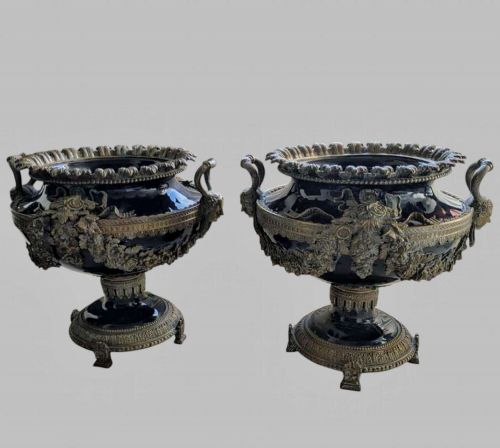
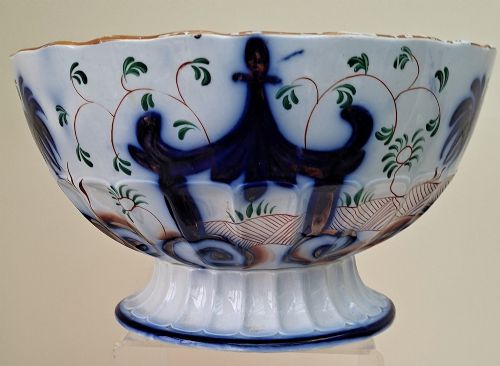
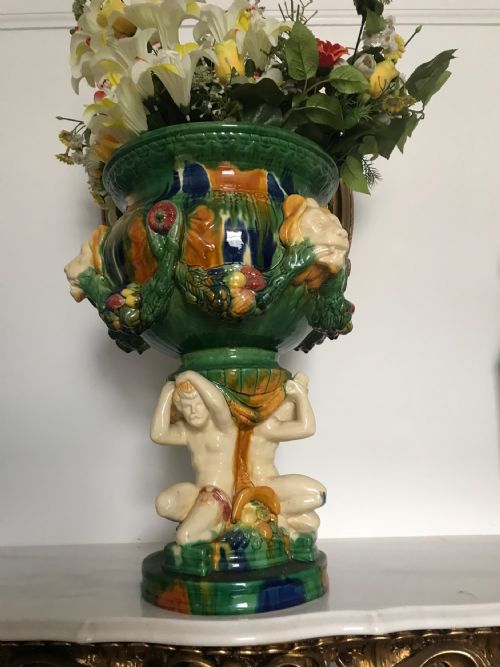
The selection ranges from robust Italian majolica planters featuring lions head decoration to tall Arts and Crafts pottery stands and monumental Minton figures. Forms span footed bowls, comports, conservatory seats, and two-tier compotes created by makers working in earthenware and faience.
Origins stretch across British potteries like Burmantofts and Woodlesford alongside continental workshops in Italy and Vallauris. Pieces appear in distinct aesthetic vocabularies, moving from Victorian naturalism and rustic themes to Italian Renaissance Revival and mid-century French styling.
Materials and construction methods
Potters built these substantial forms using earthenware and heavy ceramic bodies capable of supporting significant vertical weight. Artisans applied lead glaze, cobalt glaze, and lustrous finishes to seal the porous clay and create deep reflective surfaces.
Makers employed majolica techniques to build rich, colourful surfaces where metallic oxides melted into the opaque tin or lead glazes during firing. Complex figural compositions incorporated moulded elements, such as cherubs, lions heads, and cascading begonia leaves, joined securely to the central shafts before glazing.
The object forms span functional garden seats, comports, and footed bowls alongside monumental jardiniere and pedestal plant stands.
Distinctions in quality and execution
Quality rests upon the crispness of the modelling and the ambition of the sculptural form, distinguishing standard production wares from monumental exhibition pieces. Superior examples exhibit finely detailed hand-modelling on figural bases, crisp relief work in plant motifs, and sophisticated control over complex multi-fired glazes.
The integration between a jardiniere and its matching pedestal dictates visual success, where proportions remain balanced and decorative schemes complement one another. Richness of palette, depth of lustre, and the successful execution of complex glazes separate exceptional studio and factory output from simpler utilitarian wares.
Burmantofts·Minton·Woodlesford·Vallauris·Moorcroft
The Decorative Glazed Ceramic Pedestal Glossary
- Majolica
- A type of earthenware decorated with opaque coloured glazes fired over an absorbent clay body. This technique allows for vibrant greens, cobalts, and purples that pool in relief details.
- Jardiniere
- A large ornamental pot or container designed to hold plants and flowers. These vessels often sit atop matching ceramic pedestals to elevate greenery within a room.
- Comport
- A decorative footed dish or bowl used for serving fruit or sweets. In ceramic forms, the bowl rises on a sturdy central stem or pedestal base.
- Faience
- Tin-glazed earthenware produced in Europe, noted for its fine painted decoration and glossy surface. The term often describes continental pottery inspired by traditional majolica methods.
- Lead glaze
- A transparent or coloured silica and lead mixture applied to pottery before firing. It produces a brilliant, glossy finish that enhances the underlying clay body and colours.
Decorative Glazed Ceramic Pedestal: Frequently Asked Questions
How were jardiniere and pedestal sets used?
These matched sets served as indoor display furniture for large potted palms, ferns, and flowering plants in Victorian and Edwardian reception rooms and conservatories. The raised platform protected household flooring while bringing greenery up to eye level.
They also functioned as standalone decorative objects in entrance halls, showcasing sculptural forms and vibrant glazes without any plant placed upon them.
How do I care for antique glazed ceramics?
Keep glazed ceramic pedestals and planters away from damp surfaces and fluctuating temperatures to protect the historic clay body and glaze integrity. Dust gently with a dry, soft cloth and avoid chemical cleaning products that might damage the surface.
When placing heavy plants inside a jardiniere, use a separate waterproof liner rather than pouring water directly into the historic ceramic vessel.
How do I distinguish Victorian pieces?
Victorian ceramic pedestals and planters typically display deep lead or cobalt glazes, naturalistic leaf motifs, or Renaissance Revival architectural details. Look for heavy earthenware bodies and rich majolica colouration that reflect nineteenth-century taste for ornate decorative arts.
Maker marks, registration numbers, and stylistic cues such as cherubs or naturalistic plant forms further anchor pieces securely within the Victorian and Edwardian eras.