




Decorative Console Table
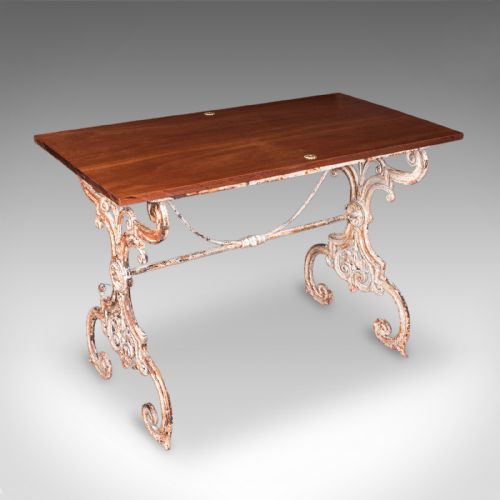
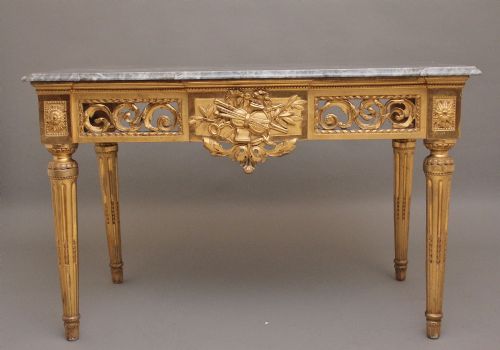
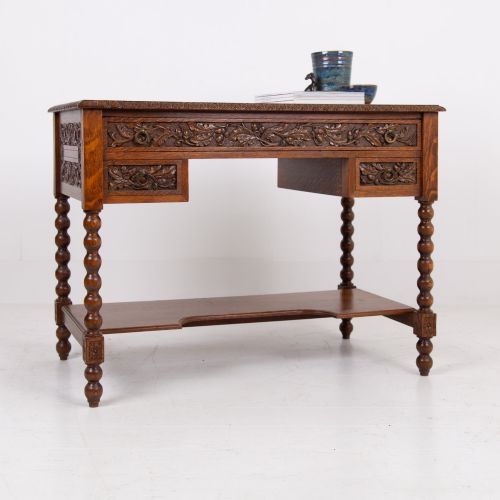
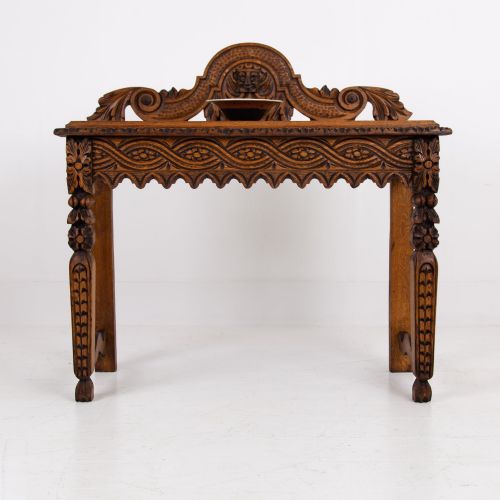
A decorative console table brings architectural presence to a hall or reception room through shaped marble tops and carved timber frames.
Decorative Console Table
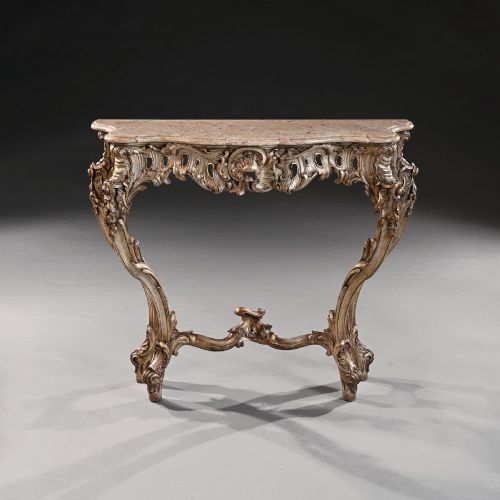
A decorative console table sits against a wall, often carrying a shaped marble top or intricate carved wooden decoration. These tables serve primarily as focal points in entrance halls and reception rooms, combining surface utility with sculptural form.
The pieces on this page span the eighteenth, nineteenth, and early twentieth centuries, drawing upon styles such as Victorian, Neoclassical, Louis XVI, and French Rococo. You will encounter formats ranging from diminutive Adam style cabinets to substantial French marble consoles and Italian giltwood examples.
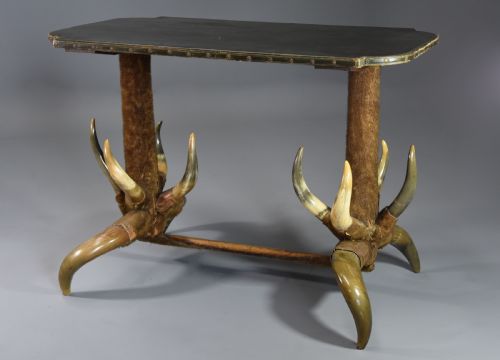
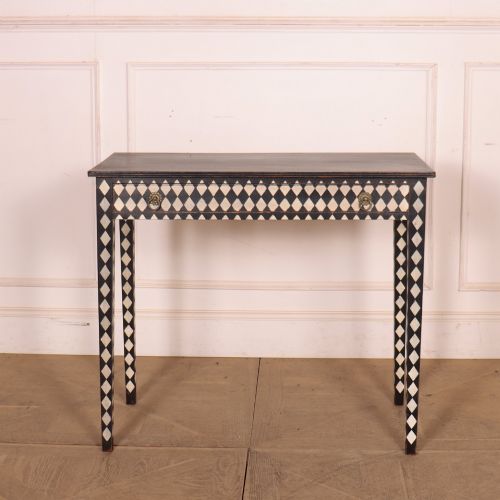
Makers and workshops across Britain, France, Italy, and Germany approached these tables with diverse materials, incorporating painted finishes, inlaid marquetry, and specialised surfaces like specimen marble and cow horn. Each iteration reflects the aesthetic priorities of its period, from austere geometric lines to exuberant carved decoration.
How they were made
Cabinet makers utilised structural timbers like oak, walnut, and mahogany to build the carcasses and legs of these tables, frequently applying burr veneers or satinwood to create patterned surfaces. Giltwood and painted finishes were then layered over carved softwood or hardwood frames to achieve decorative richness.
Marble tops, whether white, grey, or specimen varieties, were cut and polished to fit precisely onto the wooden bases, often secured with brackets or mortar. Hand carving brought depth to the friezes and legs, employing techniques honed across European workshops during the nineteenth and early twentieth centuries.
Decorative Console Table Retail Price Guide 2026
Typical asking prices for decorative console table among the pieces listed under this phrase on Sellingantiques today, from the lower quarter to the upper quarter. They describe what is for sale here now, not the wider market.
An unusual German table utilises real cow horn, proving that Victorian makers sought decorative novelty in unexpected natural materials.
What varies in quality
The distinction between standard and exceptional pieces rests in the crispness of the hand carving and the selection of materials, such as figured burr walnut or flawless marble slabs. Master carvers produced deep, undercut foliage and balanced proportions that elevate simple furniture into sculptural art.
Originality of surface finish remains paramount, distinguishing tables that retain their historic paint, gilding, or patinated wood from those altered or stripped over time. Structural integrity in the joints and the precise fit of marble tops further divide ordinary production from workshop masterpieces.
Maple and Co
The Decorative Console Table Glossary
- Console table
- A table designed to stand against a wall, traditionally supported by brackets or scroll legs rather than four standard vertical posts.
- Giltwood
- Timber that has been coated with a thin layer of gold leaf or gilt powder over a prepared gesso ground, common in ornate European furniture.
- Specimen marble
- A decorative surface composed of various coloured marbles cut and fitted together in geometric or pictorial patterns.
- Demi-lune
- A half-moon shape characteristic of tables designed to sit flush against a wall in narrow spaces.
- Marquetry
- The art of applying pieces of veneer to a structure to form decorative patterns and pictures, utilising diverse wood species.
Decorative Console Table: Frequently Asked Questions
Where should I place a decorative console table?
These tables find their natural home in entrance halls, narrow corridors, or beneath large mirrors in reception rooms where floor space is limited. Their shallow depth allows them to anchor a wall without obstructing movement through the interior.
Pairing a console with a matching mirror or lighting creates a deliberate focal point that greets visitors upon entry. The flat surface accommodates small decorative objects, lamps, or correspondence trays.
How do I care for marble and wood surfaces?
Marble tops require protection from acidic substances such as wine, citrus, and vinegar, which can etch the polished stone surface over time. Regular dusting with a soft cloth and immediate blotting of spills will preserve the finish.
Wooden frames benefit from occasional application of appropriate wax to nourish the grain and protect against excessive dryness. Avoid placing these tables in direct sunlight or near heat sources to prevent timber splitting.
How can I tell the period of a console table?
Dating relies on examining the construction methods, tool marks on the underside, and stylistic motifs that align with specific eras like the Victorian or Neoclassical periods. Wood shrinkage, screw types, and secondary timbers used in the internal framing offer clues to age.
Stylistic cues such as the asymmetry of French Rococo or the strict symmetry of Adam style pieces help narrow down the decade of manufacture. Comparing the joinery with known period examples confirms authenticity.
Were these tables always fixed to the wall?
Many early console tables relied on wall fixings or brackets for stability because their ornate front legs were purely decorative and unable to bear weight independently. Over time, cabinet makers shifted towards free-standing designs with four or more legs.
Checking the rear structure and legs reveals whether a table requires wall attachment or stands securely on its own. Understanding this helps determine the correct placement within a modern room.