




Decorative Chinoiserie Lamp Light
These decorative chinoiserie lamp light pieces combine orientalist motifs with period lighting forms to illuminate traditional interiors.
Decorative Chinoiserie Lamp Light
A decorative chinoiserie lamp light brings painted porcelain, lacquered wood, and gilt bronze into domestic spaces as functional illumination. Buyers searching for these items encounter converted vases, tea canisters, and standard lamps dating from the Regency era through to the mid twentieth century.
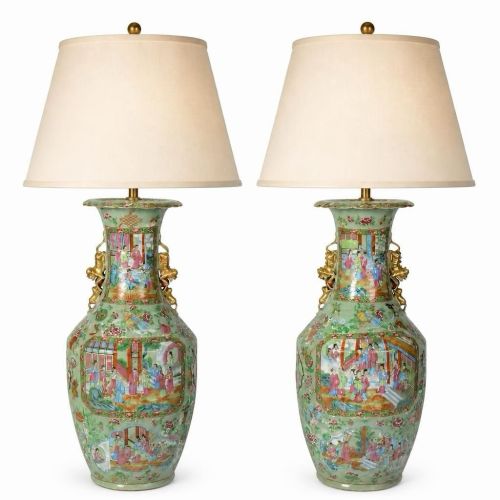
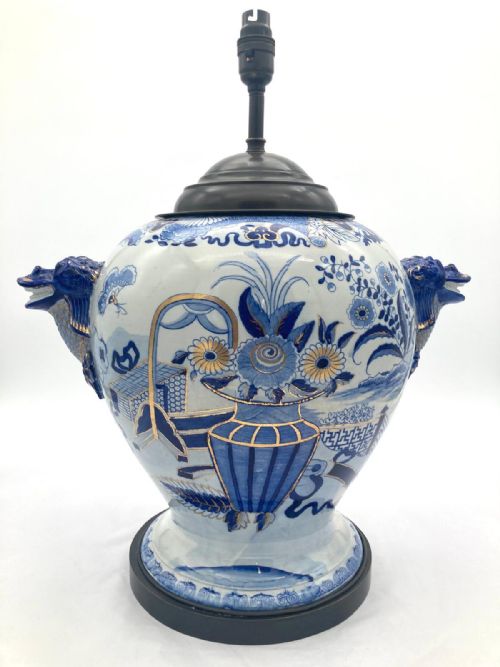
The selection on this page centres on table lamps and floor lamps originating from nineteenth century Chinese and Japanese workshops, alongside European interpretations in French Rococo Revival and Regency styles. Converted porcelain vases form a large part of the available selection, often wired for modern use while retaining their original hand painted surfaces.
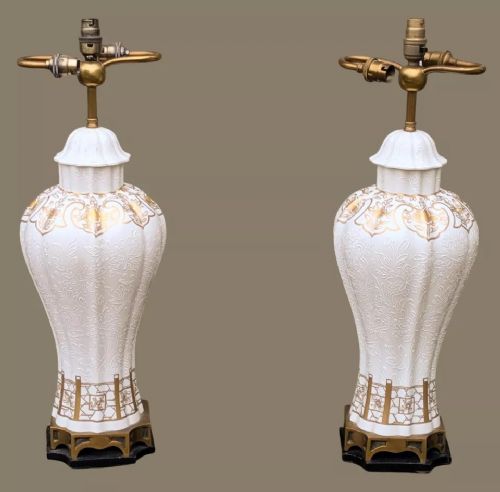
Period examples range from nineteenth century export porcelain to nineteen thirties standard lamps, demonstrating how Far Eastern containers were adapted by European makers. Buyers find both matched pairs and single floor lamps, each utilising traditional motifs and decorative finishes.
How they were made
Manufacturing methods rely on the combination of imported oriental ceramics and metalwork with local European mounting techniques. Craftsmen utilised brass, gilt bronze, and lacquered wood to mount porcelain vases and tea canisters into stable lighting fixtures.
Surface decoration involves hand painted enamels on porcelain, lacquered wood finishes, and fabric shades. Potters and painters applied famille rose, famille verte, and Imari palettes before metalworkers added bases and fittings for electrical conversion.
Old tea canisters find a second career illuminating reading nooks.
What varies in quality
Quality rests upon the preservation of the original hand painted enamel work and the integration of the metal mounts. Finer pieces display crisp detail in the porcelain painting and solid construction in the gilt bronze or brass fittings.
The distinction between tiers also involves the harmony of the conversion, where the original vase or canister retains its structural integrity without intrusive drilling. Superior examples maintain balanced proportions between the ceramic body and the overall height of the standard or table lamp.
Hicks and Meigh
The Decorative Chinoiserie Lamp Light Glossary
- Chinoiserie
- European artistic style reflecting Chinese and East Asian artistic influences, prominent in furniture, ceramics, and decorative objects. This aesthetic guided the creation of European painted lamps and influenced domestic interior design.
- Famille Rose
- A palette of Chinese porcelain enamels dominated by opaque pink or rose colours, introduced during the Qing dynasty. These painted scenes frequently appear on export vases subsequently converted into table lamps.
- Famille Verte
- A classification of Chinese porcelain defined by a dominant green enamel palette, used extensively during the Qing period. Pieces decorated in this style form a distinct category within the available lighting.
- Imari
- Japanese porcelain decorated in underglaze blue, iron red, and gilt, originating from the town of Arita. These distinctive patterns appear on eighteenth century vessels adapted for modern lighting.
- Gilt Bronze
- Copper alloy treated with a gold or mercury gilt finish, also known as ormolu, utilised for mounts and bases. This material provides decorative structure and weight to European porcelain lamp conversions.
Decorative Chinoiserie Lamp Light: Frequently Asked Questions
What is a decorative chinoiserie lamp light?
These items are functional lighting fixtures created by mounting Asian porcelain vases, tea canisters, or lacquered wood onto brass and gilt bronze bases.
They bring historical craft traditions into living spaces through hand painted ceramic bodies and decorative metalwork.
How do I date a lamp light?
Dating relies on identifying the period of the ceramic body, such as nineteenth century export porcelain or eighteenth century Japanese Arita ware, alongside the style of the metal mounts.
European conversion techniques and wiring styles also provide clues to whether the piece dates from the Regency era, Victorian period, or the nineteen thirties.
Were these originally made as lamps?
Most ceramic bodies used for these lights started as decorative vases or tea canisters rather than lighting apparatus. Craftsmen later converted them by adding electrical fittings and stable bases to suit domestic interiors.
How do I style these lamps?
These pieces function as focal points on side tables, cabinets, or as floor standing standard lamps in traditional or eclectic rooms. Their painted enamel surfaces and gilt bronze mounts complement period furnishings and neutral backdrops.