
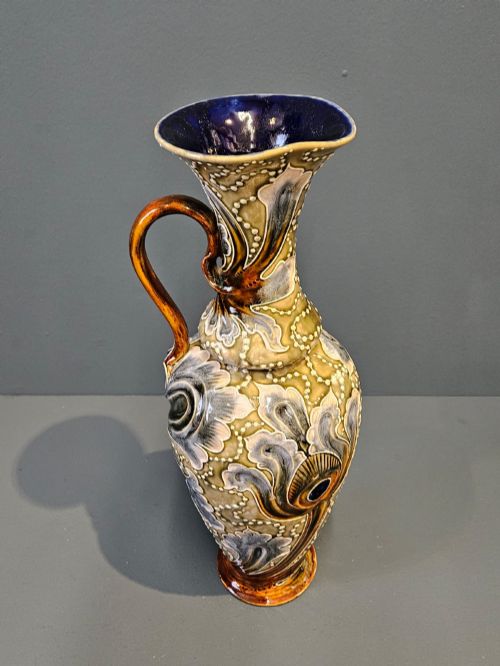
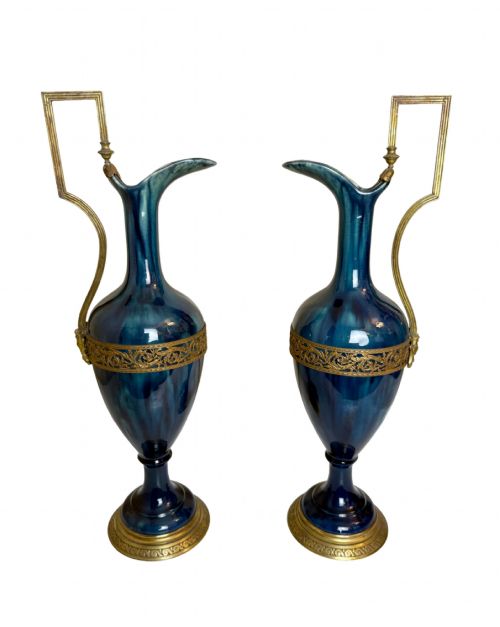
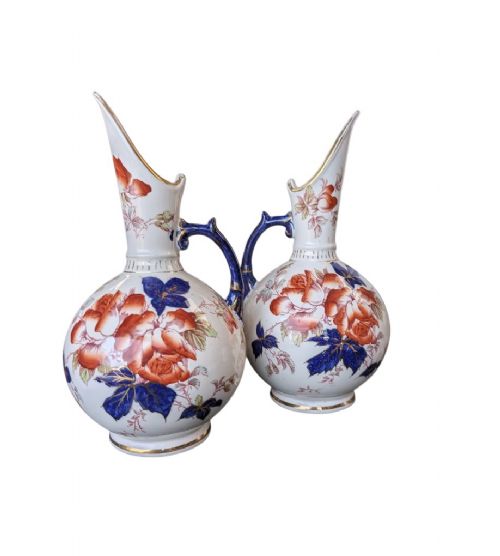


Decorative Ceramic Ewer
A decorative ceramic ewer brings sculptural form and fluid line to a mantelpiece, offering a classic vessel shape shaped by nineteenth-century tastes.
Decorative Ceramic Ewer
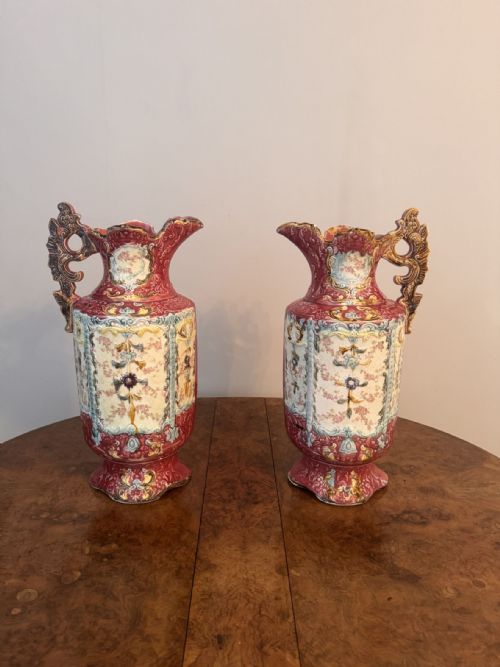
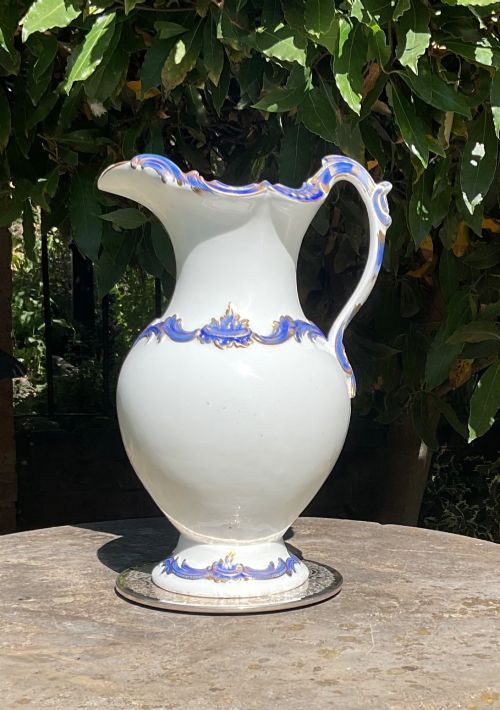
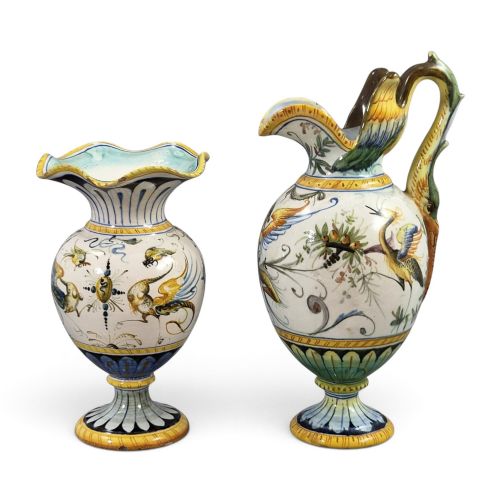
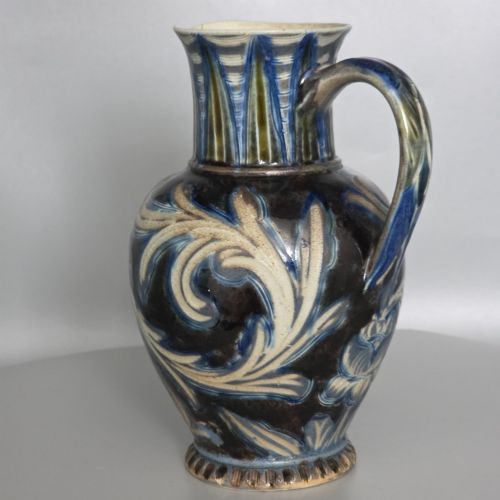
A decorative ceramic ewer takes the traditional form of a water-carrying pitcher and transforms it into an ornamental display piece. When you search for a decorative ceramic ewer, you encounter pouring vessels that range from slender nineteenth-century porcelain jugs to robust Victorian earthenware shapes.
The selections on this page span the Victorian, Edwardian and early twentieth-century periods, capturing diverse revivalist aesthetics alongside floral and reticulated designs. Formats vary from grand pairs intended for pedestals to individual handled jugs decorated with intricate gilding and enamel.
Originating largely from British potteries alongside continental European kilns, these objects reflect decades of shifting ceramic artistry. You meet pieces designed purely for visual impact, often grouped alongside vases and matching basins.
Materials and Techniques
Potters shaped these vessels using porcelain, earthenware and ceramic bodies, often applying delicate glazes to seal the surface. Skilled hands built up intricate details through relief moulding, incised patterns and applied flower encrustations.
Surface decoration relied heavily on hand painting, enamel work and applied gold leaf or gilding to accentuate handles and rims. Many pieces received multiple firings to set transfer prints, gilt highlights and specialised coloured glazes.
Listings feature works from the Victorian, Edwardian and early twentieth-century periods, utilising porcelain and earthenware.
Judging Quality
Quality rests in the crispness of the moulding and the precision of the hand-painted details across the body and handle. Superior examples demonstrate expert control during the gilding process, with clean lines and securely bonded gold leaf.
The nuance of the glaze and the complexity of the decorative scheme distinguish standard production items from masterworks. Balance in the vessel's proportions and the finesse of reticulated or raised gold decor set the finest pieces apart.
Doulton Lambeth·Royal Worcester·Royal Crown Derby·Cantagalli Florence·Minton·Coalport
The Decorative Ceramic Ewer Glossary
- Ewer
- A large jug or pitcher with a wide spout and a curved handle, traditionally used for holding water but rendered here for decorative display.
- Gilding
- The application of gold leaf or gold dust to the ceramic surface to highlight handles, rims and painted panels.
- Reticulated
- Describes pottery featuring an openwork pattern created by piercing the clay body before firing to form a delicate lattice.
- Majolica
- A type of earthenware coated with an opaque tin glaze and painted with brightly coloured metal oxide pigments.
- Blush Ivory
- A specialised cream-coloured ceramic ground developed by Victorian potteries, often decorated with soft floral tints.
Decorative Ceramic Ewer: Frequently Asked Questions
What is a decorative ceramic ewer?
A decorative ceramic ewer is an ornamental pitcher designed for display rather than functional pouring. These vessels feature elaborate handles, spouts and artistic glazes.
Originating primarily in the nineteenth and early twentieth centuries, they served as striking focal points on sideboards, mantels and pedestals within period homes.
How were these ceramic ewers used?
While derived from utilitarian water jugs, decorative ewers functioned principally as ornamental art objects. Wealthy Victorian households displayed them in reception rooms to showcase refined taste and artistic patronage.
Some larger examples accompanied matching basins on washstands, though many surviving pieces were created purely to adorn drawing rooms.
How do I identify a Victorian ewer?
Victorian ewers often display distinct revivalist styles, including Rococo Revival, Renaissance Revival and Aesthetic Movement motifs. Look for robust earthenware bodies, rich gilding and characteristic nineteenth-century forms.
Maker marks, registration numbers and impressed factory stamps on the base provide definitive clues to the period and origin.
Where should I place an ewer?
An ewer requires a sturdy surface where its height and sculptural handle can be fully appreciated. Placed upon a mantelpiece, a side table or a dedicated pedestal, the piece draws the eye through its silhouette.
Ensure the location protects delicate elements like hand-painted enamel or raised gold leaf from accidental knocks.