

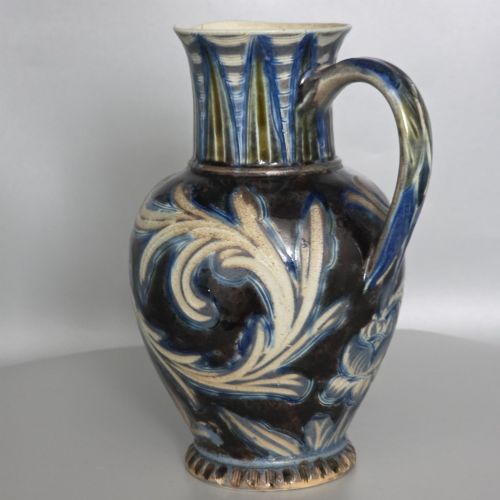
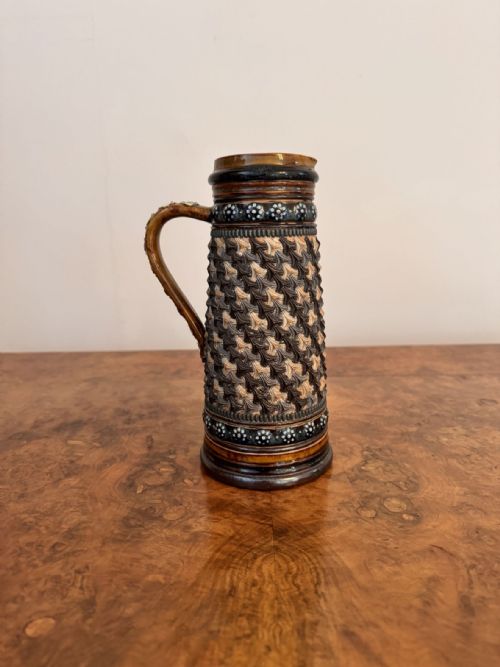



Victorian Art Pottery Pitcher
These robust victorian art pottery pitcher examples combine spirited late-nineteenth-century studio experimentation with utilitarian forms.
Victorian Art Pottery Pitcher
A victorian art pottery pitcher brings together functional vessels and decorative ewers produced primarily during the nineteenth century. The examples on this page span several key aesthetic movements, including Arts and Crafts, Art Nouveau, and Victorian Folk Art.
Most pieces you encounter here emerge from prominent studio potteries and major manufacturers of the period, taking forms such as water jugs, ewers, and matching jug and bowl sets.
Dating ranges from the 1870s through to 1900, capturing a transformative era in ceramic design where traditional earthenware and stoneware met avant-garde surface decoration.
Materials and construction methods
Potters relied heavily on durable stoneware and earthenware bodies, frequently finished with rich salt glaze or specialised decorative glazes that give each surface distinct texture and depth.
Makers utilised techniques such as incised decoration, hand-painting, and applied motifs to shape clay into complex vessels, ranging from robust utilitarian water jugs to delicate studio art pieces.
Victorian Art Pottery Pitcher Retail Price Guide 2026
Typical asking prices for victorian art pottery pitcher among the pieces listed under this phrase on Sellingantiques today, from the lower quarter to the upper quarter. They describe what is for sale here now, not the wider market.
Some nineteenth-century potters turned everyday sporting scenes and cheerful barge work into enduring ceramic art.
Distinguishing quality across pieces
The distinction between standard production items and superior examples lies in the ambition of the design and the precision of the studio execution. Pieces associated with named makers or specific designers tend to exhibit sharper incising, more balanced proportions, and more confident glaze application.
Artistry in surface decoration, whether through flowing Art Nouveau plant motifs or crisp Arts and Crafts lettering, elevates a vessel from simple utility to a notable work of ceramic art.
Doulton Lambeth·Sir Edmund Elton·Emma Shute·Minton
The Victorian Art Pottery Pitcher Glossary
- Stoneware
- A robust, vitrified pottery fired at high temperatures until non-porous. It provides a durable body suitable for heavy domestic jugs and pitchers.
- Salt glaze
- A glassy, slightly textured finish achieved by throwing common salt into the kiln during high-temperature firing. This creates a characteristic orange-peel texture on stoneware surfaces.
- Earthenware
- Porous pottery fired at lower temperatures than stoneware, requiring a glaze to hold liquids. It forms the base of many folk art and slip-decorated jugs.
- Ewer
- A large jug or pitcher with a wide spout and curved handle, traditionally used for holding water rather than serving drinks.
- Incised decoration
- A technique where patterns or lettering are carved directly into the damp clay body before firing. This method adds tactile depth beneath the glaze.
Victorian Art Pottery Pitcher: Frequently Asked Questions
How do I date a Victorian ceramic jug?
Dating relies on combining stylistic clues, such as the flowing curves of Art Nouveau or the robust geometry of Arts and Crafts, with any stamped factory marks or artist signatures found on the base.
Material evidence also helps narrow the timeline, as certain salt-glaze techniques and glaze formulations gained popularity primarily during the 1880s and 1890s.
Were these pitchers used daily?
Many of these vessels served practical roles in nineteenth-century households, functioning as water ewers, washstand accessories, or table pitchers.
Some highly decorative studio pieces, however, were created purely for display and cabinet collections rather than heavy domestic labour.
How should I display my art pottery pitcher?
These ceramic pieces require stable, flat surfaces away from direct, harsh sunlight to protect fragile glaze finishes over time. Placing them where natural light can catch surface textures and salt glazes enhances their visual depth.