
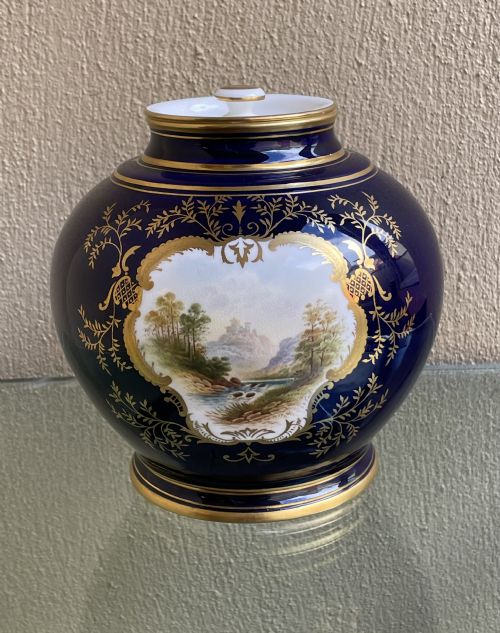


Decorative Ceramic Display Vase
A decorative ceramic display vase brings colour and hand-finished detail to a room, drawing the eye with rich glazes and painted panels.
Decorative Ceramic Display Vase
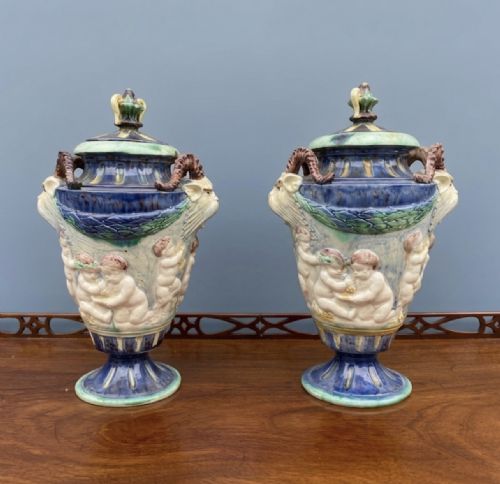
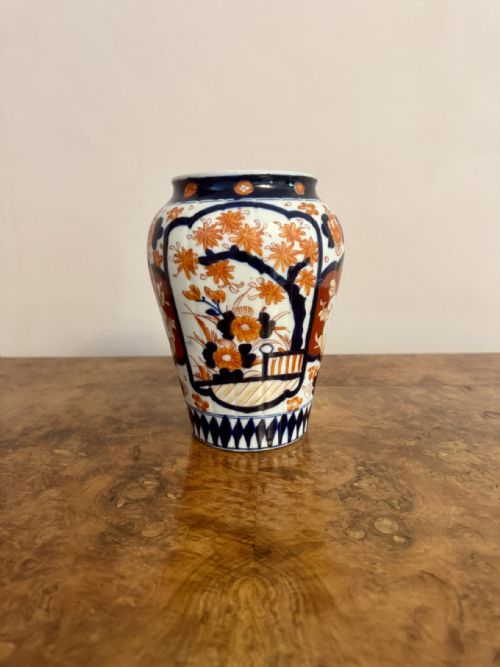
When you search for a decorative ceramic display vase, you find ornamental vessels intended purely for visual impact rather than holding cut flowers. These pieces range from Victorian majolica urns and Edwardian earthenware jugs to Japanese Imari and Satsuma vessels made for export.
The versions you are most likely to meet on this page span the late nineteenth century through to the art deco period, taking the form of moon flasks, covered urns, chargers, and tall handled vases.
Makers across England, Europe, and Japan produced these ceramics using porcelain, earthenware, and bone china, decorated with hand painting, gilding, and raised enamel work.
How they were made
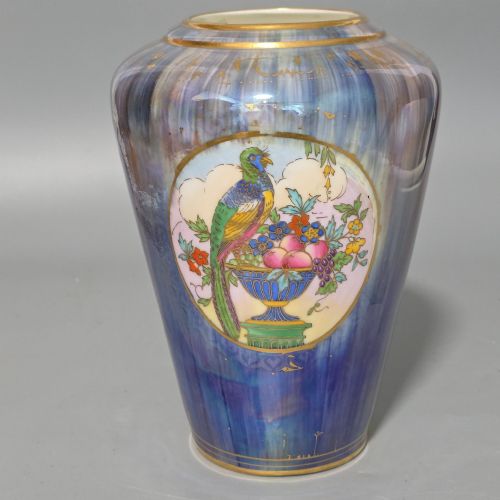
Potters shaped these vessels using earthenware or porcelain bodies, often applying specialist glazes such as lustres, enamel, and lacquer over black paint to achieve deep surface textures.
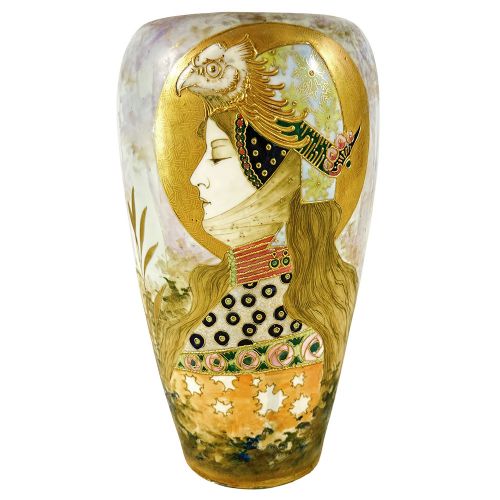
Decoration relied heavily on skilled hand painting and gilding, with artists adding gold leaf, pate-sur-pate details, and intricate moriage relief work before firing the pieces in kilns.
Parrots, storks, and samurai all share shelf space here.
What varies in quality
The skill of the hand painting and the crispness of the moulded relief work separate standard production pieces from exhibition-quality items.
The application of heavy gilt, enamel, and specialised glazes dictates the refinement of the surface, alongside the prestige of the factory or studio of origin.
Nicholas Kannhauser for Reissner, Stellmacher and Kessel·Minton·Coalport·Hododa·Kinkozan·Charlotte Rhead·Wedgewood·Royal Worcester
The Decorative Ceramic Display Vase Glossary
- Imari
- A style of Japanese export porcelain decorated in underglaze blue and iron red, typically with supplementary gold and black.
- Majolica
- A type of earthenware coated with an opaque tin-lead glaze and painted with bright metal oxide colours.
- Moriage
- A Japanese pottery technique using raised clay dots and lines to create textured decorative patterns.
- Pate-sur-pate
- A ceramic decoration method where successive layers of liquid clay slip are built up to form a cameo-like relief design.
Decorative Ceramic Display Vase: Frequently Asked Questions
Where should I place a display vase?
These large ornamental pieces suit prominent positions on heavy wooden sideboards, mantelpieces, or dedicated pedestals where their painted panels and gilded surfaces can catch the light.
Because many measure fifty centimetres or more in height, they require stable surfaces away from high-traffic household areas.
How do I date a Satsuma vase?
Satsuma earthenware pieces from the Meiji period often bear artist signatures or studio mon symbols, such as the Shimazu family crest seen on exhibition-quality pieces.
Stylistic shifts from dense nineteenth-century landscapes to later twentieth-century forms help narrow down the production decade.
What is the difference between Imari and Satsuma?
Imari pieces are hard-paste porcelains featuring characteristic cobalt blue and iron red palettes with gilt highlights, originating mainly from Arita.
Satsuma pieces use a distinct cream-coloured earthenware body covered in a finely crackle-glazed surface, decorated with elaborate enamel and gilt scenes.