
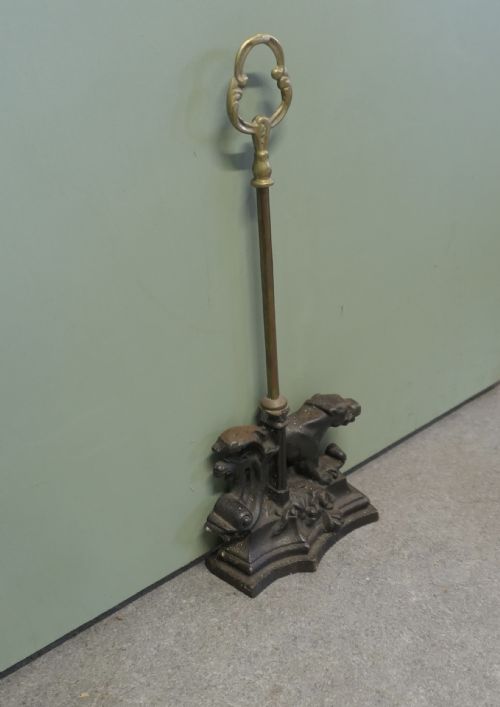


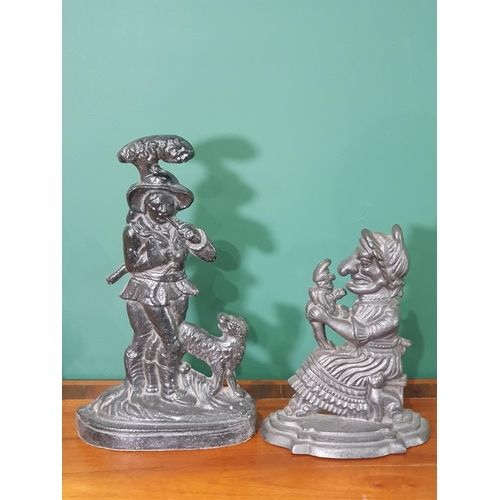


Decorative Cast Iron Doorstop
A decorative cast iron doorstop keeps a heavy timber door firmly ajar while adding character to a hallway.
Decorative Cast Iron Doorstop
A decorative cast iron doorstop is a functional item designed to hold heavy doors open using the substantial weight of metal. These pieces serve as practical household accessories and sculptural ornaments within domestic interiors.
Buyers searching for a decorative cast iron doorstop will most frequently encounter Victorian examples shaped as animals, historical figures, or traditional characters. Common nineteenth-century subjects include dogs, dolphins, lions, and figures such as Mr Punch.
The inventory ranges from ornate Victorian Gothic Revival door stops to late Victorian and Edwardian household keepers. Alongside traditional door porters, related cast iron forms such as boot scrapers occasionally appear in the selection.
Materials and manufacture
These items are produced primarily from robust cast iron, poured into moulds to create heavy sculptural forms and detailed relief patterns. The material provides the necessary mass to hold doors securely in place.
Nineteenth-century households relied on iron Mr Punch figures to keep parlour doors from slamming shut during windy afternoons.
Distinctions in quality
Quality in these items rests upon the crispness of the casting detail and the artistic fidelity of the subject matter. Finer Victorian examples display sharp relief work on figures and animals rather than soft or blurred edges from worn moulds.
The survival of original painted surfaces significantly elevates a piece, as does a heavier, more substantial mass. Superior items demonstrate careful proportion and balance designed for daily utility in busy hallways.
The Decorative Cast Iron Doorstop Glossary
- Door porter
- A heavy weight with a handle at the top designed to be carried and placed against a door. It is synonymous with a doorstop.
- Cast iron
- An iron-carbon alloy poured into moulds to create rigid, heavy objects. It forms the primary material for these nineteenth-century pieces.
- Boot scraper
- A stationary iron implement fixed near an entrance to remove mud from footwear. It shares manufacturing techniques with door stops.
- Gothic Revival
- An architectural and decorative style popular during the Victorian era. It influences the ornamentation and aesthetic of certain heavier iron pieces.
- Keeper
- A traditional term for a heavy domestic object that keeps a door positioned open. Dealers frequently use this alongside doorstop.
Decorative Cast Iron Doorstop: Frequently Asked Questions
How heavy is a typical door stop?
These pieces possess substantial mass derived from solid cast iron to ensure they hold heavy internal doors effectively. Their weight varies depending on the size and sculptural form.
Larger figures and extended door porters are exceptionally heavy to prevent movement in draughty hallways.
Where should I place a doorstop?
Position the piece directly on the floor near the edge of the door swing to catch and hold the panel securely. They suit hallways, studies, and principal reception rooms.
Keep them clear of high-traffic walking paths to avoid accidental knocks against the heavy iron.
How do I care for cast iron?
Dust the surface regularly with a dry cloth and avoid using harsh liquid cleaners that might damage painted finishes. Maintaining a dry indoor environment prevents surface corrosion.
Apply a light wax if appropriate to protect historic paintwork and preserve the metal.