
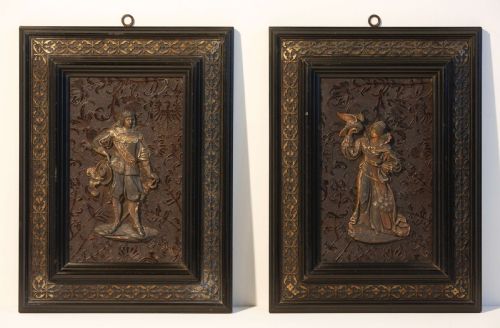


Decorative Bronze Figure Pair
A decorative bronze figure pair brings symmetry and weight to a mantel or console, offering classical presence or exotic detail.
Decorative Bronze Figure Pair
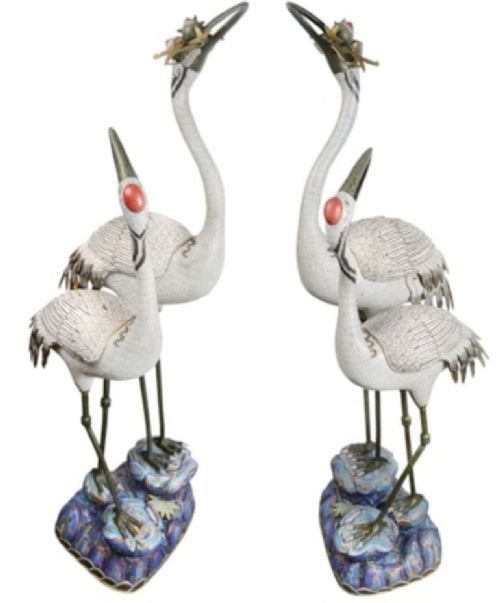
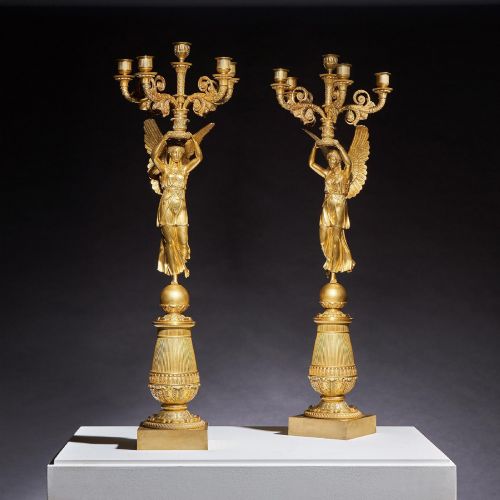
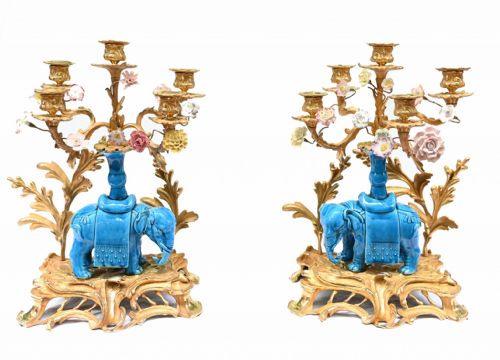
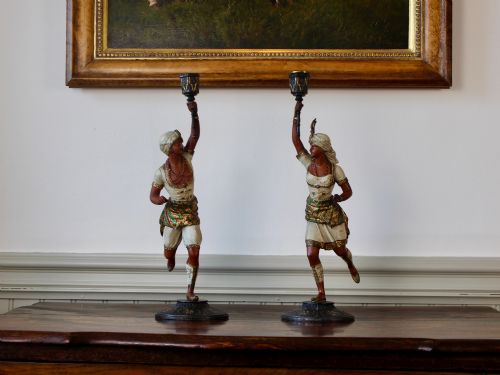
When searching for a decorative bronze figure pair, collectors encounter matched sets originating primarily from the nineteenth and early twentieth centuries. These objects take many forms, including candelabra, doorstops, bookends, and standalone sculptures depicting human figures, animals, and mythological subjects.
The aesthetic vocabulary spans multiple traditions, incorporating Victorian, French Empire, Chinese Imperial, and Orientalist styles. The most frequent discoveries are French and Continental castings, often designed to function in pairs as garnitures or balanced mantel ornaments.
How they were made
Surface treatment defines the final appearance, achieved through cold painting, fire-gilding, or chemical patination to produce varied tones on the metal. Many examples incorporate secondary materials such as marble bases, ebonised wood plinths, or porcelain elements to elevate the design.
Assyrian royalty and Venetian sea serpents occasionally stand guard over your mantelpiece.
What varies in quality
The integrity of the patina or original gilding significantly influences the character of the piece, as does the selection of base materials like carved marble or exotic woods. Matched pairs that retain their original surface treatments without excessive wear command greater attention from discerning collectors.
Pierre Philippe Thomire·Fabergé·Albert Ernest Carrier-Belleuse
The Decorative Bronze Figure Pair Glossary
- Spelter
- A zinc alloy frequently utilised as a less costly alternative to bronze during the nineteenth and twentieth centuries. It accepts paints and patinas readily to simulate heavier metals.
- Patinated bronze
- Metal treated with chemical solutions to produce a specific surface colour and finish, ranging from deep brown to verdigris. This layer protects the underlying alloy and adds visual depth.
- Gilt bronze
- Bronze that has been coated with a thin layer of gold or gold amalgam, often through fire-gilding methods. This technique yields a brilliant, durable golden surface.
- Cloisonné
- An enamelling technique where metal wire is soldered to a metal base to create compartments filled with enamel paste. These sections are then fired and polished smooth.
- Garniture
- A set of ornamental objects designed to be displayed together on a mantelpiece or sideboard, typically comprising a central clock flanked by matching candelabra or vases.
Decorative Bronze Figure Pair: Frequently Asked Questions
How do I clean bronze figures safely?
Dust the surface regularly with a soft, dry brush to prevent the accumulation of dirt within intricate crevices.
Avoid using water, abrasive cloths, or chemical polishes, as these substances can strip the original patina and damage the metal finish.
How do I distinguish bronze from spelter?
Bronze is heavier, colder to the touch, and exhibits a resonant ring when lightly tapped, whereas spelter is softer and more brittle.
Examine the underside or areas of wear for colour; spelter reveals a greyish-white metal beneath the surface finish, while bronze displays a warm golden-brown hue.
Where should I place a figure pair?
These matched sets function effectively as balanced focal points on mantelpieces, sideboards, or console tables where symmetry enhances the room.
Keep them away from direct sunlight and excessive moisture to preserve the stability of marble bases and the integrity of painted or patinated surfaces.