
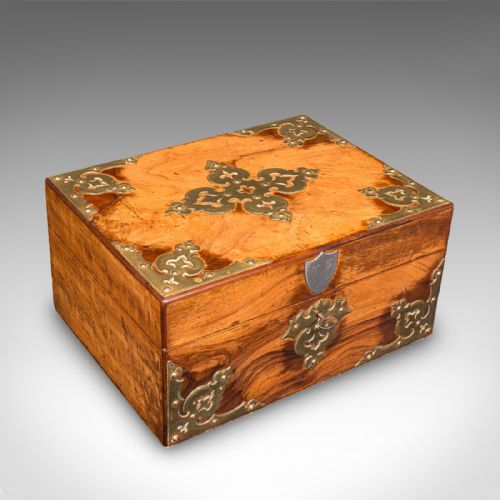


Decorative Brass Wooden Casket
These decorative brass wooden caskets combine warm timber with gleaming metalwork to keep your most prized possessions secure.
Decorative Brass Wooden Casket
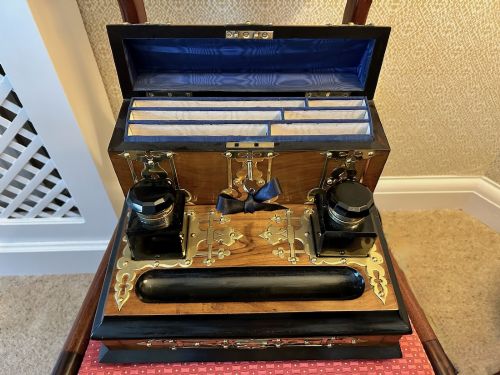
A decorative brass wooden casket brings together sturdy timber and metal mounts to form a functional container for personal valuables, writing implements, or sewing gear. When searching for a decorative brass wooden casket, you encounter nineteenth-century pieces ranging from compact tea caddies to spacious stationery boxes.
The specimens seen here span the Victorian era, Regency period, and Arts and Crafts movement, utilising rich woods like walnut, rosewood, and coromandel. These containers often feature internal compartments lined with silk or glass to organise specific items.
Makers shaped these boxes into various forms, including domed tops, sarcophagus shapes, and flat-lidded cases. Each surviving example demonstrates the functional needs of past households alongside ornamental ambition.
How they were made
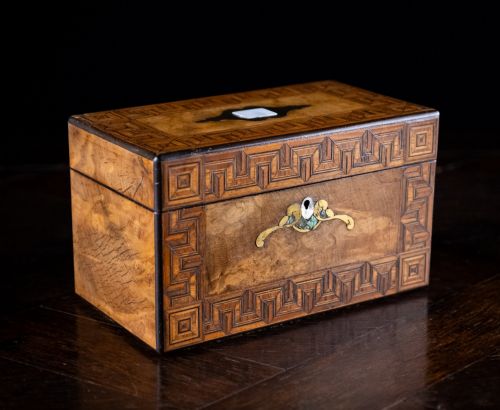
Craftsmen built the foundations of these caskets using solid woods and decorative veneers such as burr walnut, amboyna, and fruitwood. Carpenters applied intricate parquetry and penwork to the wooden surfaces before integrating metal components.
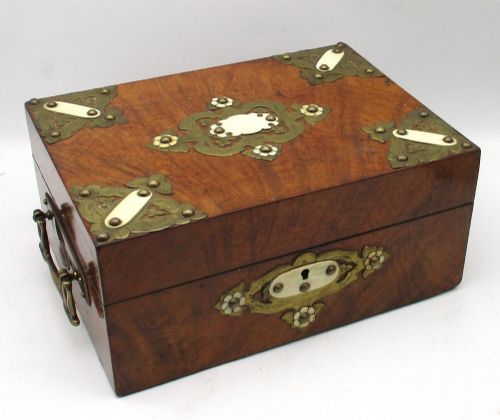
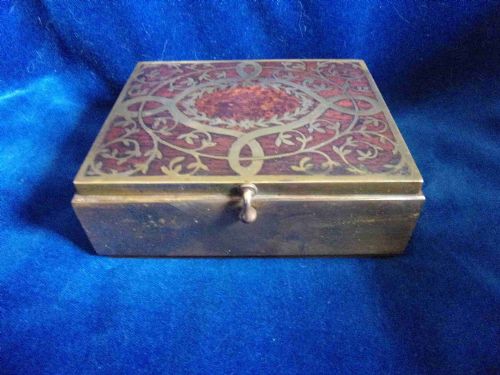
Metalworkers fitted brass straps, corners, and mounts to reinforce the structural joints and protect the edges of the timber box. Inlays of mother of pearl, malachite, and pietra dura were then carefully set into the wood to create contrasting visual patterns.
Some nineteenth-century boxes include secret drawers requiring a sequence of hidden wooden latches to open.
What varies in quality
The grade of timber and the complexity of the veneer selection set individual pieces apart, with figured burr walnut and coromandel representing the more ambitious tier of production. Dense grain patterns and carefully matched wooden panels indicate a higher level of cabinetmaking skill.
The refinement of the brass mounts and the precision of the inlay work dictate the overall sophistication of the casket. Hand-engraved metal details and complete internal fittings demonstrate the investment of time by the original maker.
ERHARD AND SOHNE·C.G. Hope Hastings
The Decorative Brass Wooden Casket Glossary
- Parquetry
- Geometric wood-mosaic work used for ornamenting floors and furniture surfaces. Small triangular or square pieces of timber are arranged to form repeating patterns.
- Pietra dura
- An artistic technique using cut and fitted polished coloured stones to create images. This method appears on luxury stationary boxes and desk accessories.
- Sarcophagus
- A stone or wooden container shaped like a coffin with a sloping lid. Nineteenth-century sewing boxes and tea caddies often adopted this classical silhouette.
- Penwork
- The application of ink designs directly onto a wooden surface to simulate marquetry or engraving. This delicate technique creates fine monochrome illustrations on the exterior of the box.
Decorative Brass Wooden Casket: Frequently Asked Questions
What were decorative brass wooden caskets used for?
These boxes served multiple domestic functions, acting as secure containers for letters, tea, sewing equipment, or jewellery.
Owners kept them on tables and desks in parlours and studies to maintain order among small personal effects.
How do I identify a Victorian casket?
Victorian examples often display heavy brass mounts, coromandel or walnut veneers, and elaborate internal silk or velvet linings.
Design motifs from this period frequently draw upon Gothic Revival or general nineteenth-century eclectic styles.
Where should I place a wooden casket at home?
Position your box on a stable chest of drawers, a side table, or a desk away from direct sunlight and sudden temperature changes.
Keep the timber conditioned and protect the surface from abrasive objects placed on top of the lid.
How do Regency caskets differ from later ones?
Regency pieces often feature rosewood construction with restrained brass inlay and classical sarcophagus proportions.
They tend to pre-date the heavier ornamentation associated with the later nineteenth-century Victorian output.