

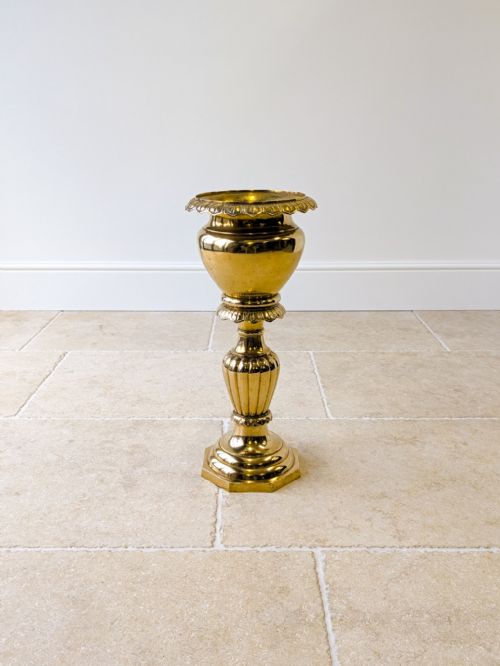

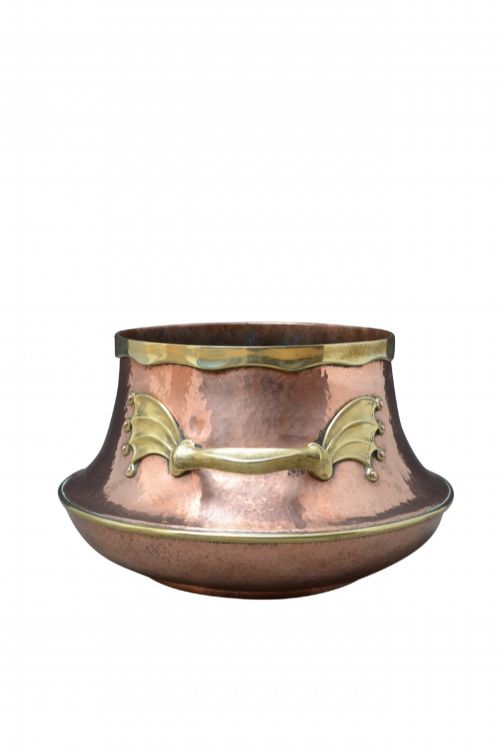
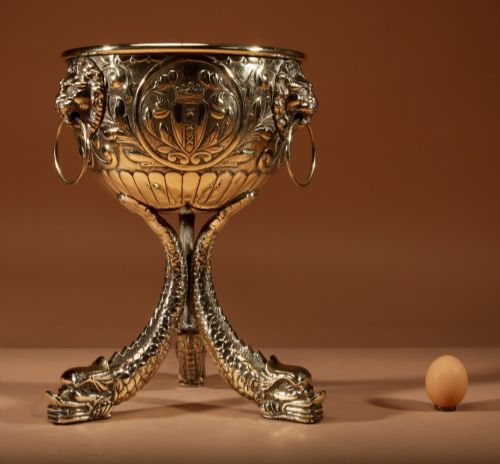


Decorative Brass Planter Holder
A decorative brass planter holder brings warmth and metallic texture to an interior, housing greenery or logs with undeniable presence.
Decorative Brass Planter Holder
When you search for a decorative brass planter holder, you are looking at metal vessels designed to contain potted plants, jardinières, and fireside fuel such as logs or coal. The pieces available here span several distinct periods, including Victorian, Regency, and the early twentieth century, alongside specific expressions like Arts and Crafts and Art Nouveau.
You are most likely to encounter cylindrical or footed brass vessels on this page, often accompanied by copper, oak, or mahogany elements. Forms range from simple nineteenth-century cylinders to embossed dinanderie vessels, pressed brass bodies on stands, and larger coopered timber containers banded in metal.
The styles recorded in these listings reflect both British and continental workshops, encompassing English Country vernacular and nineteenth-century Dutch traditions. Whether intended for botanical displays or fireside storage, these containers combine robust utility with ornamental surface work.
Materials and construction methods
Makers utilised sheet brass, copper, and tin, often combining them with solid timber bodies of oak or mahogany. Metal elements were frequently worked by hand through hammering, pressing, embossing, or casting, creating textured surfaces that catch the light.
Timber examples employ traditional coopered construction, binding wooden staves together with secure metal bands to form sturdy water-resistant or fuel-holding vessels. Pierced work, applied castings, and riveted joints further distinguish the fabrication of these planters and jardinières.
Decorative Brass Planter Holder Retail Price Guide 2026
Typical asking prices for decorative brass planter holder among the pieces listed under this phrase on Sellingantiques today, from the lower quarter to the upper quarter. They describe what is for sale here now, not the wider market.
Listings feature pieces spanning the Victorian, Regency, and Edwardian periods, utilising brass, copper, oak, and mahogany.
Distinguishing quality in metalwork and timber
The calibre of a decorative brass planter holder lies in the depth and crispness of its surface decoration, whether through hand-hammered texturing or cleanly struck embossing. Thicker gauges of brass and copper provide structural integrity that resists denting and maintains its shape over generations of use.
In timber and metal hybrid pieces, the precision of the cooperage and the integration of the metal bands dictate the overall standard. Superior examples exhibit harmonious proportions between the decorative metalwork and the structural body, ensuring both visual weight and lasting durability.
The Decorative Brass Planter Holder Glossary
- Jardiniere
- An ornamental pot or stand for holding plants or flowers, derived from the French word for gardener. These vessels are typically manufactured from brass, copper, or ceramics.
- Dinanderie
- A medieval term revived to describe decorative objects made of brass, copper, or bronze, particularly those featuring embossed or beaten designs. Originating from the Belgian town of Dinant, the technique creates rich surface textures.
- Coopered
- Constructed from wooden staves fitted together and bound by metal hoops, traditionally used for barrels and tubs. This method allows timber planters and log bins to withstand damp contents.
- Pierced
- Ornamented with holes or cut-out patterns that pierce right through the metal plate. This technique lightens the visual weight of the vessel and creates delicate shadow patterns.
Decorative Brass Planter Holder: Frequently Asked Questions
What is a jardiniere stand?
A jardiniere stand is a raised piece of furniture or a fitted metal frame designed to elevate a plant pot or planter above floor level. These stands display botanical arrangements more prominently within a room.
They appear in various heights and materials, often matching the decorative brass or timber construction of the vessel they support.
How were brass planters used historically?
Historically, these vessels served primarily as indoor planters for large potted palms and ferns during the Victorian and Edwardian eras. They protected fine interior surfaces from water damage while adding a reflective metallic accent to the room.
Many larger versions also functioned as fireside storage bins for coal, peat, or logs, combining practical utility with decorative appeal.
Can I use these for actual plants?
Many of these metal and coopered vessels were designed to contain plants, though using a modern plastic liner inside helps protect the historic interior from moisture and soil erosion. Regular care ensures the brass and timber remain preserved.
Checking the internal condition of each piece will determine whether direct planting or a secondary liner is the most appropriate approach.
How do I identify a Victorian brass planter?
Victorian brass planters often feature characteristic heavy gauge metalwork, specific styles like Renaissance Revival or Arts and Crafts, and hand-finished details such as hammered or embossed surfaces. Construction methods and patination also offer clues to their nineteenth-century origins.
Comparing the specific rim design, foot mounts, and any visible maker marks helps narrow down the production period.