

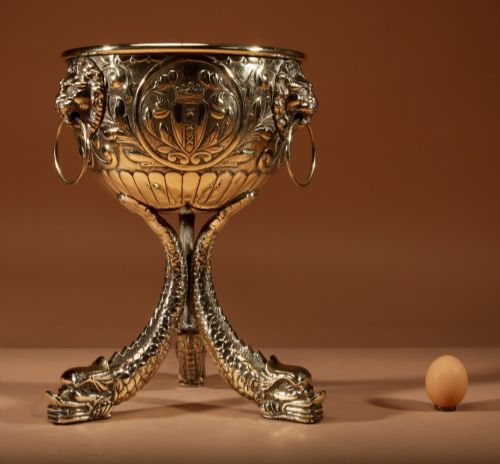


Lion Head Brass Jardiniere
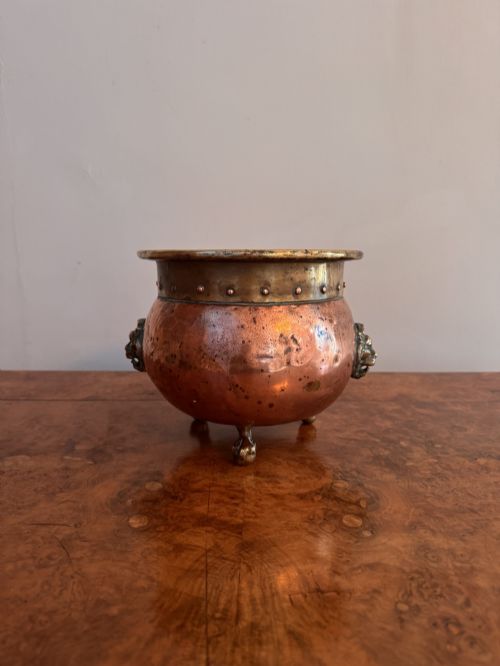
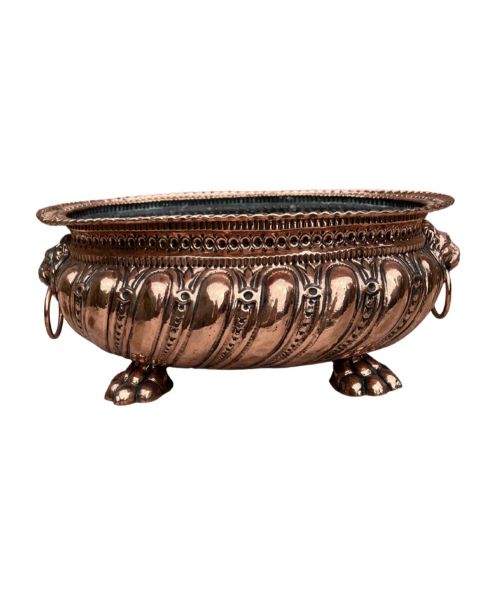
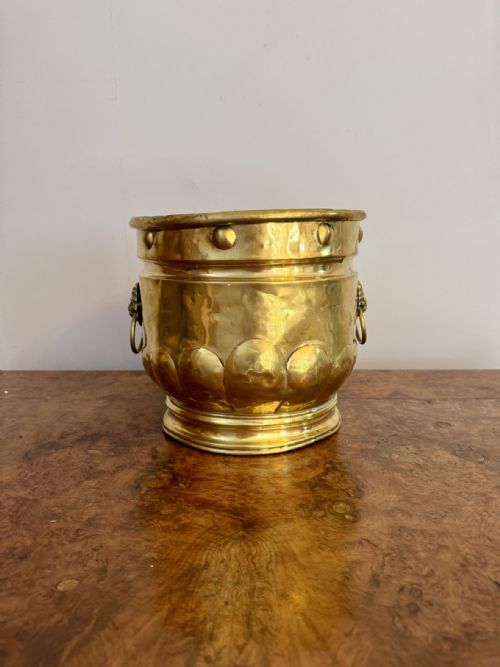
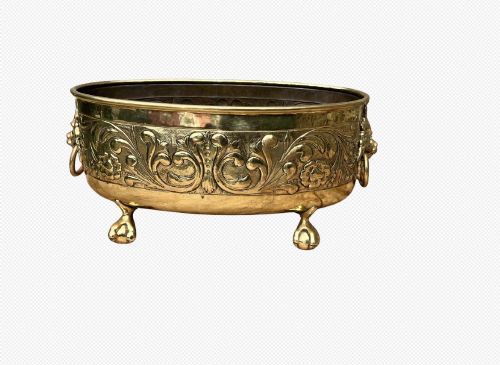
A lion head brass jardiniere brings heavy metalwork and bold animal masks together to house interior plants with authority.
Lion Head Brass Jardiniere
When you search for a lion head brass jardiniere, you encounter sturdy plant vessels shaped by centuries of metalworking traditions. The pieces appearing here span from the eighteenth century through the Victorian era up to the nineteen-twenties, incorporating styles such as Renaissance Revival, Gothic Revival, and Dutch Traditional forms.
Most examples you meet on this page date from the Victorian period, though earlier eighteenth-century Dutch wine coolers and later arts and crafts vessels also appear. These objects function as decorative planters, log bins, or wine coolers, often featuring cast ring handles held in the jaws of detailed animal masks.
How they were made
Maker's workshops built these vessels predominantly from brass, copper, and bronze, sometimes pairing them with iron and mahogany bodies or brass banding. Artisans employed dinanderie techniques, combining cast elements with hammered sheet metal.
Surface ornament relied heavily on repoussé work, where craftsmen hammered designs from the reverse to raise decorative patterns in relief. Cast lion masks and drop handles were then securely affixed to the heavy metal bodies.
Lion Head Brass Jardiniere Retail Price Guide 2026
Typical asking prices for lion head brass jardiniere among the pieces listed under this phrase on Sellingantiques today, from the lower quarter to the upper quarter. They describe what is for sale here now, not the wider market.
Many of these fierce lions spent their lives holding up ferns instead of guarding fortress gates.
What varies in quality
The weight of the metal and the integrity of construction separate finer items from simpler production pieces. Thicker gauge brass and secure handle mountings indicate higher grade workshop output.
The Lion Head Brass Jardiniere Glossary
- Repoussé
- A metalworking technique where an artisan hammers relief designs from the reverse side of the sheet metal. This process creates raised decorative motifs across the body of the vessel.
- Dinanderie
- The historical term for worked brass or bronze objects, originating from the Belgian town of Dinant. It covers various medieval and revival metal vessels.
- Cellarette
- A lockable container used for storing wine bottles in a dining room. Many large brass vessels served this dual purpose alongside plant display.
- Mask handle
- A sculptural mount shaped like a human or animal face, often holding a drop ring in its mouth. Lion masks serve as the defining feature on these planters.
Lion Head Brass Jardiniere: Frequently Asked Questions
What plants suit a brass jardiniere?
Potted ferns and foliage plants sit well inside these metal vessels, usually housed within a secondary inner pot to catch drainage water.
Direct planting inside unprotected antique brass risks corrosion from damp soil and moisture over extended periods.
How do I clean old brass?
Dust the surface regularly with a soft dry cloth to prevent grime accumulation without disturbing the historic metal finish.
Avoid harsh chemical polishes that strip away the aged patina built up over generations of handling.
Were these always meant for plants?
Many examples began as wine coolers, ice pails, or peat bins before finding modern use as decorative indoor planters.
Large eighteenth and nineteenth-century vessels adapted easily across different domestic functions depending on household needs.
How do I spot a reproduction?
Examine the weight, the consistency of the hand-hammered relief, and the wear patterns around the handle mountings.
Older pieces display natural oxidation and casting irregularities distinct from uniform modern factory manufacturing.