


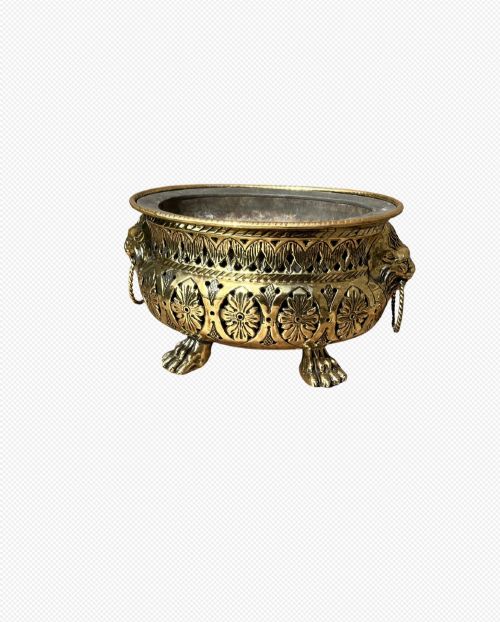


Claw Foot Brass Jardiniere
A claw foot brass jardiniere brings heavy metal plant display into a room, offering sturdy support for indoor greenery.
Claw Foot Brass Jardiniere
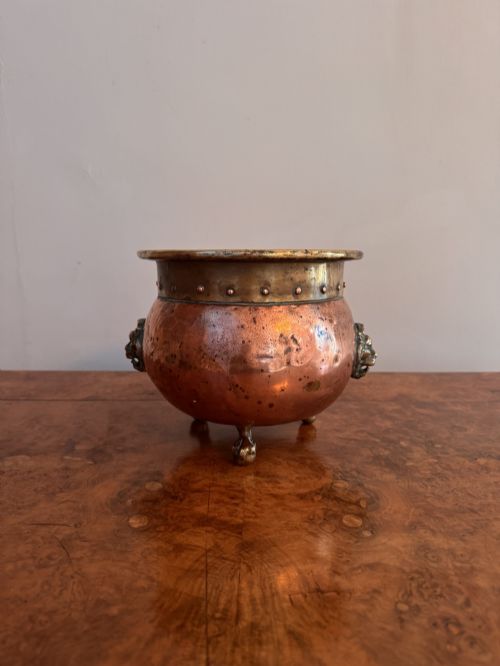
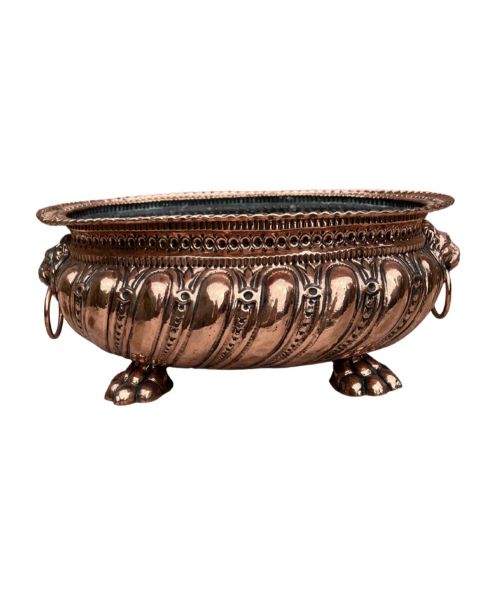
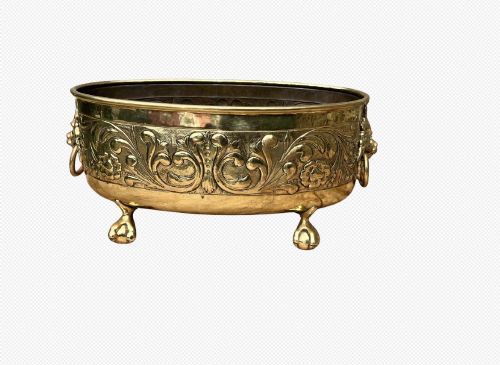
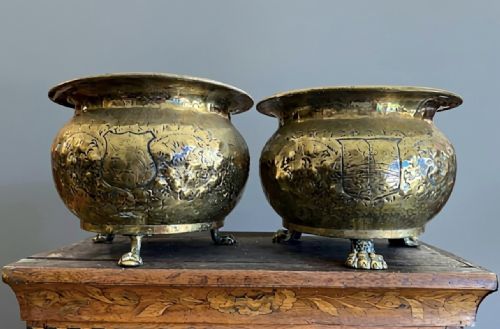
A claw foot brass jardiniere serves as a decorative plant container, holding potted plants or functioning as a wine cooler. The forms appearing on this page span the eighteenth, nineteenth, and twentieth centuries, encompassing Victorian, Edwardian, and Dutch styles.
Most examples take the form of cylindrical planters or jardiniere vessels raised upon distinct feet. Their origins stretch across British, French, Belgian, and Dutch workshops, showing considerable variety in regional ornament.
How they were made
Makers shaped these planters primarily from brass, alongside occasional pieces formed from copper. Metalworking techniques relied on beating, piercing, and repoussé work to create textured surfaces and patterned walls.
Details such as animal heads, lions mask handles, and claw feet were cast separately and attached to the main body. The resulting vessels combined structural metal strength with decorative surface relief.
Claw Foot Brass Jardiniere Retail Price Guide 2026
Typical asking prices for claw foot brass jardiniere among the pieces listed under this phrase on Sellingantiques today, from the lower quarter to the upper quarter. They describe what is for sale here now, not the wider market.
What varies in quality
Quality separates plain cylindrical vessels from heavily ornamented examples featuring intricate piercing and repoussé work. The crispness of cast details like animal heads and claw feet dictates the visual success of the piece.
Earlier eighteenth-century pieces and specific regional forms such as Dutch Baroque designs display different levels of sculptural ambition compared to later mass-produced Victorian or Edwardian items.
The Claw Foot Brass Jardiniere Glossary
- Jardiniere
- An ornamental pot or stand for holding plants or flowers. It derives from the French word for gardener.
- Repoussé
- A metalworking technique where the metal is beaten from the reverse side to form a raised design on the front. This creates deep texture across the planter body.
- Pierced brass
- Metalwork perforated with decorative cut-out patterns. It lightens the heavy appearance of the brass wall.
- Wine cooler
- A vessel designed to hold bottles and ice, frequently serving the dual purpose of a planter in these listings.
Claw Foot Brass Jardiniere: Frequently Asked Questions
What is a claw foot brass jardiniere used for?
These vessels hold potted plants or function as decorative cachepots to conceal standard plastic nursery pots. Historical examples also double as wine or champagne coolers.
Their solid metal construction protects furniture surfaces when used with a proper internal saucer or liner. They bring substantial weight and metallic sheen to interior spaces.
How do I date an antique brass jardiniere?
Examine the manufacturing marks, construction seams, and overall style to establish an approximate period. Pieces span the eighteenth, nineteenth, and twentieth centuries, with Victorian and Edwardian examples showing distinct decorative tropes.
Stylistic cues such as Gothic Revival motifs or French Empire influences point to specific design eras. Hand-beated repoussé work often indicates older, more artisanal production methods.
Are these planters waterproof?
Many older metal vessels have joints or pierced sections that may leak over time. It is wise to inspect the interior and use a waterproof liner or saucer inside.
Protecting the base prevents moisture from damaging the historic metal or the surface underneath. Placing a protective mat underneath safeguards fine wooden furniture.