
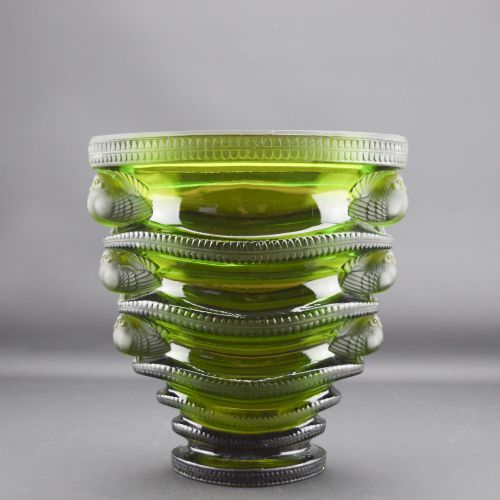
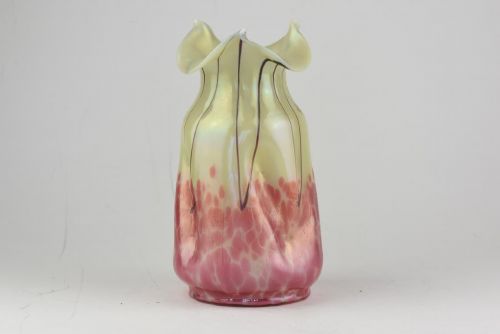
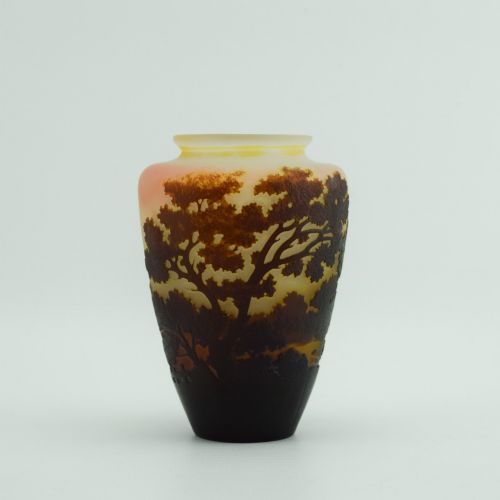
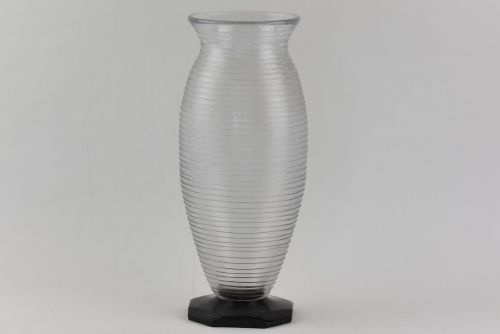
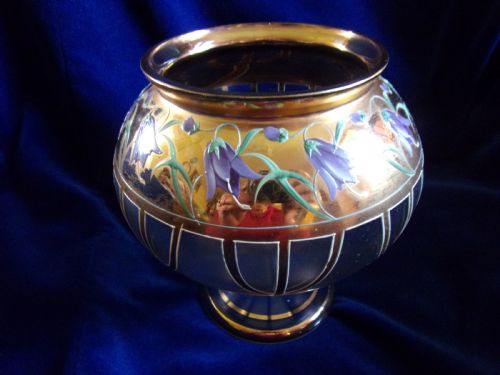
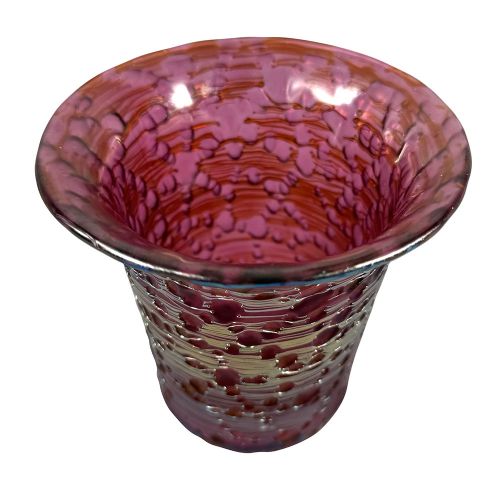


Decorative Art Glass Urn
A decorative art glass urn brings sculptural form and brilliant colour to a room through the refined techniques of past glassmakers.
Decorative Art Glass Urn
A decorative art glass urn covers the sculptural vases found across this selection, spanning the Victorian era through the 1920s and 1930s. Buyers searching for a decorative art glass urn encounter substantial glass vessels shaped by notable makers and anonymous workshops alike.
The assortment relies heavily on Art Nouveau and Art Deco designs alongside Victorian examples. Forms range from tall, slender vases to lobed and footed vessels created in glass, moulded glass, and frosted glass.
Origins stretch across European and international workshops, capturing the shift from organic floral motifs to geometric patterns. The most common manifestations on this page are iridescent and cameo glass vases from the early twentieth century.
Techniques and materials
Makers utilised blown glass and moulded glass as foundational methods, often finishing surfaces through acid-etching or cameo carving. Layers of contrasting coloured glass were fused together before being cut away by hand to reveal delicate landscapes and floral patterns.
Iridescence was achieved by treating hot glass metallic vapours, producing shimmering surfaces seen in pieces by Loetz and Tiffany. Enamel and gilding were frequently applied to the exterior to add intricate detail and metallic contrast.
Frosted and opalescent glass variations diffuse light through the body of the vessel, creating depth within the material itself. Pewter and silver mounts were occasionally added to frame the glass rim or base.
Listings feature glass pieces from the Victorian era, 1900, 1910, 1920, and 1930.
Evaluating quality in art glass
Quality rests in the precision of the execution, whether in the depth of a cameo carving or the complexity of an acid-etched design. Superior pieces display crisp control over multi-layered glass and subtle transitions of tone.
The integration of metal mounts and the retention of original enamel or gilding contribute to a piece's integrity. The fluidity of blown forms and the clarity of opalescent or iridescent effects distinguish masterworks from standard production.
Rene Lalique·Pallme Konig·Galle·Daum·Thomas Webb & Sons·Mary Gregory·Loetz·LCT Tiffany
The Decorative Art Glass Urn Glossary
- Cameo glass
- Glass formed with multiple layers of different colours, where the outer layer is carved or acid-etched away to reveal a design in relief. This demanding technique creates strong tonal contrast between the background and the raised motif.
- Iridescent glass
- Glass treated with metallic salts while hot to produce a rainbow-like sheen that catches the light. This effect mimics the natural weathering found on ancient buried glass.
- Opalescent glass
- Milky, translucent glass that appears bluish when viewed against the light and yellowish-brown against a dark background. It diffuses light softly across moulded details and relief patterns.
- Acid-etched glass
- Glass decorated by masking parts of the surface and exposing the rest to acid to eat away the unprotected areas. This process creates frosted textures and matte designs.
- Blow-out cameo
- A technique where glass is blown into a metal or carved mould to create a pre-formed shape before being carved as cameo glass. It produces high-relief designs with hollow interiors.
Decorative Art Glass Urn: Frequently Asked Questions
How do I clean my art glass vase?
Dust the surface gently with a soft, dry microfibre cloth to remove everyday particles. Avoid using chemical cleaners, abrasive pads, or immersing silver-mounted pieces in water.
For interior cleaning, use lukewarm water without harsh detergents and dry thoroughly with a lint-free cloth. Protecting the glass from direct, harsh sunlight helps preserve the original colours and iridescent treatments.
How can I tell if an art glass vase is cameo glass?
Inspect the surface closely to see if the design is raised above the background layer in a distinct colour. True cameo glass is carved from a continuous fused body rather than having elements glued or painted on top.
Running a finger across the motif reveals the tactile relief characteristic of acid-etched or hand-carved multi-layer glass.
Where is the best place to display these vases?
Place your vase in a secure location away from the edge of furniture and high-traffic household areas. Position it near a natural light source to highlight the iridescence, opalescence, or cameo carving.
Ensure the display surface is stable and level, particularly for heavier glass vessels or those with metal mounts.