
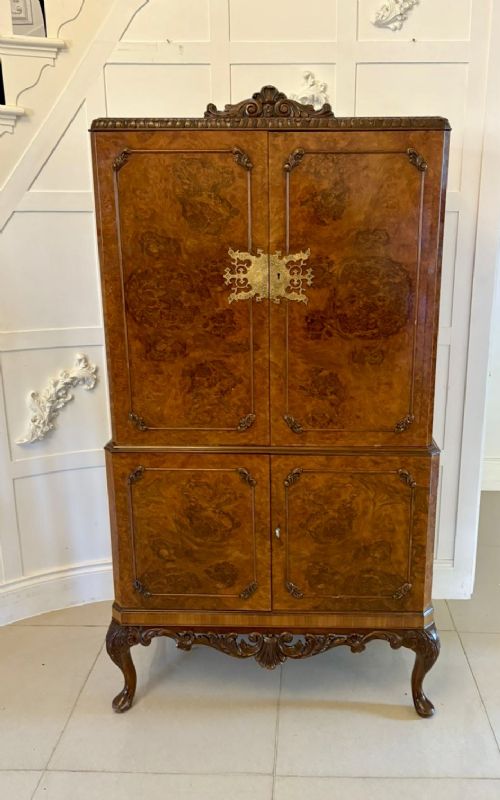

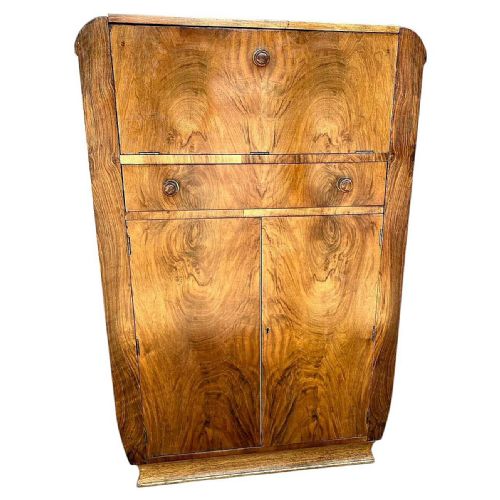
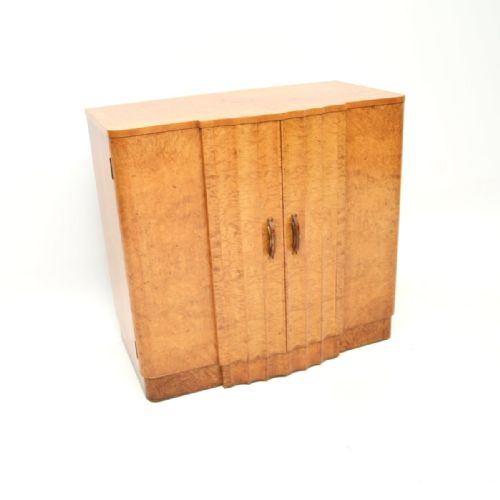
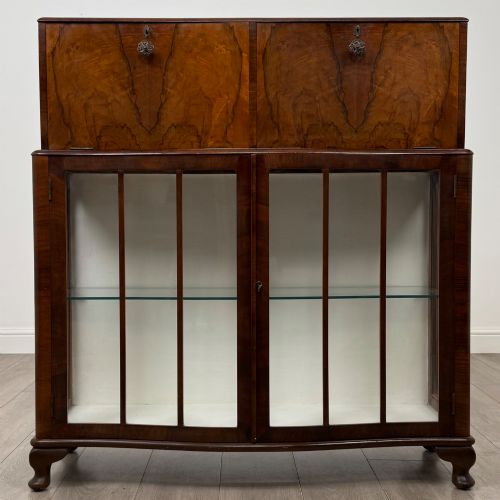


Deco Drinks Cupboard
A deco drinks cupboard brings serious style to your room, holding your glassware and bottles with theatrical flair.
Deco Drinks Cupboard
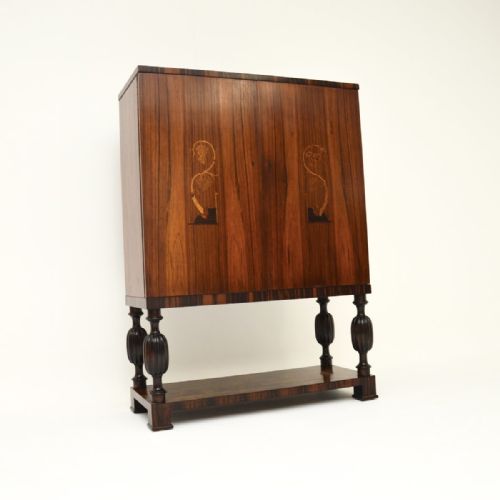
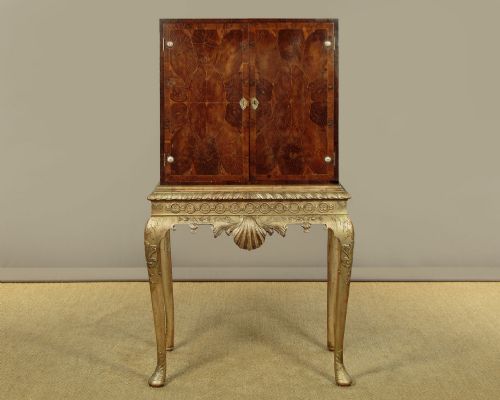
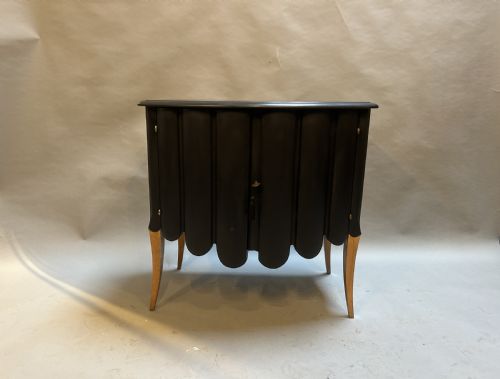
Deco drinks cupboards are specialist pieces designed for entertaining, housing glassware, bottles and cocktail accessories behind panelled doors. When searching for a deco drinks cupboard, buyers encounter forms ranging from cocktail cabinets and display cabinets to cabinets on stands and side cabinets. The majority of these pieces originate from the 1930s and 1920s, with additional examples spanning the Edwardian, 1940 and Victorian periods.
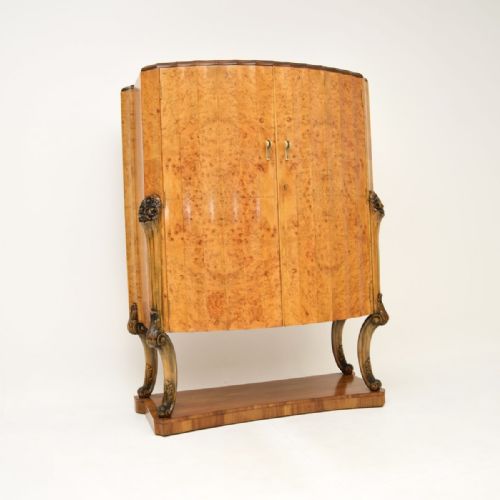
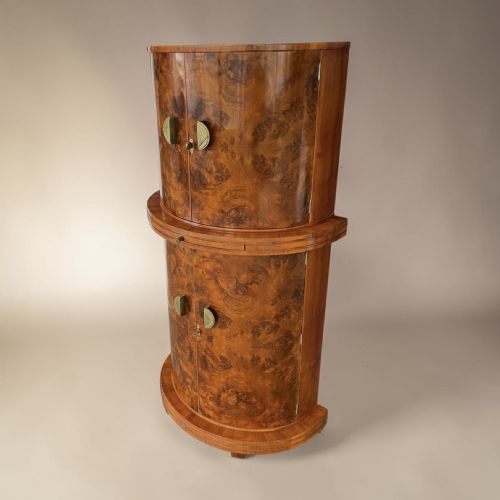
The dominant aesthetic draws heavily from the Art Deco style, alongside Swedish Grace, Queen Anne Revival and Queen Anne Style influences. These units frequently function as dry bars or fitted storage, combining drop-front serving surfaces with internal compartments for glasses and bottles. Buyers primarily meet burr walnut and walnut variants, often shaped with bow fronts or geometric lines.
Materials and construction
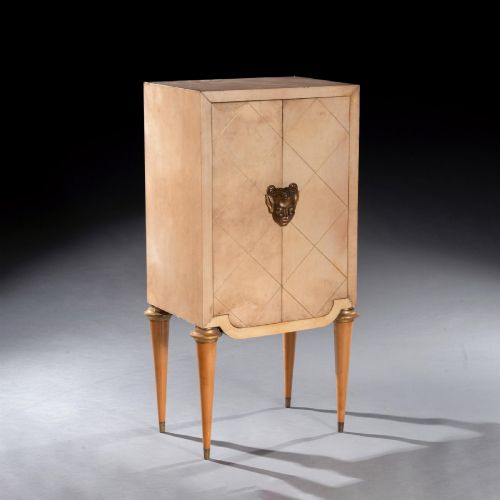
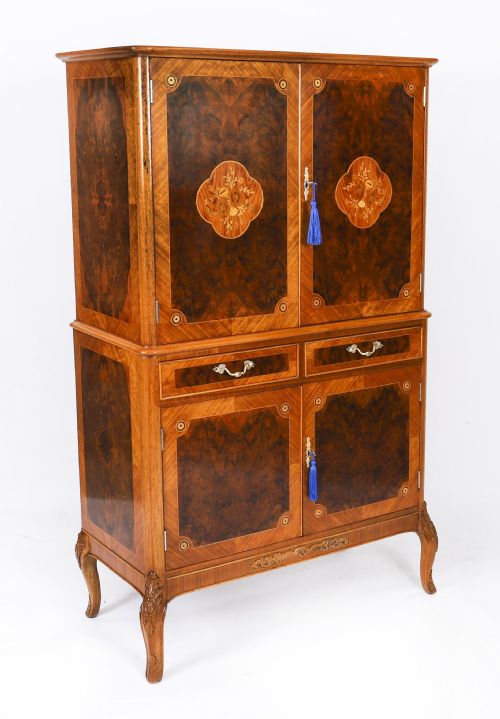
Cabinet makers utilised wood and wood veneer as the primary structural foundation, selecting burr walnut, figured walnut, mahogany, Scandinavian birch, elm and rosewood for exterior surfaces. Veneers were carefully matched and laid in geometric patterns or marquetry designs to highlight the natural grain of the timber. Specialist materials such as parchment, brass, glass and lacquer added decorative contrast to the woodwork.
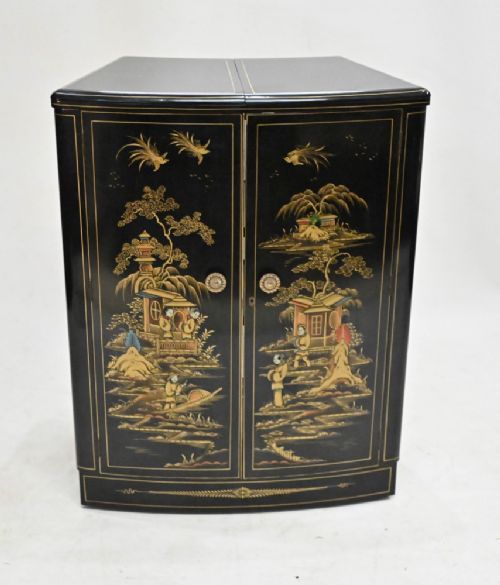
Construction techniques included intricate inlay work, metal fittings and specialised surface finishes like Chinoiserie lacquer or silver gilt stands. Interior compartments often integrated mirror tops, glass shelving and pull-out slides designed to serve drinks safely. These methods produced robust storage units capable of supporting heavy glass and bottle collections while maintaining sleek exterior lines.
Period origins span the 1930s, 1920s, Edwardian era, 1940s and Victorian times, with Art Deco dominating the stylistic range.
Markers of quality
Quality in these pieces rests upon the selection and matching of wood veneers, particularly the choice of burr walnut and figured walnut across the main doors and panels. Superior examples display thoughtful grain continuity, precise marquetry and deliberate geometric layouts that catch the light. Maker attribution also separates standard production from exceptional work, with notable pieces bearing the mark of established firms.
The sophistication of the internal fittings defines the upper tier of the range, including mirrored surfaces, integrated lighting elements and specialised pull-out serving slides. The execution of secondary details, from brass hardware to lacquered Chinoiserie or parchment inlays, reveals the level of craftsmanship invested in the construction.
Harry and Lou Epstein·Epstein·Maurice Jallot·Hille·Waring and Gillow
The Deco Drinks Cupboard Glossary
- Burr walnut
- A figured wood grain obtained from the wart-like growths on walnut trees, prized for its swirling patterns and rich texture. Makers sliced this timber into thin veneers to cover cabinet doors.
- Cocktail cabinet
- A dedicated piece of furniture designed for mixing and storing drinks, typically featuring a drop-down flap that serves as a preparation shelf. These units include internal racks for bottles and specialised holders for glassware.
- Marquetry
- The art of applying pieces of veneer to a structure to form decorative patterns and pictorial designs. Craftsmen utilised contrasting timbers to create geometric motifs on cabinet fronts.
- Chinoiserie
- European decorative art influenced by Chinese artistic traditions, often featuring hand-painted motifs on lacquered surfaces. This technique appears on selected cabinet doors to create striking visual depth.
Deco Drinks Cupboard: Frequently Asked Questions
What is inside a deco drinks cupboard?
These cabinets typically feature dedicated bottle racks, glass shelves, and pull-out mirrored mixing slides for preparing drinks.
Many units also include internal lighting, specialised slots for cocktail sticks, and secure compartments for glassware.
How do I date a deco drinks cupboard?
Most examples date from the 1920s and 1930s, displaying characteristic Art Deco geometric lines and veneer work.
Earlier Edwardian or Victorian pieces lean towards revival styles, while 1940s examples incorporate alternative materials like parchment.
Where should I place a drinks cupboard?
These cabinets suit living rooms, dining rooms, or home bars where entertaining takes place.
Ensure you leave enough clearance around the piece for drop-down flaps or swinging doors to open fully during use.
Are these cabinets suitable for modern bottles?
Most internal shelving and bottle racks accommodate standard spirit and wine bottle heights.
Some vintage configurations feature fixed internal dividers, so checking compartment dimensions helps ensure tall bottles fit comfortably.