


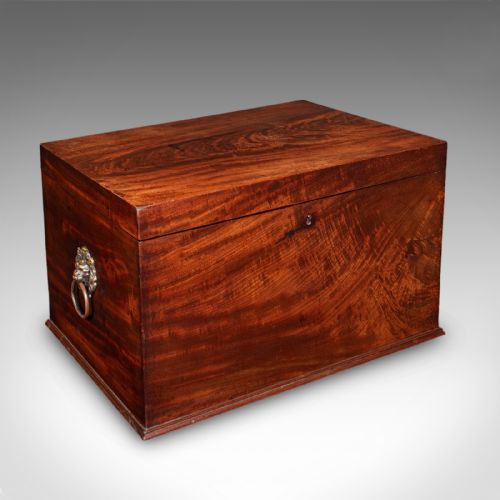


Dark Wood Wine Chest
A dark wood wine chest brings the heavy timber and brass of the Georgian and Victorian cellar straight into the reception room.

What They Are
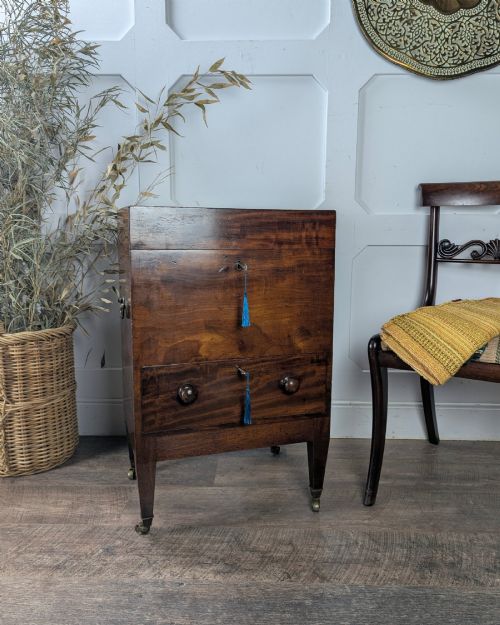
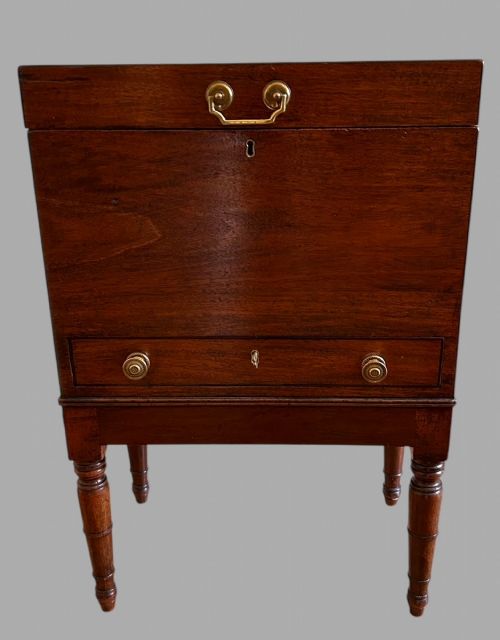
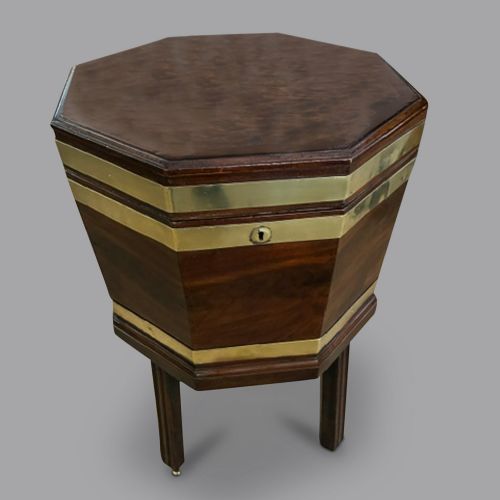
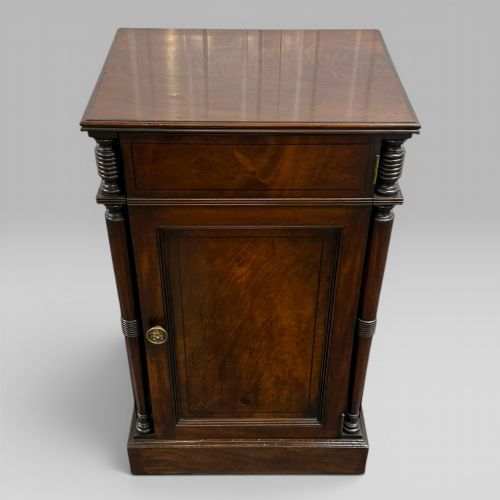
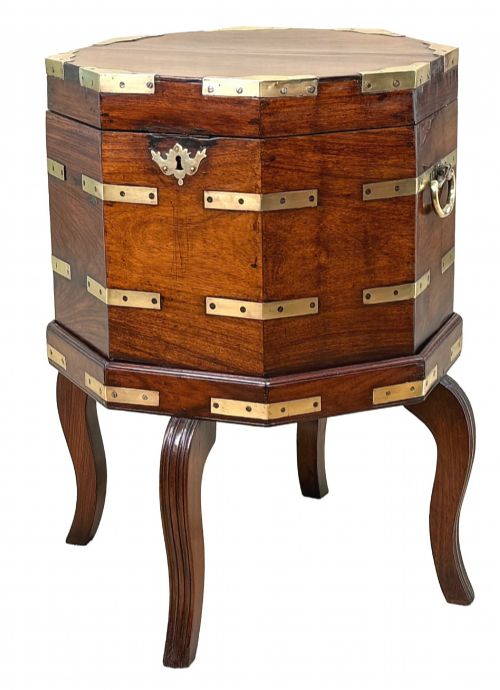
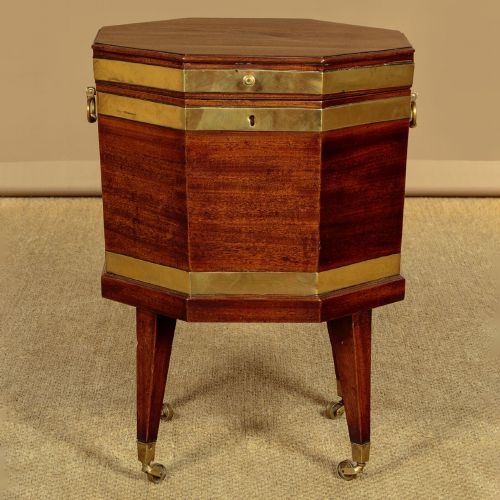
A dark wood wine chest, also listed as a cellarette or wine cooler, is a robust timber box designed to hold and cool bottles in dining rooms. The pieces gathered here span the Georgian, Regency, William IV, and Victorian eras, alongside Anglo-Indian examples.
Most items on this page take the form of freestanding mahogany cellarettes or box containers. Makers such as Edwards and Roberts contributed refined inlaid mahogany versions around the middle of the nineteenth century.
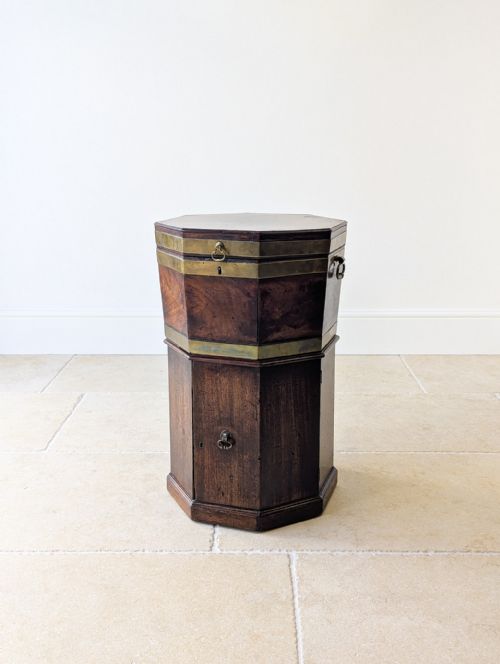
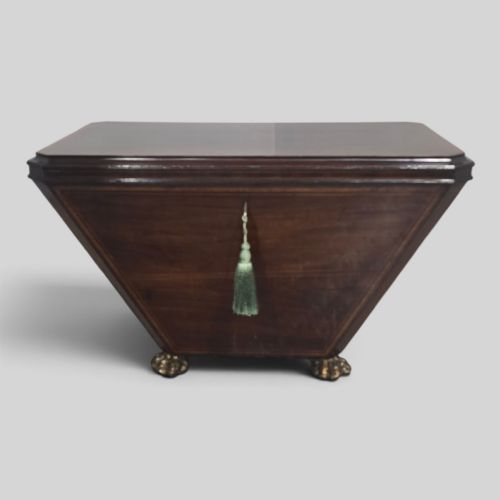
Earlier Georgian examples include George III octagonal pieces from around seventeen seventy and brass-bound mahogany designs from about eighteen hundred. Nineteenth-century varieties also encompass carved models and sarcophagus forms.
How They Were Made
These chests rely on dense hardwoods, principally mahogany, teak, and occasional hardwood foundations. Satinwood inlay provides decorative contrast against the dark timber ground on selected nineteenth-century pieces.
Retail Price Guide 2026
Typical UK retail prices for dark wood wine chest, calculated from the Sellingantiques database of over a million retail prices indexed since 2003. This retail price guide relies exclusively on Sellingantiques data; no external sources or auction records are used, so the figures do not describe the wider market.
Listings feature mahogany, teak, and hardwood, frequently accented with brass binding and satinwood inlay across the eighteenth and nineteenth centuries.
What Varies in Quality
Quality rests on the selection of timber and the precision of the joinery rather than surface ornamentation alone. Finer pieces display carefully figured mahogany and crisp satinwood inlay that integrates smoothly into the structural form.
The integration of metalwork marks the distinction between standard and superior examples. Heavy brass binding and mounts that follow the contours of the timber accurately elevate the overall construction.
Edwards and Roberts
The Dark Wood Wine Chest Glossary
- Cellarette
- A lockable container used for holding bottles of wine near the dining table. They frequently sit upon short legs or floor frames.
- Sarcophagus form
- A distinctive coffin-like shape with a steep lid, popular for large nineteenth-century wine chests.
- Brass bound
- A method of reinforcing timber boxes with metal bands secured around the circumference. This adds both structural strength and visual contrast.
- Satinwood inlay
- A contrasting light wood veneer set into recesses within the darker mahogany surface. It creates geometric or floral decorative patterns.
- George III
- The stylistic period spanning the mid to late eighteenth century, known for balanced proportions and classical restraint in furniture design.
Frequently Asked Questions
What is a wine chest?
A wine chest is a heavy timber container built to store bottles safely near the dining table. These pieces kept wine close at hand before fitted dining room sideboards became common.
Most versions feature robust wooden walls and internal compartments designed to keep bottles upright and cool. Nineteenth-century examples often sit directly on the floor or on short stands.
How do I date a chest?
Dating relies on observing the timber choice, the style of the brass mounts, and the overall form. Georgian pieces often display simpler geometric lines or octagonal shapes, while Victorian examples lean towards heavier carved and sarcophagus designs.
Makers' marks or specific inlay techniques also help narrow down the period of manufacture. Comparing the joinery methods provides further clues to the exact age.
Where were they used?
These chests lived primarily in the dining room or parlour of large houses. Servants kept them stocked with bottles brought up from the cool cellars below.
Because they were heavy and often fitted with brass bands for strength, they remained permanent fixtures in the entertaining rooms. Their secure lids kept the contents protected when not in use.
Are they all mahogany?
Mahogany is the dominant timber across the surviving examples, valued for its rich dark grain and structural strength. Other hardwoods, including teak and Anglo-Indian timbers, also appear in specific regional pieces.
Satinwood inlay is frequently combined with the mahogany base to create decorative contrast. Brass hardware is standard across nearly all variations for reinforcement.