

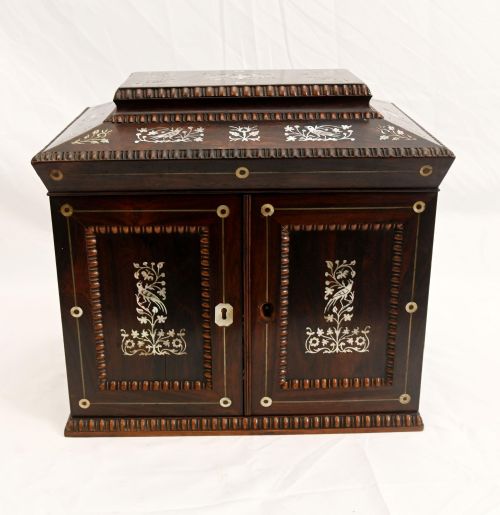


Dark Wood Tabletop Box
A dark wood tabletop box brings functional storage and period craftsmanship to a room, ranging from dressing mirrors to miniature chests.
Dark Wood Tabletop Box
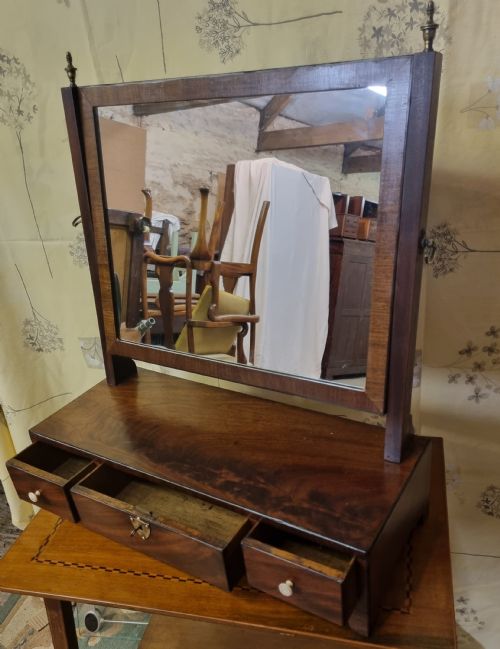
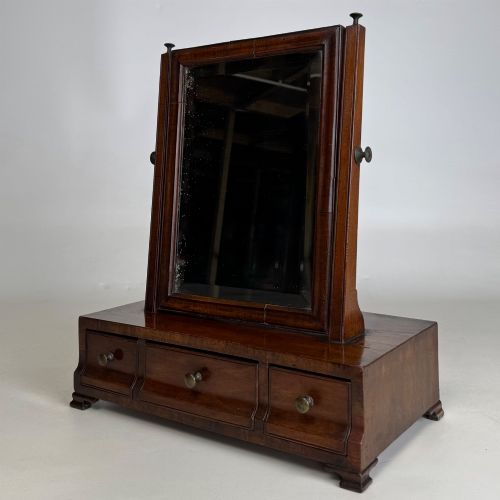
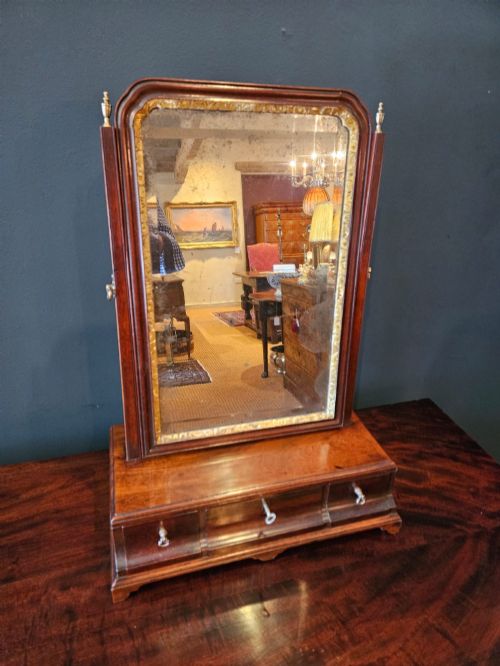
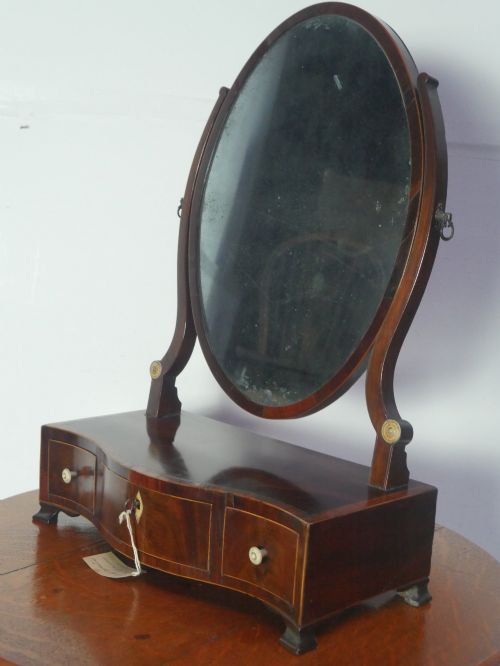
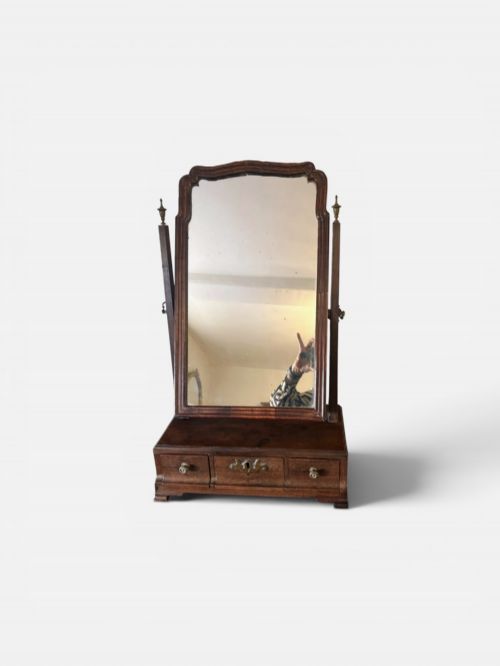
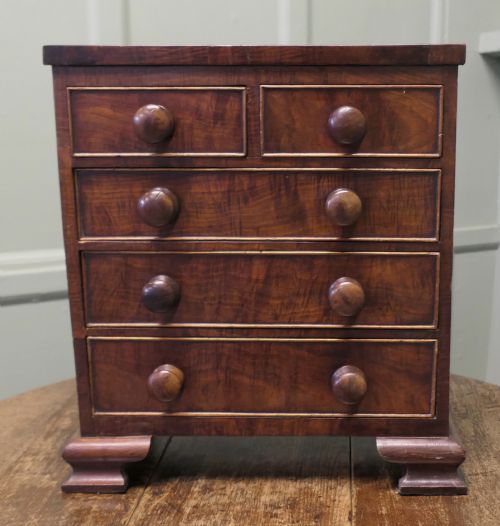
A dark wood tabletop box encompasses a diverse group of small furnishings designed for desktop or dresser use, spanning periods from the seventeenth century through the Edwardian era. When searching for a dark wood tabletop box, buyers most frequently encounter mahogany dressing mirrors, toilet mirrors, and miniature chests of drawers from the Georgian and Victorian periods.
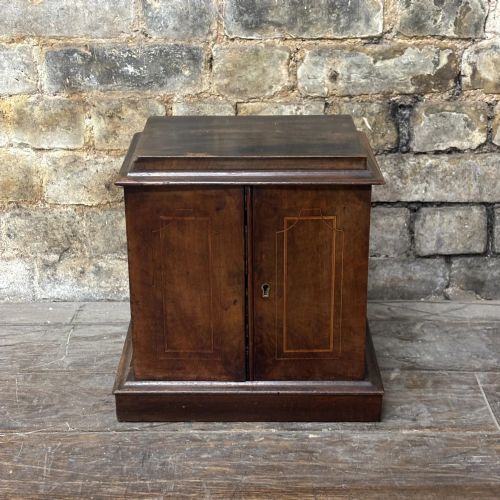
The selection also includes specialised pieces such as stationery cabinets, music boxes, jewellery chests, and writing slopes constructed from timbers like rosewood, oak, and ebony. Originating from English, French, Chinese, and Dutch workshops, these compact objects served varied domestic purposes for storing valuables, correspondence, or personal adornments.
Materials and Technique
Construction relies heavily on dense hardwoods such as mahogany, rosewood, oak, and ebony, often chosen for durability and deep natural grain. Cabinetmakers shaped these timbers into miniature case pieces and mirror frames, frequently incorporating secondary woods and boxwood stringing.
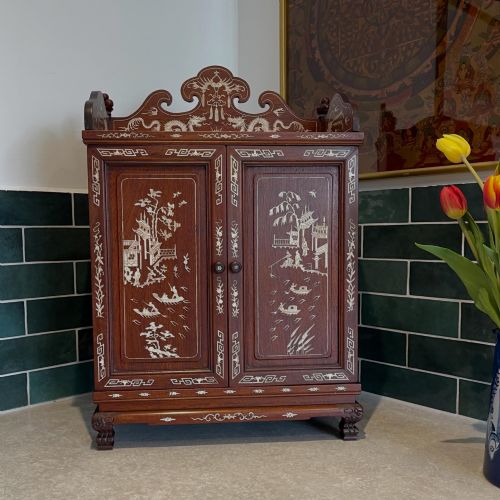
Surface detailing involves brass hardware, mother-of-pearl inlay, and carved ornamentation, reflecting the prevailing styles of each century from Flemish Baroque to Edwardian production. Finishes are applied to develop a rich patina over the wood, highlighting the natural figure of the material.
Listings feature pieces spanning the seventeenth, eighteenth, nineteenth, and twentieth centuries, constructed in mahogany, oak, rosewood, and ebony.
Assessing Quality
Quality in these compact pieces is determined by the crispness of the carving, the precision of the joinery in miniature scale, and the depth of the wood's patina. Superior examples maintain original hardware, intact glass where applicable, and structural integrity without excessive timber replacement.
The refinement of secondary details, such as finely fitted interior compartments, harmonious proportions in miniature chests, and careful selection of figured veneer, separates standard utility items from exceptional workshop productions.
John Franklin London
The Dark Wood Tabletop Box Glossary
- Toilet mirror
- A small adjustable looking glass mounted on a miniature frame with drawers, designed to sit upon a dressing table.
- Writing slope
- A portable desktop box with an angled, hinged lid that opens to reveal a sloping surface for correspondence and stationary storage.
- Patina
- The deep gloss and mellow surface texture developed on antique wood through age, handling, and polishing.
- Collectors cabinet
- A small multi-drawer chest built for organising specimens, coins, or trinkets, often featuring secure locking mechanisms.
Dark Wood Tabletop Box: Frequently Asked Questions
What were miniature chests used for?
Miniature chests served various domestic purposes, including storing jewellery, small trinkets, or personal documents on a dressing table. Some were created as apprentice pieces to demonstrate advanced woodworking abilities.
Their compact size allowed wealthy households to keep valuable personal items secure and organised in private chambers or boudoirs.
How do I identify a Georgian dressing mirror?
Georgian dressing mirrors typically feature mahogany frames mounted on small box bases containing one to three small drawers. The glass is often held in a rectangular or serpentine swinging frame supported by upright arms.
Look for period construction methods such as hand-cut dovetails on the drawers and original brass turning knobs or candle arms where fitted.
What is a coffor bach?
A coffor bach is a traditional Welsh miniature coffer or blanket chest, usually constructed from oak during the eighteenth century. They mirror the design of full-sized dowry chests in precise miniature scale.
These small boxes were often presented as gifts for significant life events, providing secure storage for precious linens or keepsakes.
How should I clean antique wood surfaces?
Maintain the finish of antique wood boxes by dusting regularly with a soft, dry cloth. Avoid using modern silicone polishes or abrasive chemical cleaners that can damage the aged surface.
Occasional application of traditional beeswax helps nourish the timber and preserves the natural patina without stripping the historical finish.