


Dark Wood Sewing Table
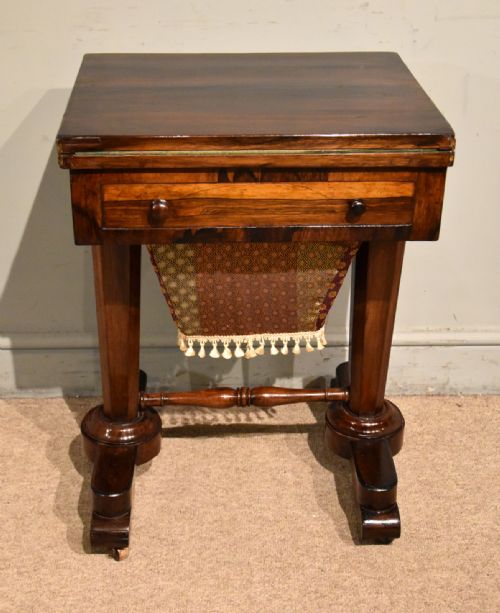
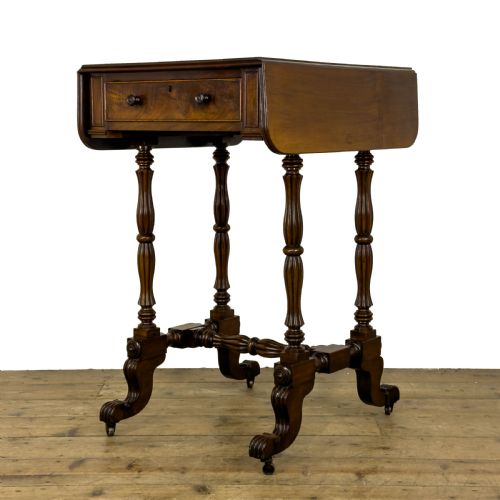
A dark wood sewing table brings refined timber and functional compartments together, offering an elegant surface for needlework and small possessions.
Dark Wood Sewing Table
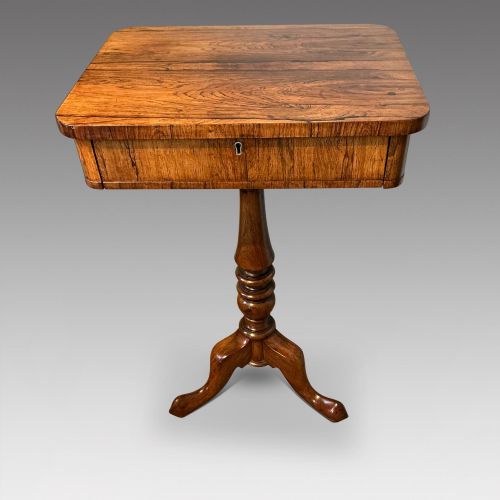
A dark wood sewing table combines a compact work surface with storage for textiles, threads, and implements. These pieces emerge primarily across the Georgian, Regency, William IV, and Victorian periods.
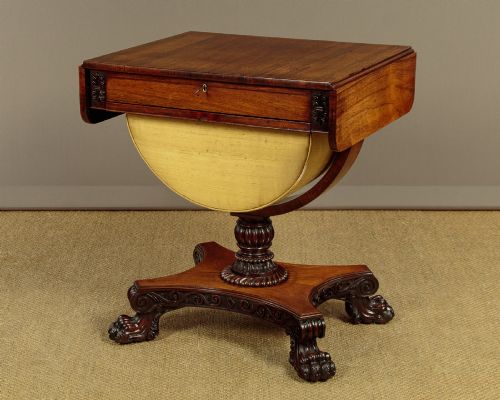
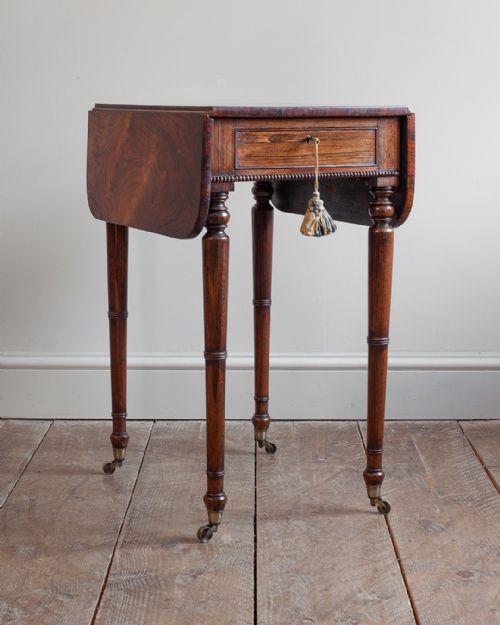
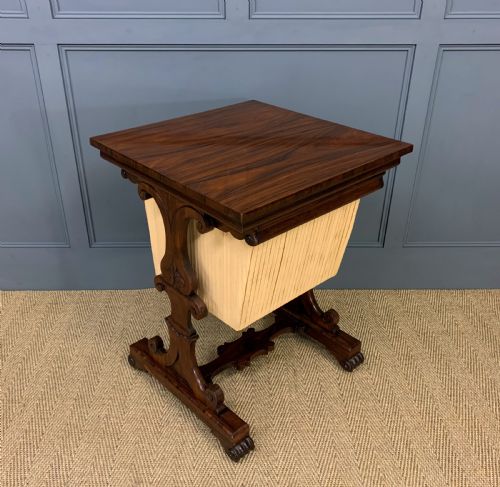
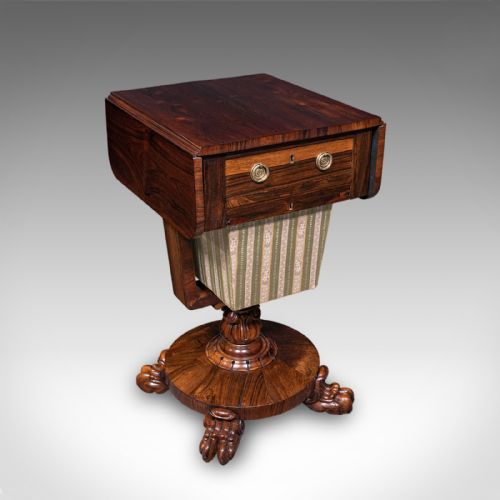
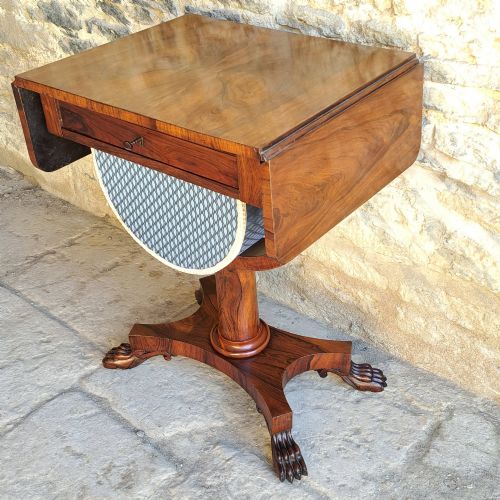
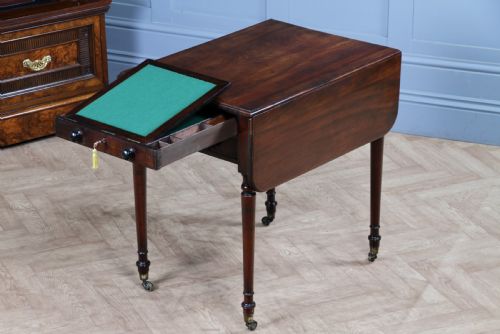
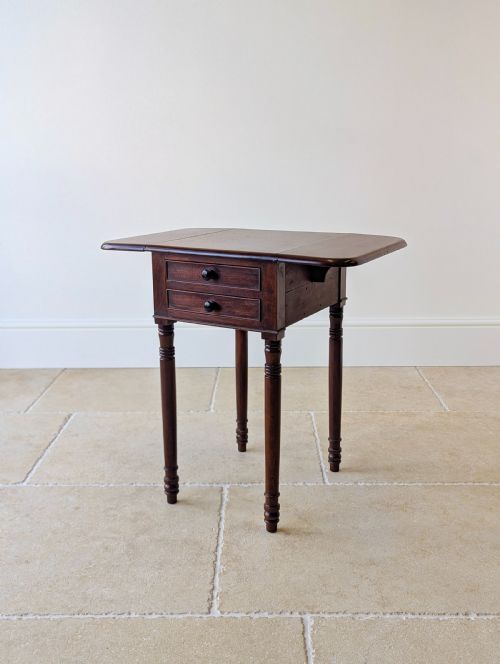
The most common version met on this page is the rosewood or mahogany work table featuring drop leaves, a pedestal base, and an under-mounted fabric bag or fitted drawer.
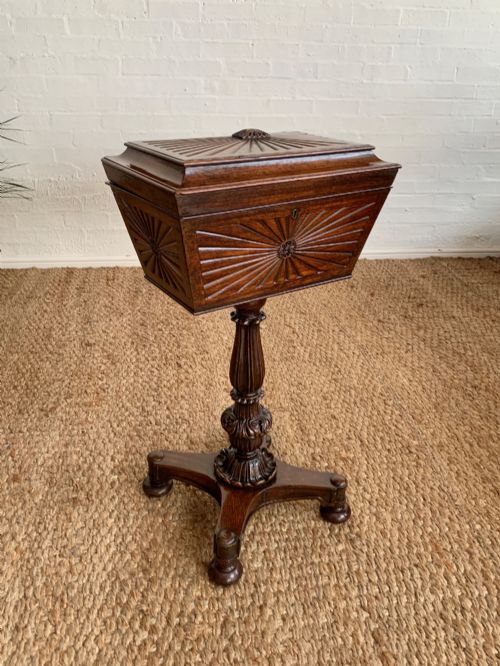
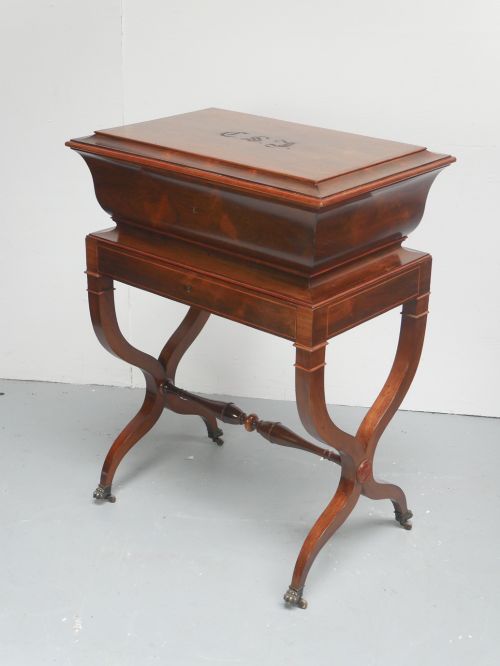
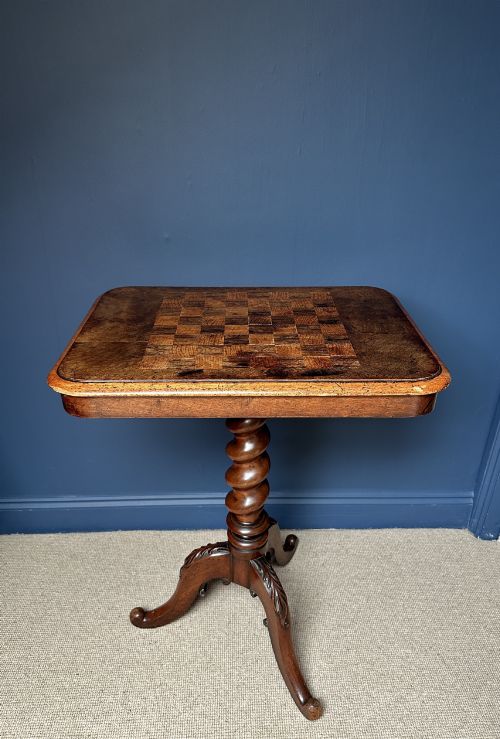
Beyond dedicated sewing functions, variations incorporate games boards, writing surfaces, and caddy tops to serve multiple purposes in the parlour or drawing room.

Materials and Construction
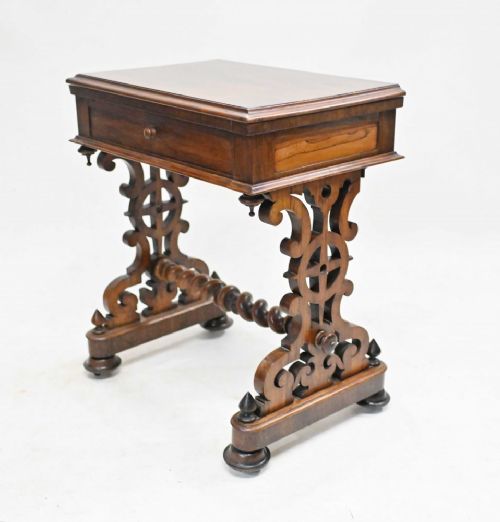
Cabinet makers utilised dense dark timbers such as mahogany and rosewood, frequently incorporating boxwood stringing, brass hardware, and marquetry inlay for decorative contrast.
Interiors and fitted compartments often integrate delicate fabrics like silk, baize, and fabric linings to house sewing accessories safely.
Structural techniques include drop-leaf mechanisms, pedestal supports with carved details, and fitted drawers secured by keys.
Dark Wood Sewing Table Retail Price Guide 2026
Typical asking prices for dark wood sewing table among the pieces listed under this phrase on Sellingantiques today, from the lower quarter to the upper quarter. They describe what is for sale here now, not the wider market.
Several examples incorporate dual functions, combining sewing storage with foldover chess and backgammon boards.
Markers of Quality
The sophistication of the timber figure and the precision of marquetry inlay set finer examples apart from plainer utilitarian versions.
Execution of carved elements, such as sunburst motifs or pedestal pillars, reveals the skill of the cabinet maker.
Completeness of internal fittings, including original fabric bags, fitted compartments, and working locks with keys, elevates an example.
Lesage·Gillows
The Dark Wood Sewing Table Glossary
- Pembroke table
- A table featuring two hinged drop leaves on opposing sides. These flaps allow the surface area to expand when needed.
- Work table
- A small functional table designed specifically for needlework, sewing, and domestic crafts. They typically incorporate drawers or fabric bags beneath the top.
- Marquetry
- Decorative veneer work arranged in intricate patterns or pictures using various woods. Craftsmen cut and fit these pieces precisely onto the primary surface.
- Caddy top
- A raised, moulded tabletop profile reminiscent of tea caddy construction. This feature adds architectural depth to the piece.
- Padouk
- A heavy, durable exotic hardwood with a rich reddish-brown tone. It accepts fine carving and polish exceptionally well.
Dark Wood Sewing Table: Frequently Asked Questions
How were work tables used?
These tables served as functional stations for women undertaking embroidery, sewing, and other needlecrafts. The top provided a stable surface, while compartments organised tools and materials.
Many examples also doubled as writing desks, lamp tables, or gaming surfaces featuring inlaid chess and backgammon boards.
How do I identify a Regency sewing table?
Regency sewing tables, dating from the early nineteenth century, frequently showcase dark rosewood or mahogany timbers with restrained classical lines. Look for pedestal bases, brass paw feet, and elegant proportions.
Maker signatures or distinctive details like brass inlay and drop leaves further distinguish this period.
Where should I place a sewing table?
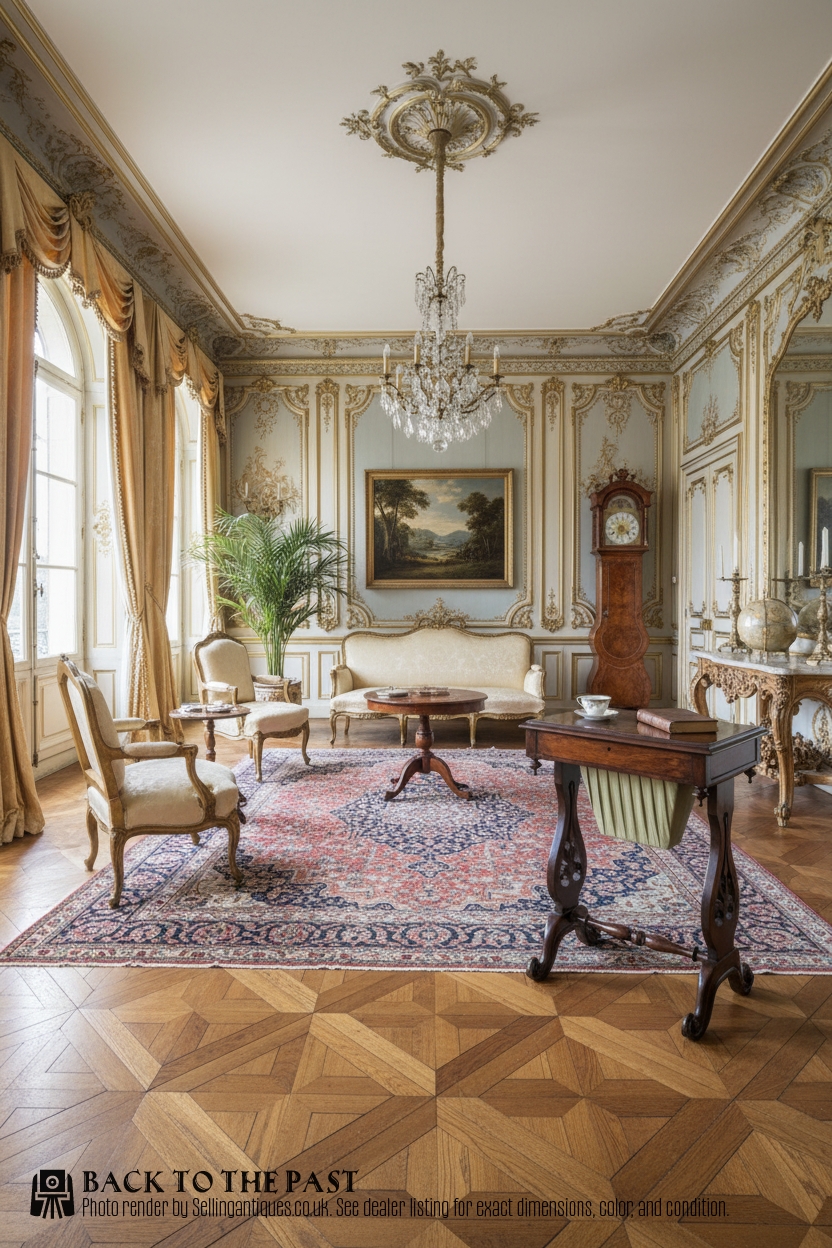
A sewing table fits well as an occasional side table beside a sofa or armchair in a living space. Its compact footprint makes it practical for smaller corners.
The drop-leaf design allows the piece to occupy minimal space until extra surface area is required.