





Dark Wood Settle Bench
A dark wood settle bench provides high-backed seating and enclosed storage, anchoring a hallway with sturdy craftsmanship and historic character.
Dark Wood Settle Bench
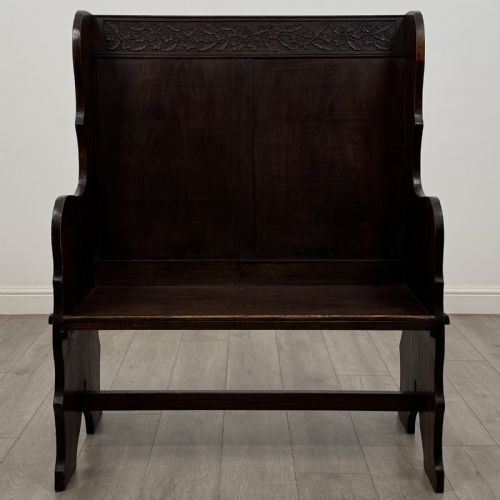
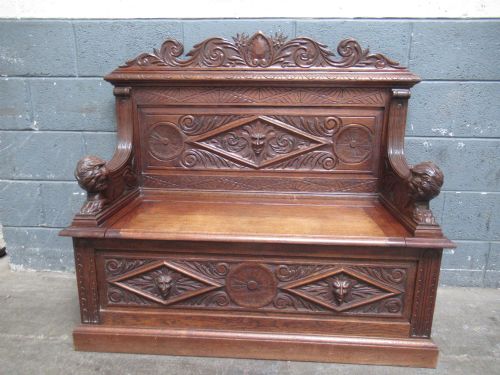
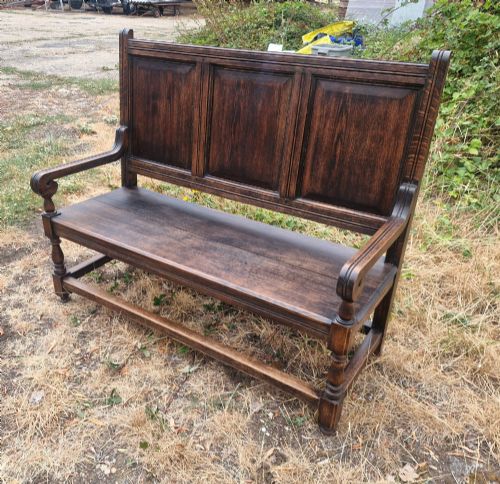
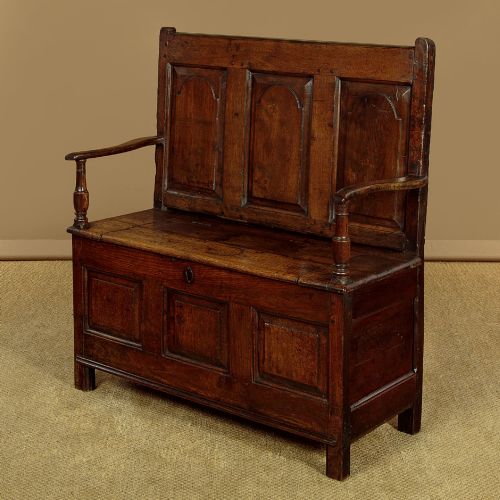
A dark wood settle bench combines a high timber back and solid armrests to block draughts in older spaces, functioning as a substantial seat. Pieces meeting this description span centuries of regional joinery, from domestic English oak examples to elaborate continental interpretations.
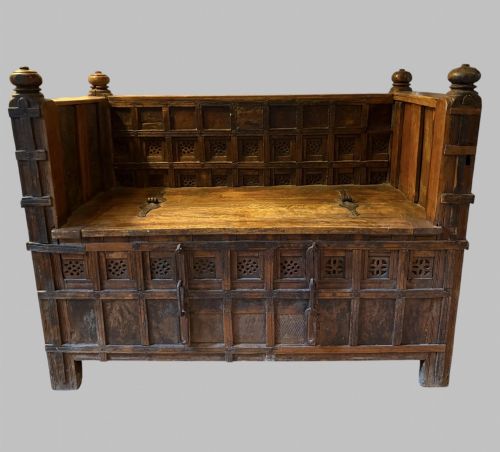
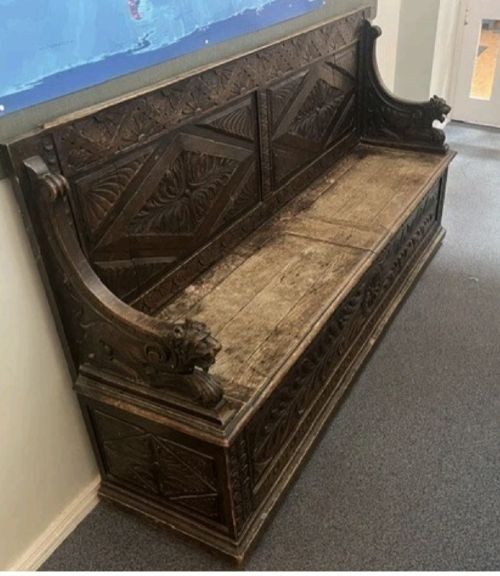
The selections available range from sturdy box settles featuring lift-up lids for storage to open-backed hall benches and convertible monks benches. Oak forms the backbone of these offerings, supplemented by mahogany, walnut, and exotic hardwoods reflecting varied global traditions.
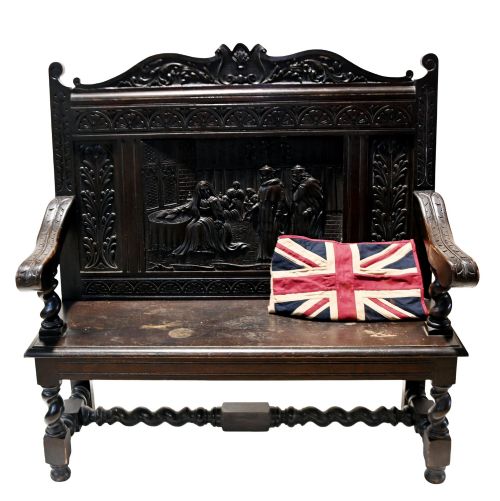
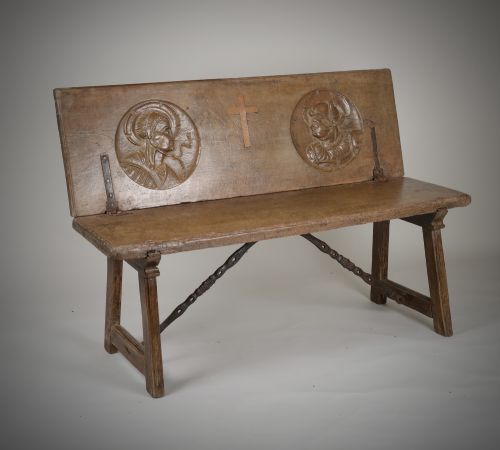
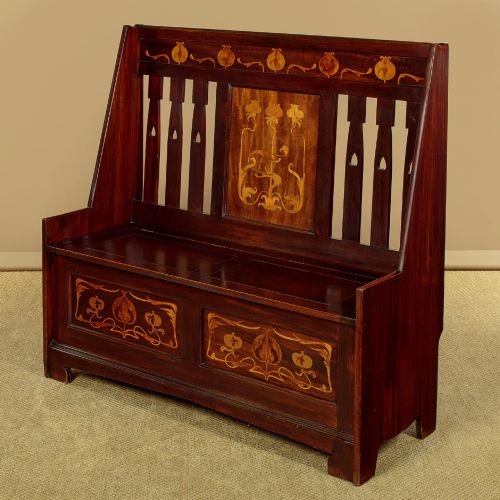
Early periods such as the seventeenth and eighteenth centuries contribute vernacular forms, while later Victorian and Edwardian examples lean into revivalist carving. Buyers encounter everything from rustic folk art canopied Spanish pieces to structured Arts and Crafts designs.
Materials and construction methods
Makers relied primarily on native and imported timbers, utilising solid oak, mahogany, walnut, and dense hardwoods to build load-bearing seats and high panels. Joinery methods relied heavily on pegged mortise and tenon joints to withstand decades of daily use without metal fasteners.
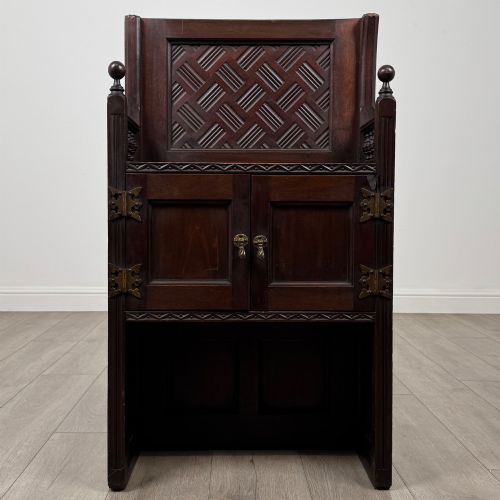
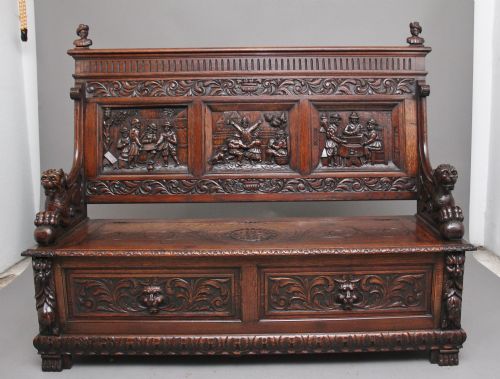
Carving, panelling, and turning dominate the surface decoration, with workshops employing relief work, linenfold panels, and applied mouldings. Iron and brass hardware, including strap hinges and lift-up mechanisms, secure storage compartments and drop-front table tops.
The inventory encompasses diverse regional forms, including Spanish folk art canopied pieces, Chinese export furniture, and English box settles.
Factors determining quality
The integrity of the timber and the depth of the hand-carving dictate the distinction between standard utility items and masterwork furniture. Original patination and untouched surface colour reveal the age of the wood, whereas heavy restoration or replaced panels alter the historic balance.
Structural proportion and the crispness of architectural details separate provincial joinery from sophisticated metropolitan workshops. The retention of original hardware, such as hinges and locks on box seats, preserves the physical integrity of the piece.
James Shoolbred and Co
The Dark Wood Settle Bench Glossary
- Settle bench
- A wooden bench featuring a high back, solid arms, and often a closed base designed to keep out cold draughts. These pieces served multiple domestic functions near fireplaces.
- Monks bench
- A multifunctional seat with a hinged back that tilts forward to form a table top over a box base. This form maximised utility in smaller historic chambers.
- Box settle
- A variant incorporating a hinged seat lid that opens to reveal a deep storage chest underneath. It provided secure containment for blankets and household goods.
- Green Man
- A sculptural motif depicting a human face emerging from or entwined with foliage, frequently carved into Victorian oak furniture. This symbol represents rebirth and spring.
- Jacobean Revival
- A nineteenth-century style imitating seventeenth-century English decoration through heavy geometric mouldings and dark finishes. Cabinetmakers used this aesthetic to project historical weight.
Dark Wood Settle Bench: Frequently Asked Questions
What is a dark wood settle bench used for?
These benches served historically in hallways and kitchens to block cold air while offering sturdy seating and hidden storage. Modern interiors utilise them similarly as architectural anchor pieces in entryways or dining areas.
Many examples feature lift-up lids or convertible table backs, maintaining their practical dual purpose. Their heavy timber construction allows them to endure heavy daily use.
How do I date an antique settle bench?
Dating relies on examining tool marks, timber selection, construction joints, and stylistic motifs. Seventeenth and eighteenth-century pieces often display hand-split boards and pegged joinery.
Revival pieces from the Victorian era typically incorporate machine-sawn elements and heavier, deeper mechanical carving. Comparing the hardware and patina against known period styles confirms the approximate age.
Where should I place a settle bench at home?
A high-backed settle functions effectively in entrance halls, mudrooms, or large dining kitchens where its solid back creates a defined seating zone. Placing it against a blank wall allows the carved details and timber grain to stand out.
Avoid positioning antique wooden furniture in direct sunlight or near active heating vents. Stable indoor humidity prevents the historic timber from splitting or warping over time.