



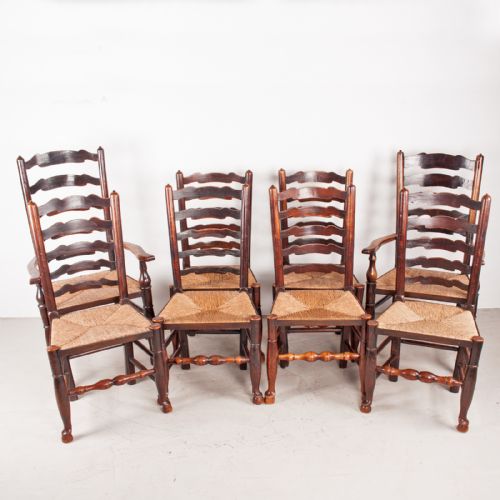


Dark Wood Rush Chair
A dark wood rush chair brings tactile warmth and vernacular strength to a room, drawing on centuries of domestic seating traditions.
Dark Wood Rush Chair
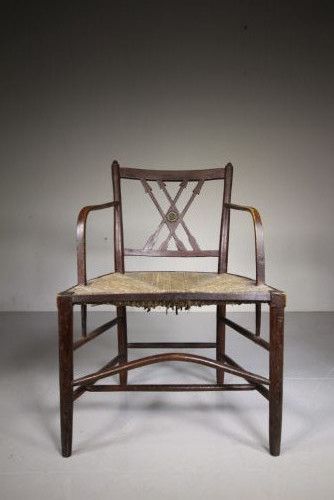
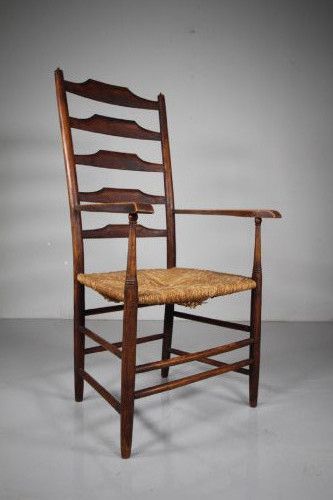
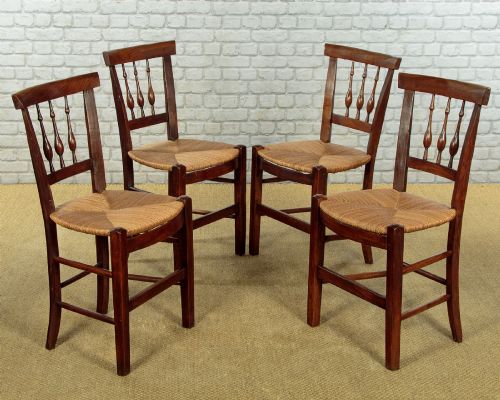
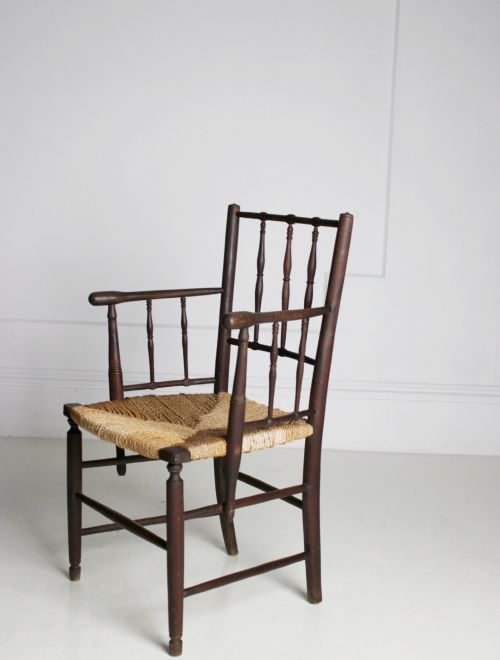
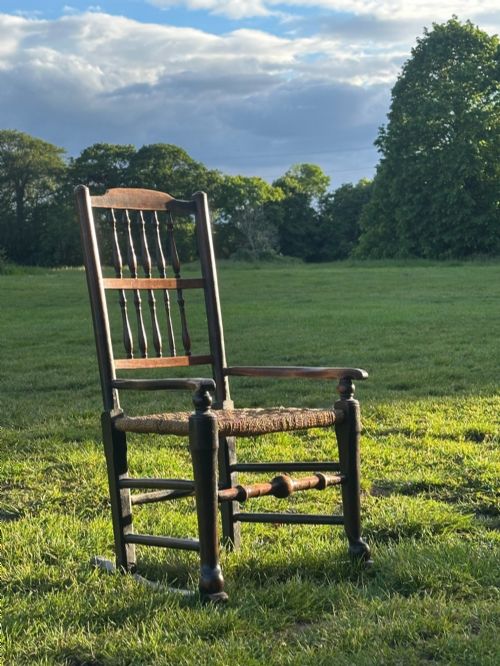
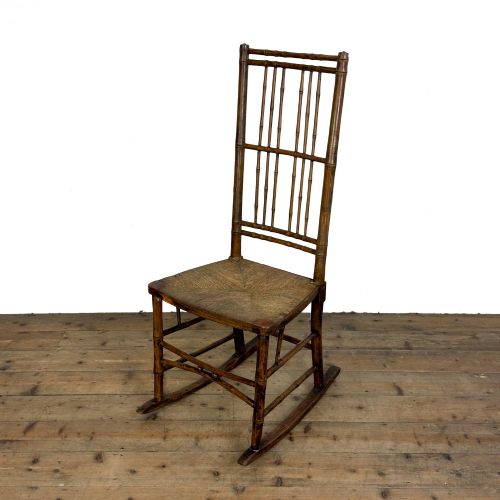
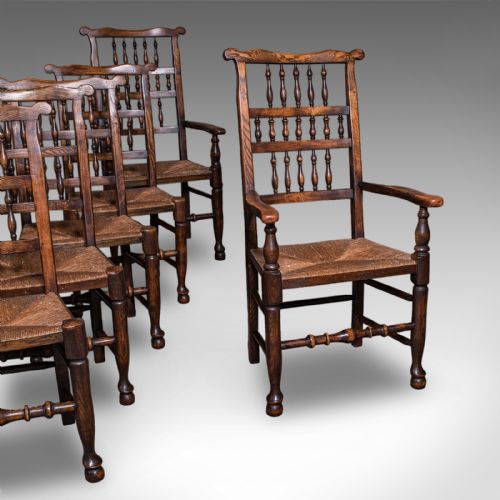
A dark wood rush chair spans forms from sturdy farmhouse armchairs and ladderbacks to refined Arts and Crafts side chairs. You will frequently encounter nineteenth-century vernacular pieces alongside Edwardian interpretations, each designed for utilitarian domestic use.
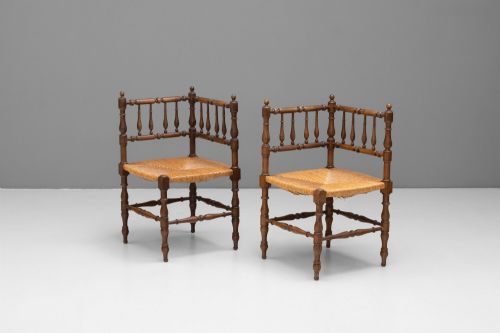
Makers utilised resilient local timbers like oak, elm, ash, and beech, pairing them with woven seating to create enduring dining, rocking, and corner chairs. These pieces carry the distinct aesthetic of English country workshops and movement-led design ideals.
Materials and construction
Frames rely on turning, steaming, and joining solid hardwoods such as ash, beech, and elm, often left in their natural dark tone or painted. Carpenters shaped spindles and ladder backs to balance structural rigidity with relative lightness.
The seats are hand-woven from marsh rush, creating a taut, supportive surface that flexes with use. This traditional cordage technique relies on twisting dried river rushes around a wooden frame.
Some nineteenth-century rocking chairs include subtle foot-scratches left by generations of fidgeting occupants seeking the ideal tilt.
Assessing quality and integrity
Quality rests in the tightness of the rush weave and the structural honesty of the hardwood frame, where minimal restoration indicates careful preservation. Better examples display balanced proportions, crisp turning on spindle backs, and well-fitted joints.
The presence of original surface treatments, whether aged dark polish or authentic early paint, elevates a piece above later refinishing. Subtleties in the hand-shaping of ladder backs and arm bow curves distinguish regional vernacular workshops from mass production.
Philip Clissett·William Morris·E W Godwin·Liberty & Co
The Dark Wood Rush Chair Glossary
- Rush
- Marsh grass twisted into cord and woven tightly to form a supportive, resilient seat. It provides a natural texture that patinates gracefully with decades of friction.
- Ladderback
- A chair back featuring horizontal slats curved to fit the spine. This regional form appeared frequently in English country kitchens.
- Spindleback
- A style incorporating slender, turned wooden rods set into the backrail. These vertical members distribute weight evenly across the frame.
- Carver
- An armchair, frequently produced as part of a larger matched suite with side chairs. They typically stood at the head of a dining table.
- Vernacular
- Objects built by local craftspeople using traditional regional methods rather than following formal metropolitan pattern books.
Dark Wood Rush Chair: Frequently Asked Questions
How do I care for a rush seat?
Keep rush dry and dust it regularly with a soft brush to prevent the natural fibres from becoming brittle. Avoid placing the chair in direct sunlight or damp environments, which weakens the woven reed.
Apply a light application of boiled linseed oil sparingly if the cordage dries out significantly. With sensible humidity control, a well-woven rush seat serves daily life for generations.
Can I use these chairs daily?
Most antique ladderback and spindleback designs were built for heavy domestic service in farmhouses and cottages. Their solid hardwood frames handle everyday sitting comfortably when joints remain secure.
Check periodically that the legs do not wobble and that the rush shows no signs of unravelling under heavy strain. Treating older seating with reasonable care ensures it functions reliably in modern rooms.
How do I date an older chair?
Examine the tool marks, timber choice, and construction methods to gauge the period of production. Hand-turned spindles and pegged joints often suggest nineteenth-century or earlier regional craftsmanship.
Compare the style of the ladder slats or arm supports with documented vernacular types from districts like Lancashire or Cheshire. Subtle shifts in turning profiles help distinguish Georgian examples from later Edwardian revivals.
What is an Arts and Crafts chair?
Arts and Crafts seating emphasises honest construction, visible joinery, and functional simplicity over ornamental excess. Makers drew inspiration from vernacular traditions, celebrating natural materials like oak and rush.
These pieces often feature clean vertical lines, low ladder backs, and unpretentious finishes. They reflect a philosophical shift toward handcrafted domestic objects at the turn of the twentieth century.