



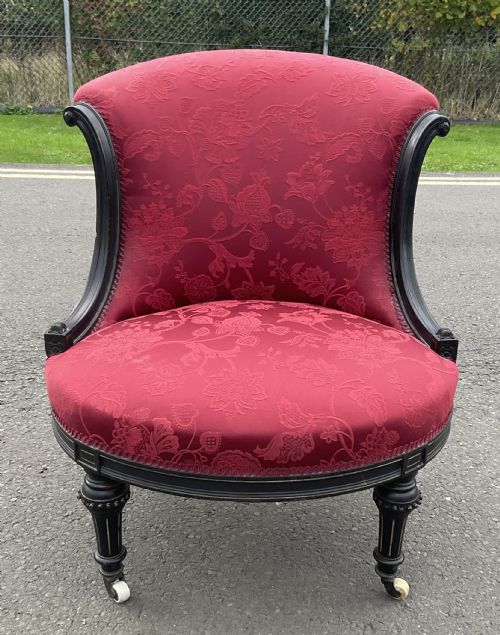


Aesthetic Movement Low Chair
An aesthetic movement low chair brings distinct nineteenth-century reform design into a room, offering low seating shaped for comfort and visual balance.
Aesthetic Movement Low Chair
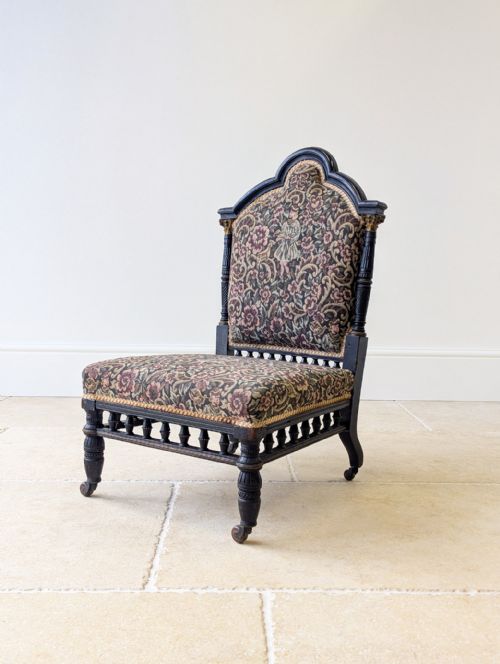
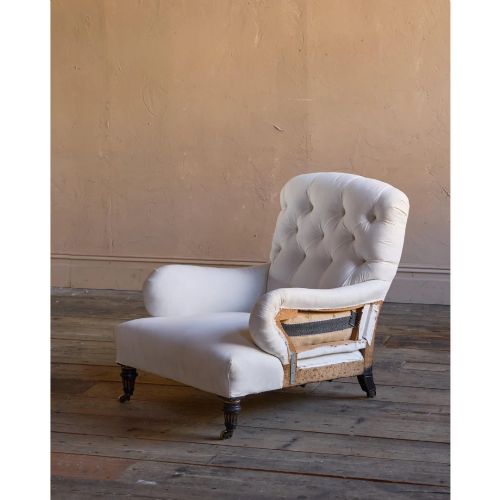
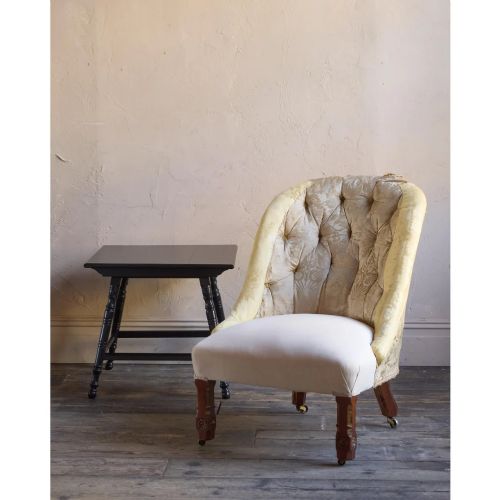
An aesthetic movement low chair sits low to the floor, taking forms such as salon chairs, nursing chairs, child chairs, and armchairs from the Victorian period. These pieces emerge from the nineteenth century, particularly around 1880, embodying the reform ideals of the era.
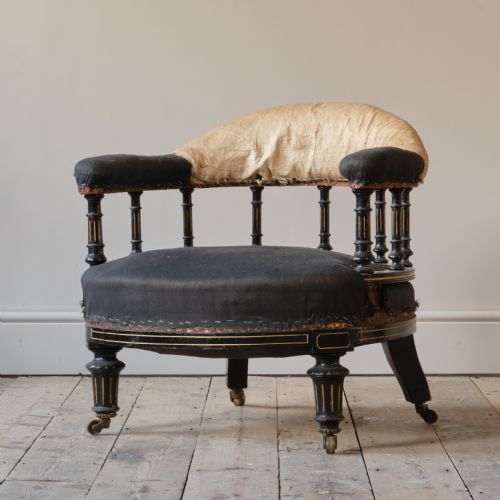
The selections available here range from ebonised wood frames to mahogany and Oregon pine structures. Buyers encounter varied formats including open armchairs, tub armchairs, and low bathroom chairs designed for domestic spaces.
Makers and designers of the period, such as Bruce J. Talbert and firms like Gillows and Maple & Co, heavily influenced these configurations. Their work establishes the primary vocabulary for low seating found in this category.
How they were made
Frames rely on woods such as mahogany, walnut, Oregon pine, and ebonised wood, often shaped into sturdy structures. Woodwork is paired with structural brass elements where appropriate to secure joints and details.
Upholstery forms a major component, utilising fabrics like velvet, standard upholstery fabric, and calico underneath. Workshops constructed these seats to support low frames, combining exposed wooden elements with soft padded surfaces.
Aesthetic Movement Low Chair Retail Price Guide 2026
Typical asking prices for aesthetic movement low chair among the pieces listed under this phrase on Sellingantiques today, from the lower quarter to the upper quarter. They describe what is for sale here now, not the wider market.
What varies in quality
The refinement of the woodwork dictates much of the distinction across these chairs, separating standard output from pieces bearing documented workshop attributions. Ebonised finishes and carved walnut demonstrate different levels of artisanal care during shaping and assembly.
Upholstery specification and framing proportions also create variation, from simple child chairs to substantial armchairs with large proportions. Pieces associated with notable designers or makers display superior structural integrity and stylistic cohesion.
Bruce J Talbert·Gillows·Maple And Co
The Aesthetic Movement Low Chair Glossary
- Ebonised wood
- Timber treated to resemble ebony, frequently used on nineteenth-century frames to provide a dark, uniform surface.
- Nursing chair
- A low-seated Victorian chair originally designed for comfort while nursing, characterised by a compact frame.
- Salon chair
- An occasional chair intended for drawing rooms, combining decorative presence with accessible proportions.
- Calico
- A plain-woven cotton fabric commonly utilised as an initial upholstery layer beneath decorative textiles.
Aesthetic Movement Low Chair: Frequently Asked Questions
What is an aesthetic movement low chair?
An aesthetic movement low chair is a nineteenth-century seating form designed with a low profile, aligning with Victorian reform styles.
These chairs often feature ebonised wood, walnut, or mahogany frames paired with upholstered seats for domestic use.
How were these chairs used historically?
They served as functional domestic seating in bedrooms, nurseries, and reception rooms during the Victorian period.
Specific variants like nursing chairs and salon chairs accommodated particular domestic activities while reflecting contemporary design tastes.
How do I identify a Victorian low chair?
Identification relies on observing characteristic nineteenth-century timber choices, low proportions, and stylistic details associated with the aesthetic movement.
Many examples exhibit ebonised finishes or specific frame shapes linked to known makers from the eighteen-eighties.
What materials make up these chairs?
Construction materials primarily include hardwoods such as mahogany, walnut, and Oregon pine, alongside ebonised wood.
Upholstery finishes involve textiles like velvet, calico, and general upholstery fabric supported by brass hardware.