



Dark Wood Rocking Chair
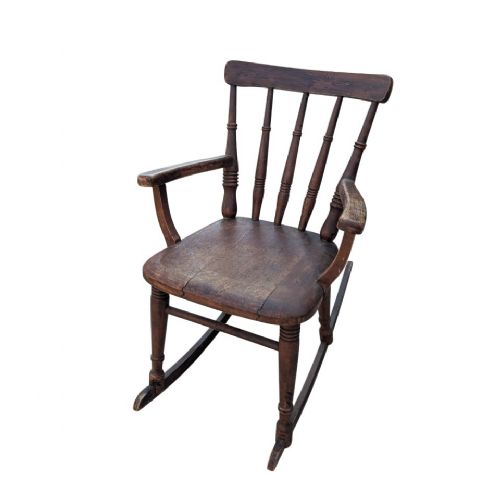
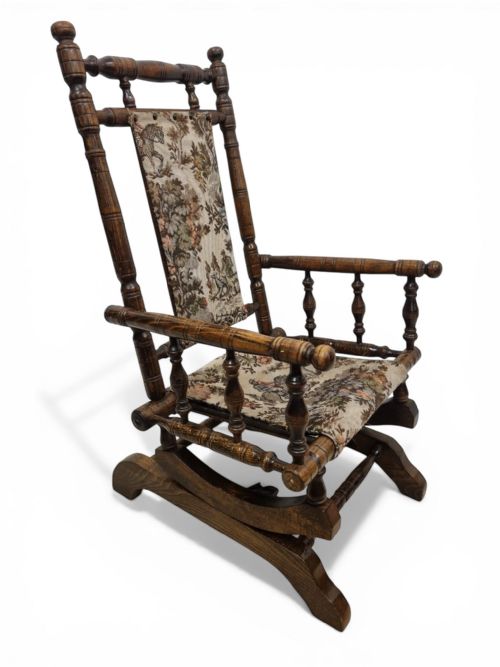
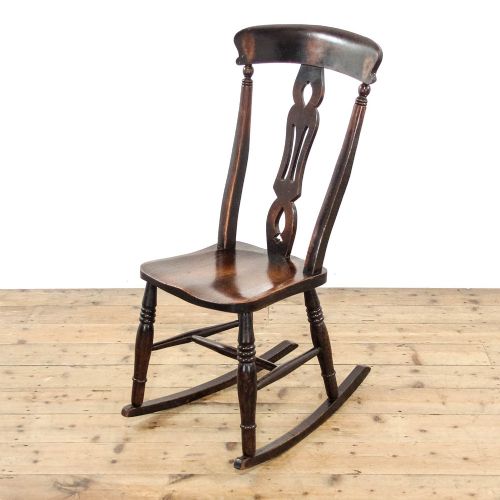
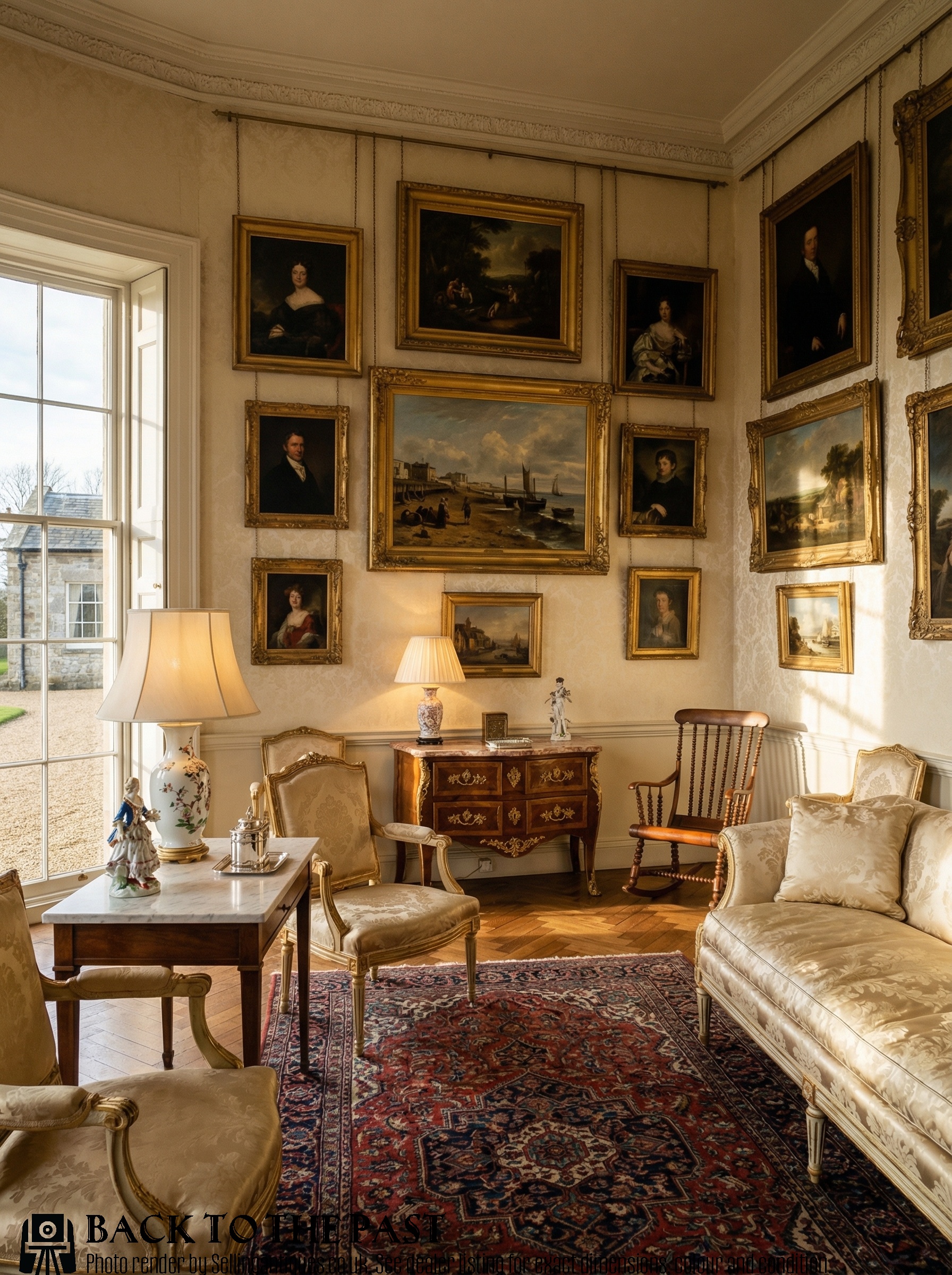
A dark wood rocking chair brings domestic comfort to a room, offering rhythmic motion through sturdy timber frames shaped over centuries.
Dark Wood Rocking Chair
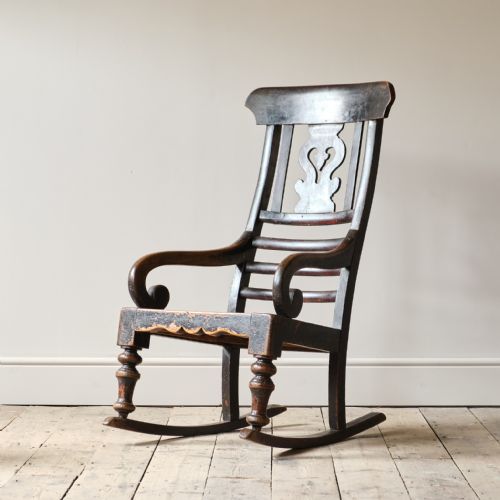
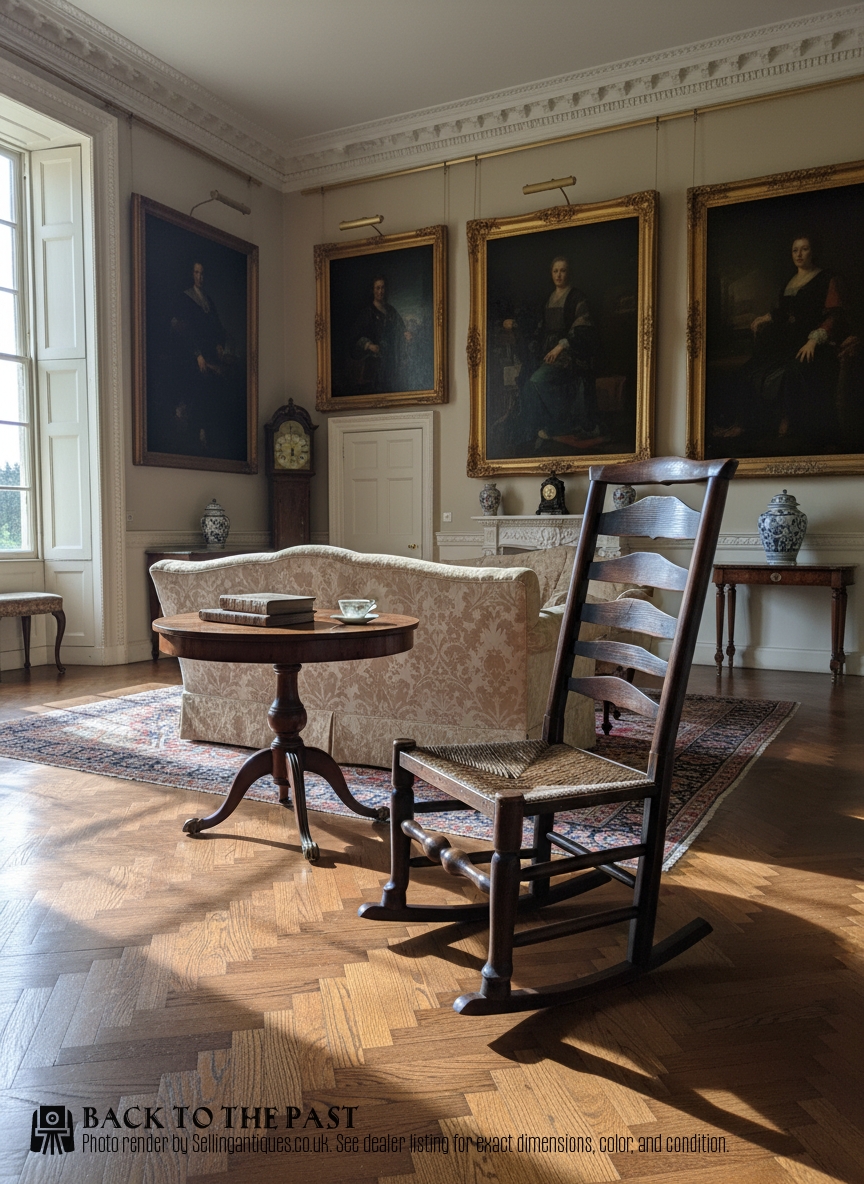
Every dark wood rocking chair on this page represents a tradition of seating designed for gentle movement, spanning vernacular country forms and refined urban styles. Buyers seek these pieces for fireside sitting, nurseries or studies where functional relaxation meets traditional craftsmanship.
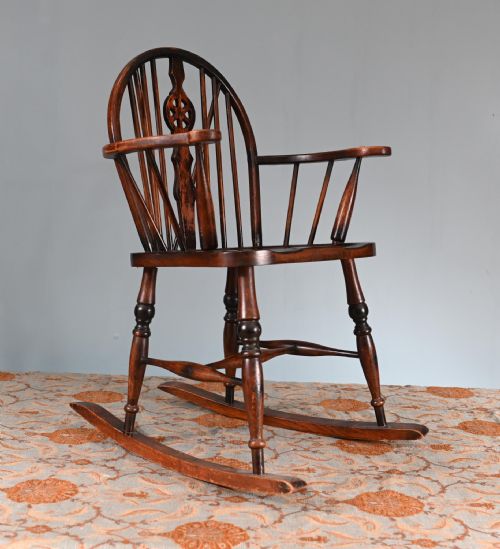
The selection ranges from robust Windsor designs and ladder backs to steam-bent bentwood frames. Victorian examples and earlier eighteenth century pieces dominate the selection, alongside Edwardian and later vernacular variants.
Materials and Construction
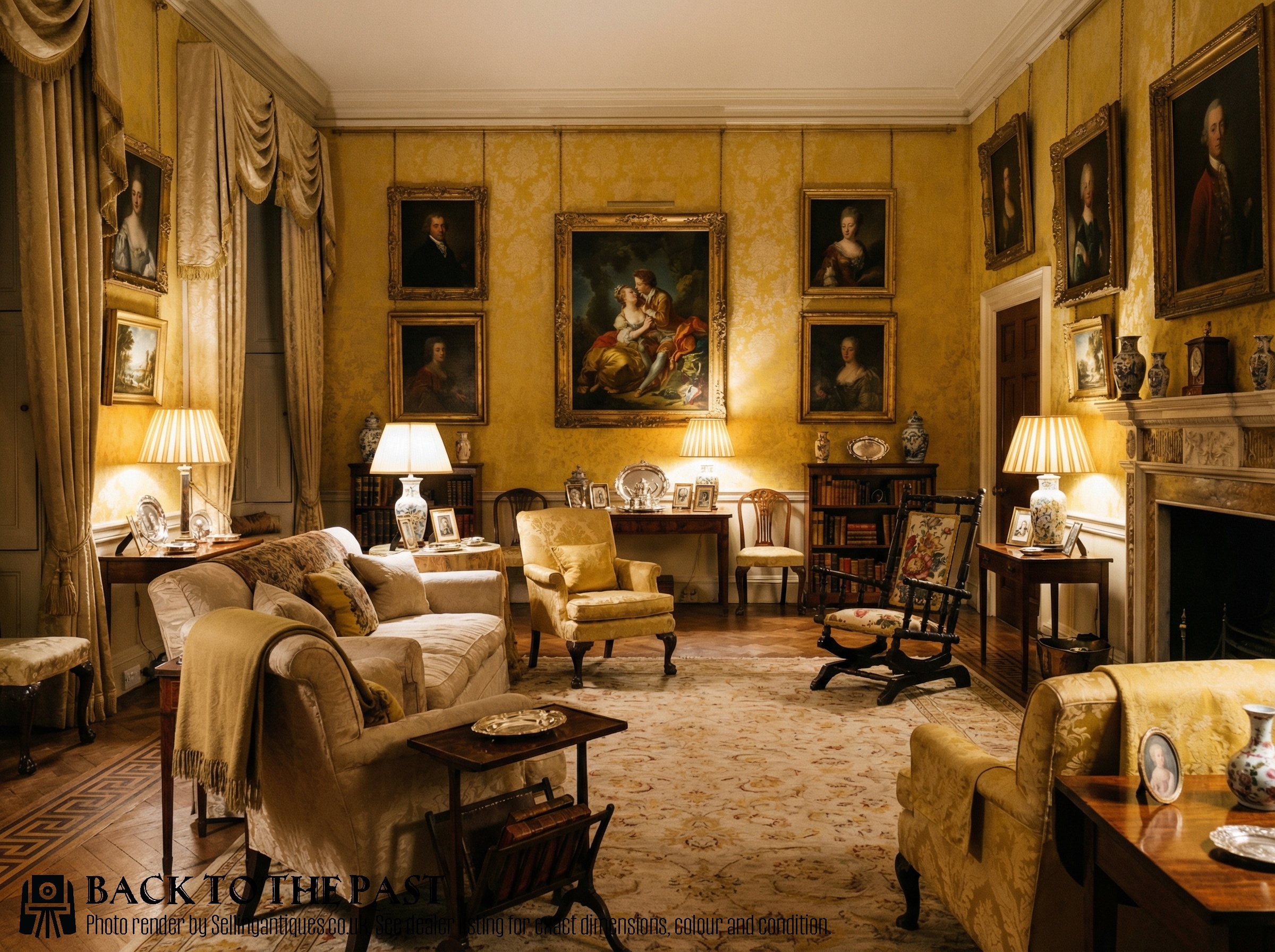
Cabinet makers and bodgers relied upon durable native hardwoods such as elm, ash, beech and oak to build frames capable of withstanding the stress of continuous motion. Turnings, steam bending and traditional joinery form the structural backbone of these chairs.
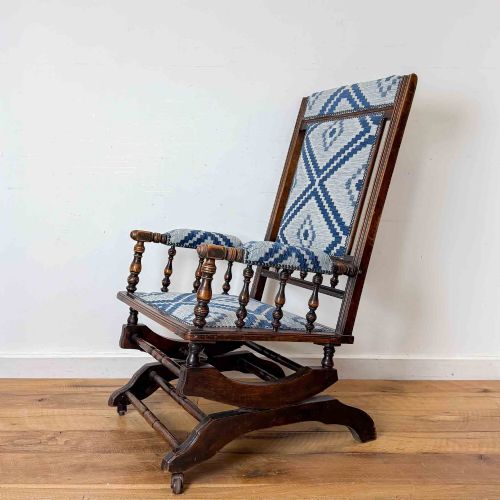
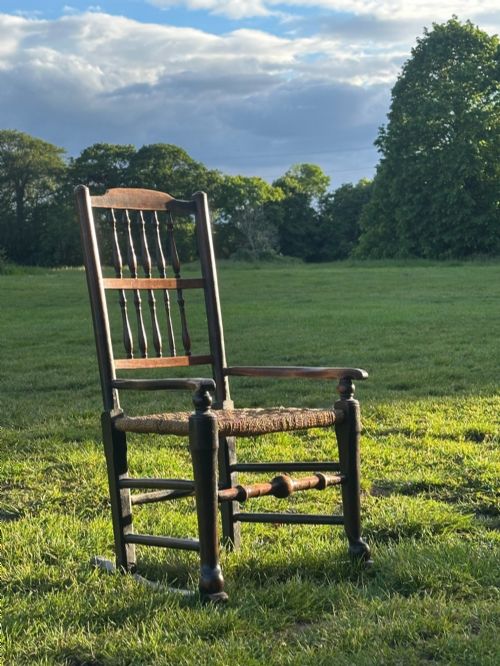
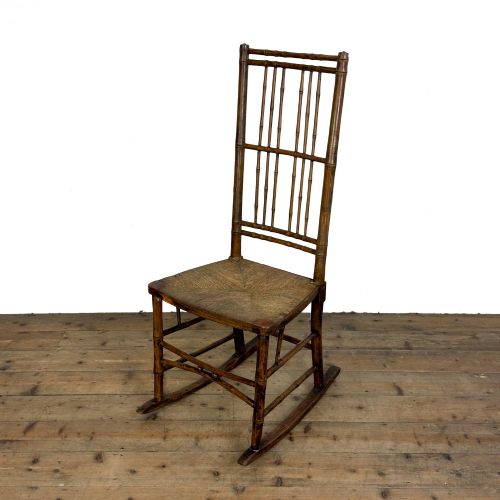
Seating areas often feature woven rush, cane or sea grass, while more formal iterations incorporate leather, tapestry upholstery or button-backed textiles. Paint finishes or polished timber surfaces preserve the natural grain of the wood.
Dark Wood Rocking Chair Retail Price Guide 2026
Typical asking prices for dark wood rocking chair among the pieces listed under this phrase on Sellingantiques today, from the lower quarter to the upper quarter. They describe what is for sale here now, not the wider market.
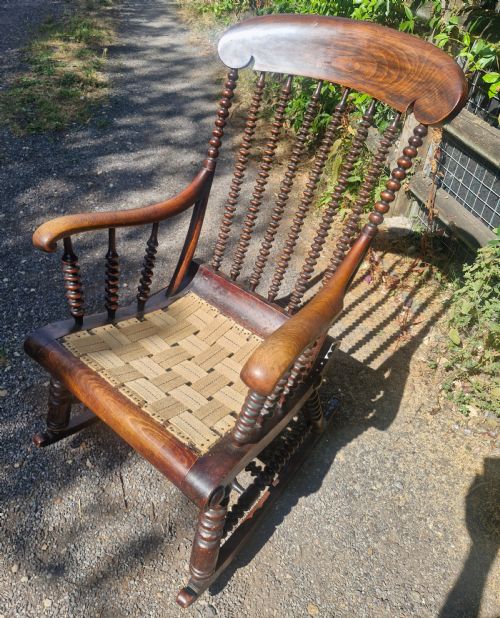
Some chairs include faux bamboo turnings, proving that Victorian makers loved replicating exotic plants in solid British hardwood.
Evaluating Quality and Character
Quality rests in the integrity of the timber selection and the precision of the joinery, particularly where the rockers meet the legs. Chairs retaining original surfaces, undisturbed patina or authentic woven seating command greater appreciation among collectors.
Design sophistication also distinguishes individual pieces, from simple provincial ladder backs to complex steam-bent forms produced by notable makers. The harmony of proportions and the survival of secondary details like bobbin turnings or spindle backs define the upper tier.
Jacob and Josef Kohn·Thonet
The Dark Wood Rocking Chair Glossary
- Bentwood
- Wood softened by steam and bent into curved structural forms. This technique created the light, sweeping profiles seen in nineteenth century rocking chairs.
- Windsor
- A chair built with a solid wooden seat into which the legs and back spindles are directement tenoned. These pieces often feature comb backs, wheelbacks or hooped frames.
- Ladder back
- A chair back constructed from horizontal slats or rails positioned between two upright posts. This traditional form appears frequently in country vernacular furniture.
- Rush seating
- Woven marsh vegetation used to create a flexible, supportive seat pad. Artisans twisted the dried material before weaving it tightly across the chair frame.
Dark Wood Rocking Chair: Frequently Asked Questions
How do I identify an older rocking chair?
Look closely at the construction methods, tool marks and timber types used in the frame. Hand-turned spindles and pegged joints usually indicate older provincial manufacture.
Compare the silhouette against established periods like the eighteenth century or Victorian era, noting how timber age aligns with the style.
What is a bentwood rocking chair?
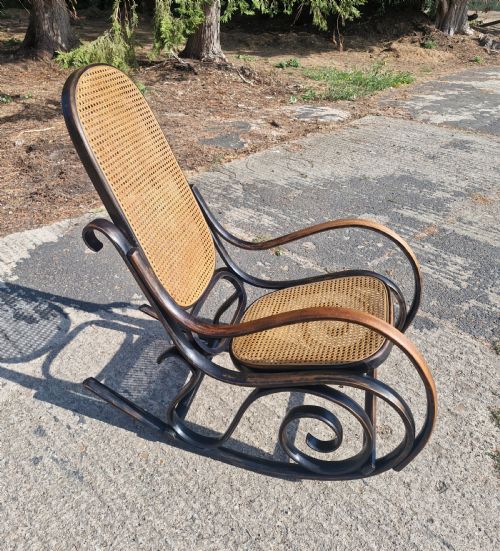
A bentwood rocking chair utilises steam-heated timber manipulated into graceful, curved structural lines. This manufacturing method originated in the nineteenth century and produced remarkably resilient furniture.
These chairs often feature woven cane seats and lighter overall frames compared to traditional solid wood Windsor designs.
Where should I place a rocking chair?
These chairs suit firesides, quiet reading corners and bedrooms where their gentle motion provides practical utility. Ensure adequate clearance behind the chair for the runners to move freely without striking walls.
Pairing the timber tone with existing interior wood finishes helps anchor the piece naturally within a room.
Are child rocking chairs functional?
Smaller rocking chairs were historically built for children or nurseries, constructed with the same sturdy materials as full sized equivalents. Elm, ash and beech frames ensure they remain structurally robust.
Many collectors display these smaller pieces as decorative examples of vernacular craftsmanship alongside full scale seating.