
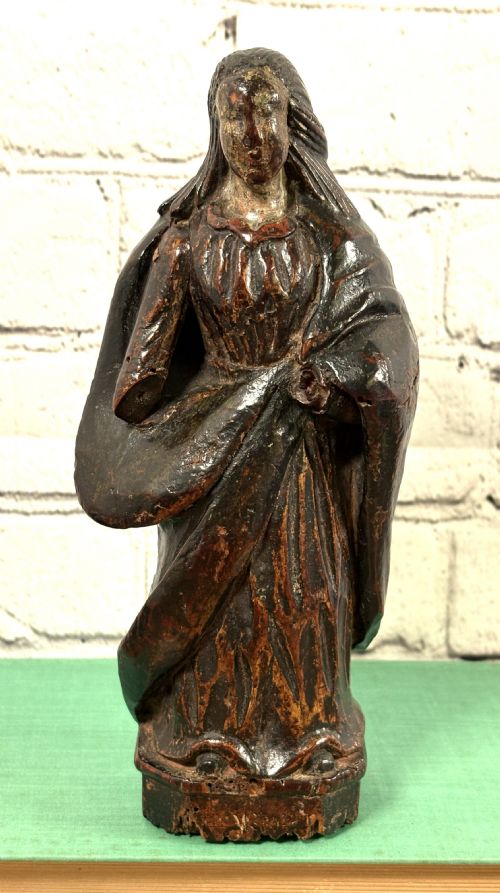


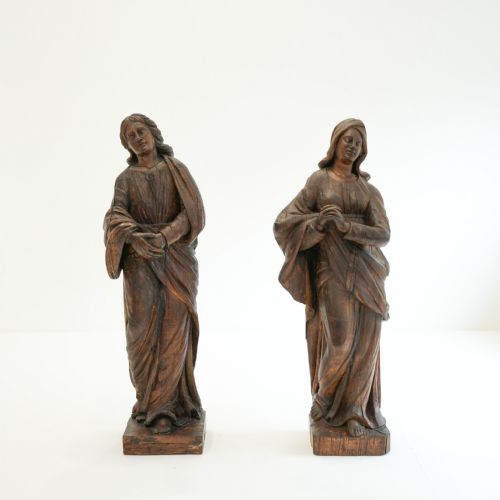


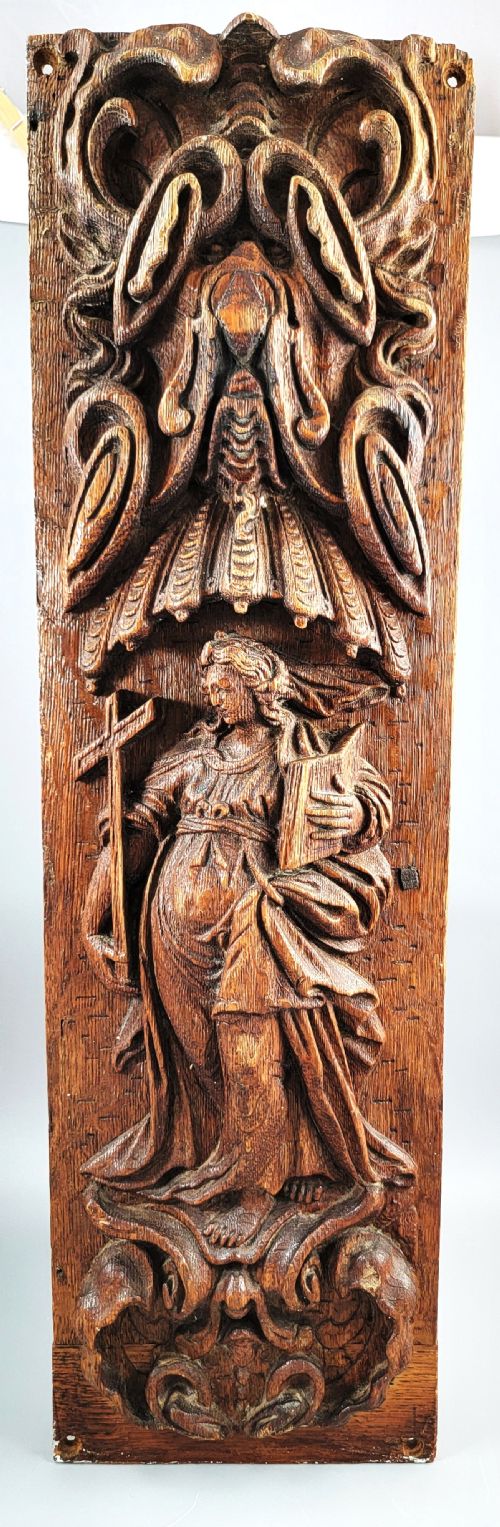
Dark Wood Religious Sculpture
A dark wood religious sculpture carries centuries of devotion in carved oak, limewood and pine, offering a tactile connection to historical craftsmanship that collectors prize.
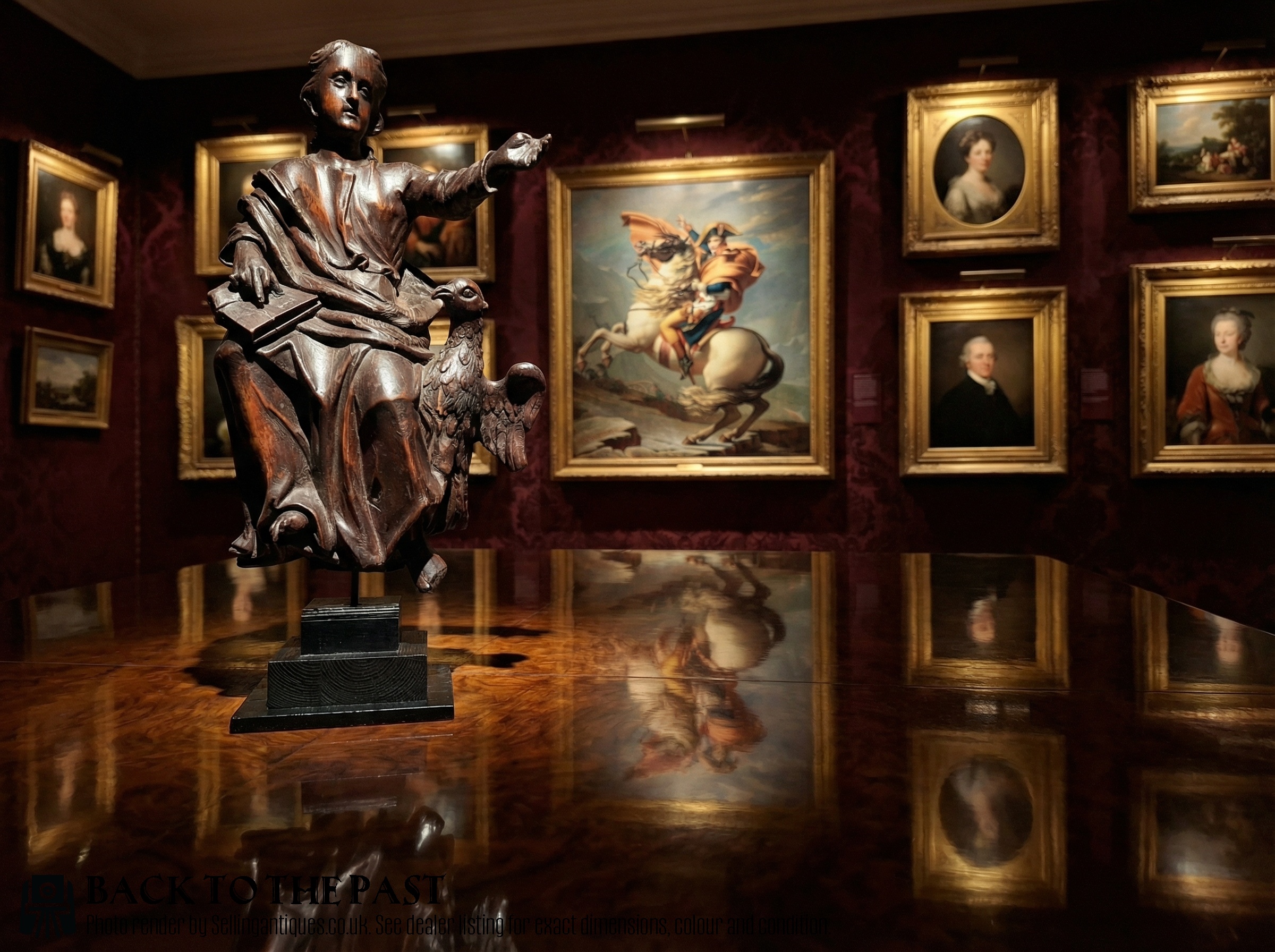
Dark Wood Religious Sculpture
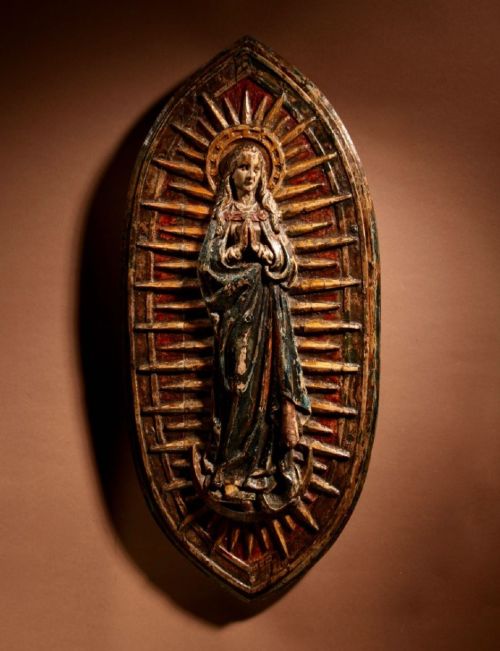
Dark wood religious sculpture encompasses figures of saints, panels, altarpiece fragments and crucifixes shaped from timber for devotional use. These objects span periods from pre-sixteenth century medieval works through Baroque interpretations and nineteenth-century Gothic revivals.
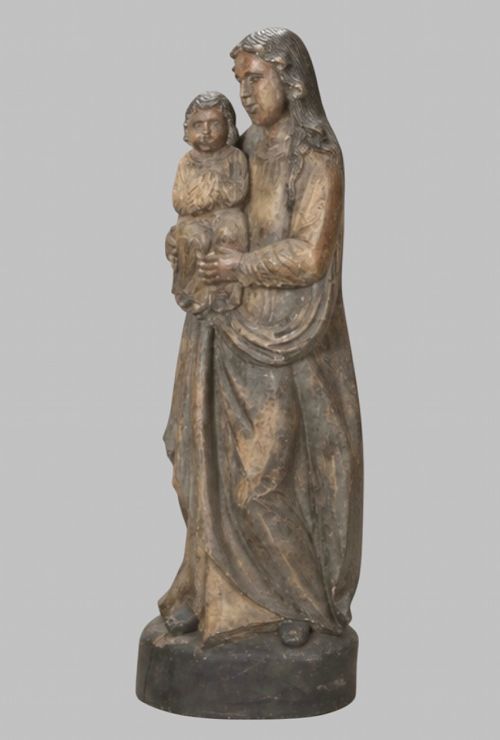
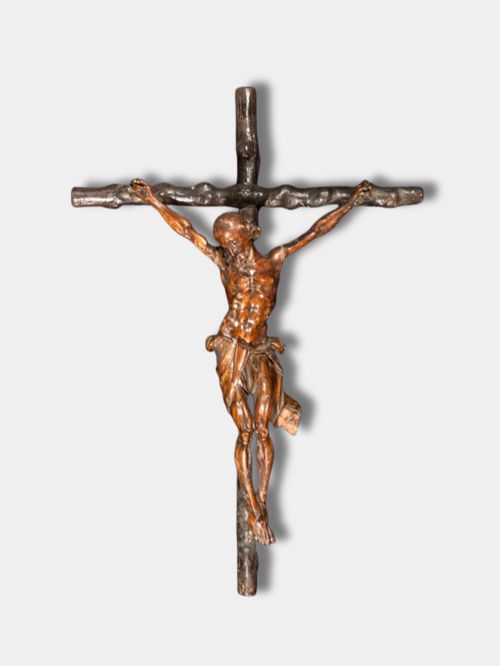
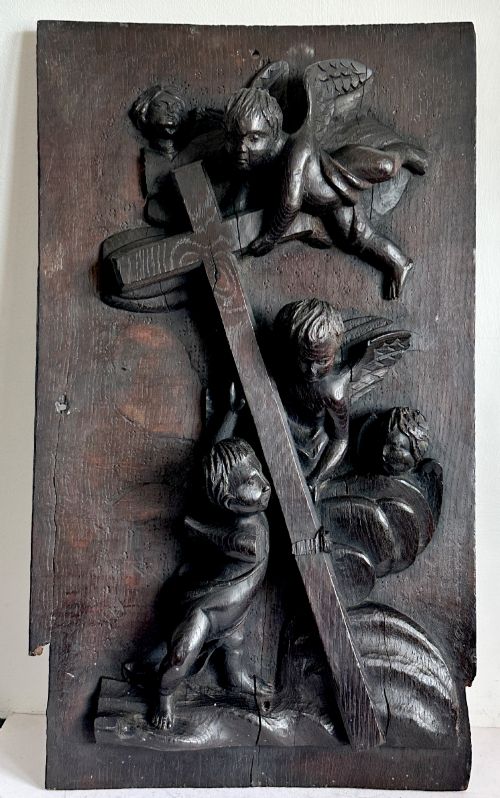
Buyers meet forms ranging from large wall relief carvings and free-standing statues of the Madonna and Child to detailed depictions of angels and corpus Christi figures. Oak appears frequently alongside limewood, pine and boxwood, reflecting European and Asian ecclesiastical traditions.
How they were made
Artisans carved these sculptures directly from dense hardwoods and softwoods like oak, limewood, pine and boxwood, utilising chisels and gouges to build deep relief and expressive contours. Surfaces often received preparation with gesso before some retained traces of polychrome pigment, gilding or dark lacquer finishes.
Joinery methods secured larger panels and multi-part figures, while finer details in hair, drapery and facial expressions emerged through careful hand-tooling. The grain of the timber directly influenced the depth and crispness achievable in each medieval or baroque carving.
The selection includes architectural panels, altarpiece fragments and free-standing devotional statues created across European and Asian traditions.
What varies in quality
Depth of relief and anatomical expression separate standard devotional carvings from superior artistic achievements, particularly in how drapery falls and hands are shaped. Pieces retaining original surface treatments, such as early polychrome or gilding on the wood, command higher regard.
The crispness of the chisel work and the structural integrity of the timber define the upper tier of these sculptures. Early medieval and high baroque examples demonstrate a distinct sculptural ambition that lesser nineteenth-century revival pieces occasionally lack.
The Dark Wood Religious Sculpture Glossary
- Corpus Christi
- The body of Jesus Christ depicted on a cross. This form appears frequently in seventeenth-century wooden crucifixes.
- Polychrome
- Decorated in multiple colours. Artisans applied pigments over gesso to give realistic life to wood carvings.
- Gesso
- A plaster mixture applied to wood surfaces as a base for paint or gilding. It smoothed the timber grain before decoration.
- Relief
- Sculptural elements carved from a flat background panel. Wall reliefs depict narrative scenes like the Stations of the Cross.
- Pieta
- A representation of the Virgin Mary holding the dead body of Christ. Medieval examples often employ carved oak.
Dark Wood Religious Sculpture: Frequently Asked Questions
What periods do these sculptures cover?
The pieces span from pre-sixteenth century medieval works and Gothic creations through seventeenth-century Baroque interpretations up to nineteenth-century Gothic revivals and early twentieth-century examples.
Craftsmanship evolved across these eras, shifting from austere medieval piety to the theatrical dynamism of Baroque panels and figures.
How were these wooden sculptures used?
These items served primarily within churches, private chapels and domestic spaces for prayer, contemplation and altarpiece decoration. Relief panels illustrated biblical narratives while free-standing statues focused devotion on specific saints or biblical figures.
Many functioned as central focal points for worship before entering collections as historic artefacts.
Which woods appear most often?
Oak forms the majority of the European medieval and seventeenth-century pieces, prized for its durability and firm grain. Limewood, pine, boxwood and assorted hardwoods also appear across various regional traditions.
Each timber responded differently to the chisel, allowing carvers to achieve varying levels of fine detail in faces and drapery.
How should I care for a wood carving?
Keep wooden sculptures away from direct sunlight, extreme heat sources and rapid humidity fluctuations to prevent splitting or warping. Dust gently with a dry, soft brush rather than using liquid polishes or damp cloths.
Stable environmental conditions preserve the historic timber and any remaining gesso, paint or dark patina.
How do I distinguish regional styles?
Flemish and German Baroque pieces often display dramatic folds and emotional intensity, whereas early English or French medieval works feature more linear austerity. Details in costume, facial structure and the choice of wood offer clues to geographic origin.
Comparative study of sixteenth-century and seventeenth-century ecclesiastical workshops helps clarify these regional differences.