
Dark Wood Library Shelving
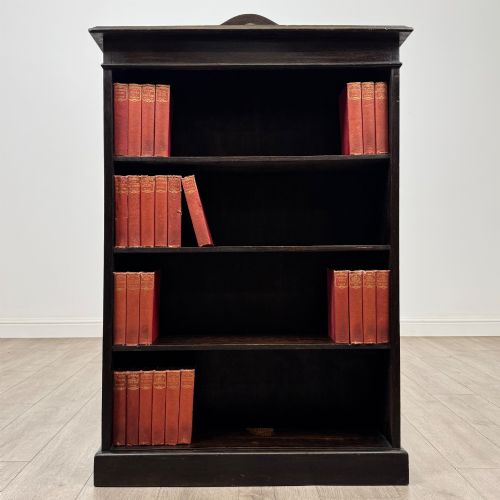
Dark wood library shelving brings substantial timbers and disciplined rows of books into rooms that need architectural weight and calm order.
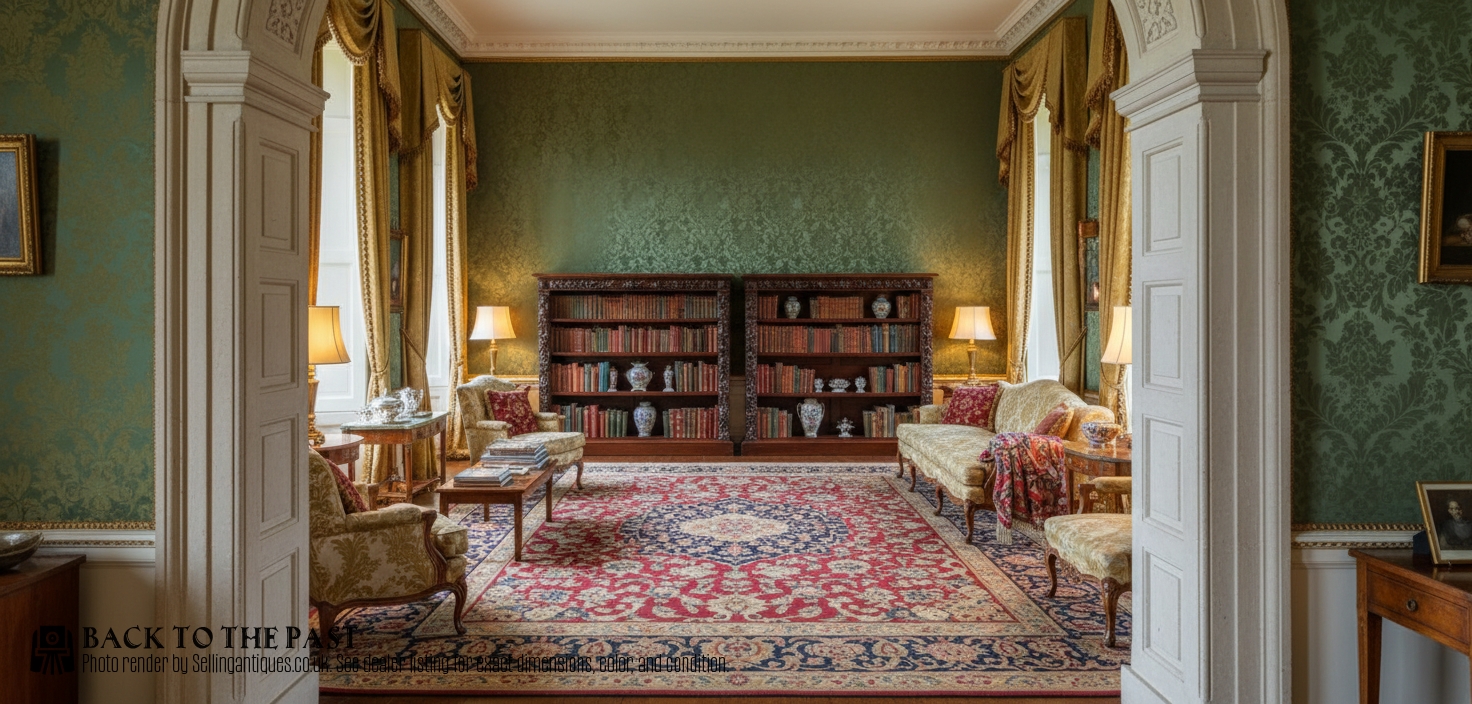
Dark Wood Library Shelving
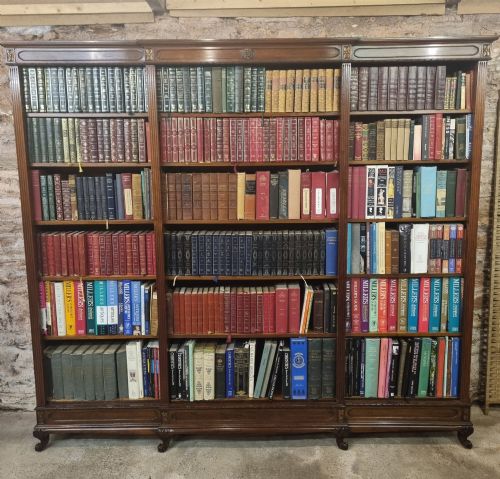
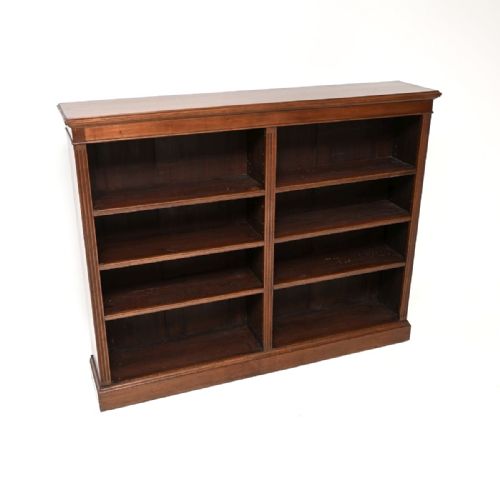
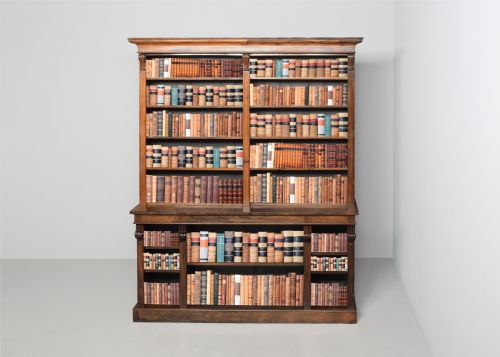
Dark wood library shelving comprises open bookcases, breakfront bookcases, and tiered display pieces designed to hold substantial volumes while anchoring a room with deep timber tones. These pieces appear primarily from the nineteenth and early twentieth centuries, spanning Regency, Victorian, and Edwardian periods.
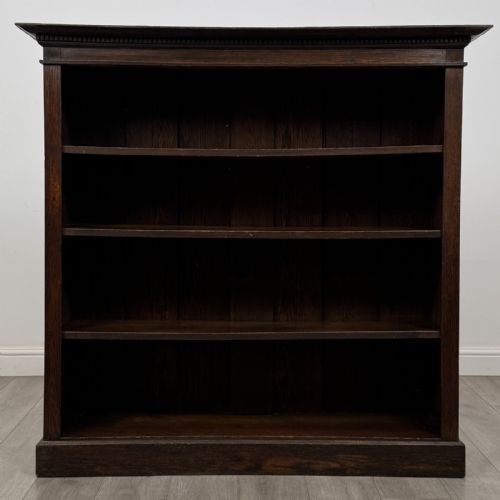
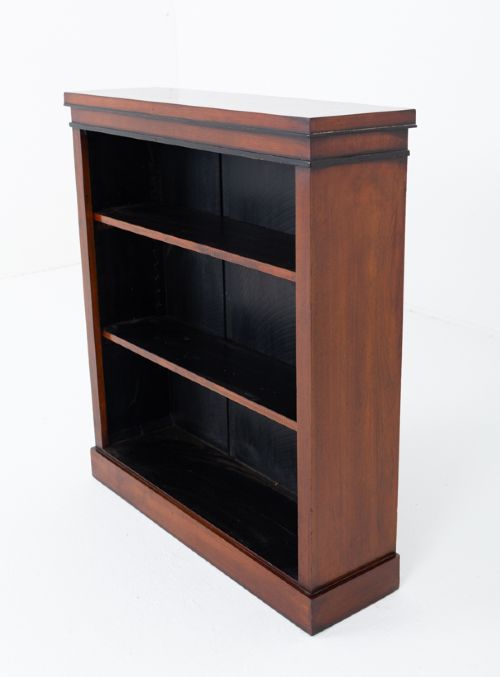
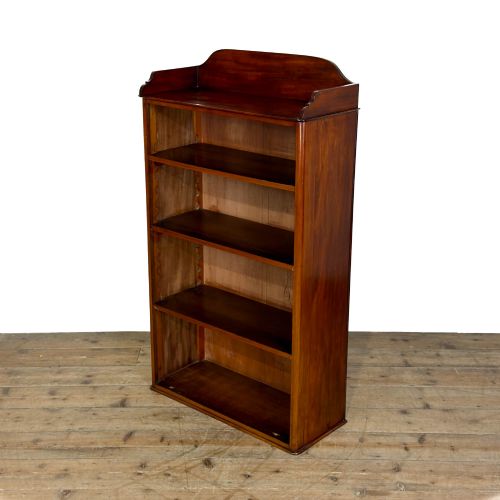
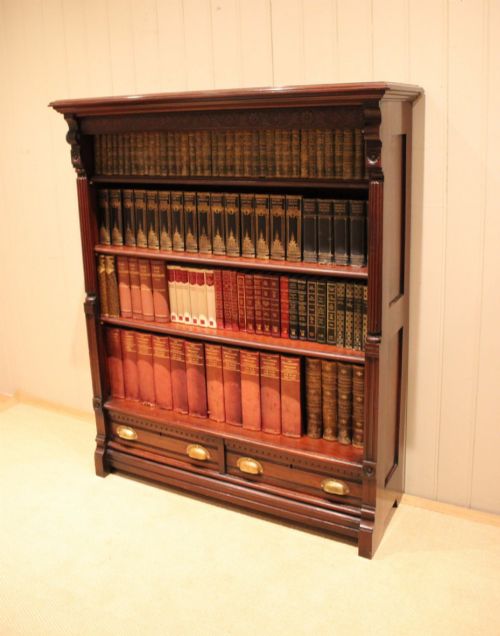
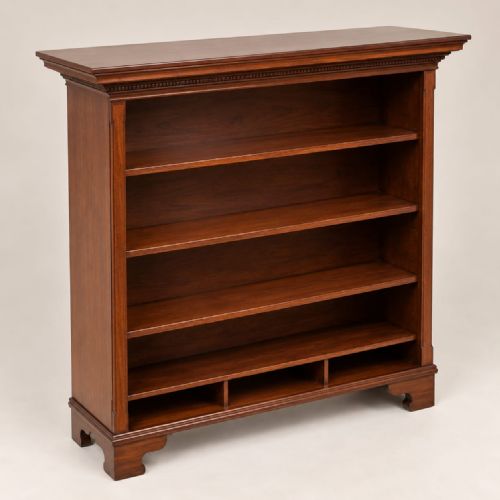
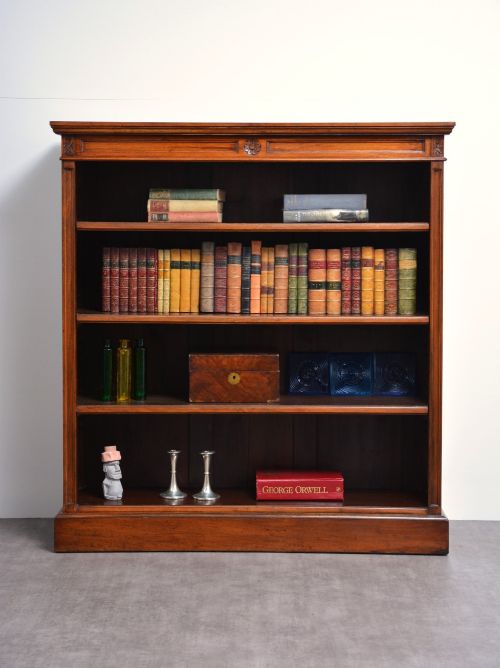
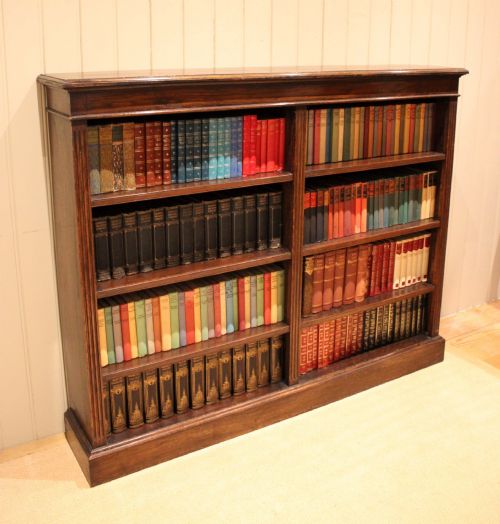
The most common form on this page is the open bookcase, often fitted with adjustable shelves to accommodate varying book heights. Buyers encounter freestanding mahogany, oak, walnut, and rosewood units that range from low dwarf bookcases to large library installations.
Makers such as Waring and Gillows and Globe Wernicke appear alongside unmarked pieces, reflecting both bespoke cabinet-making and early sectional manufacturing. The forms serve both working libraries and domestic sitting rooms where books form part of the interior decoration.
Materials and construction
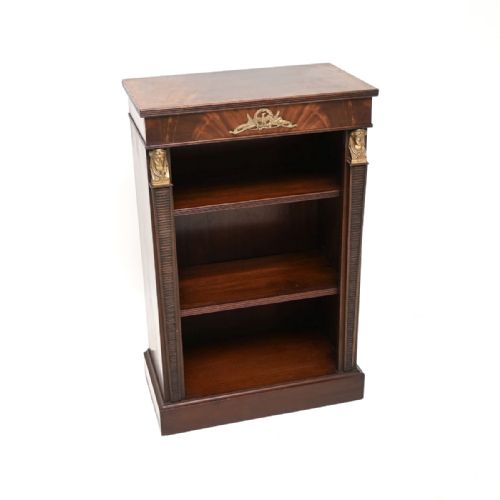
Cabinet-makers relied on dense hardwoods such as mahogany, walnut, rosewood, and oak to build frames capable of supporting heavy rows of books without sagging. Flame mahogany veneers and solid timbers provided the dark surfaces, sometimes accented with brass fittings, ormolu mounts, or ebonised details.
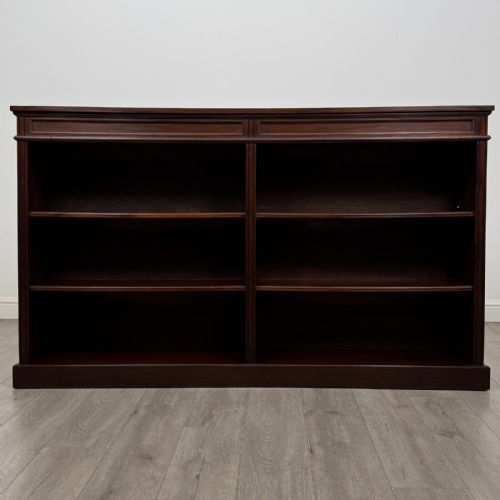
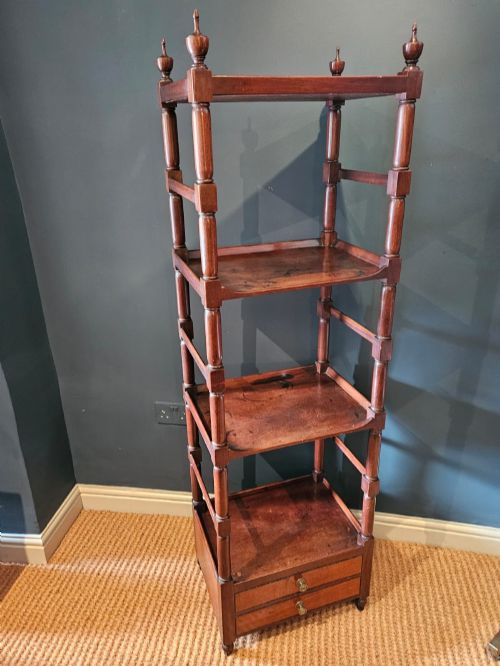
Internal construction frequently featured adjustable shelf racks cut into the uprights, allowing owners to reposition boards using wooden pegs or metal pins. Breakfront forms and tiered what-nots demonstrated sophisticated joinery, utilising solid plinths, carved corbels, and glazed or open compartments.
Some Victorian shelves hid behind them the occasional lost bookmarker left behind by readers who lived centuries ago.
Distinctions in quality
Quality rests in the selection of timber, particularly the grain figuration seen in flame mahogany and matched walnut veneers across wide breakfront facades. Dense figure and careful book-matching elevate a piece beyond standard utility joinery.
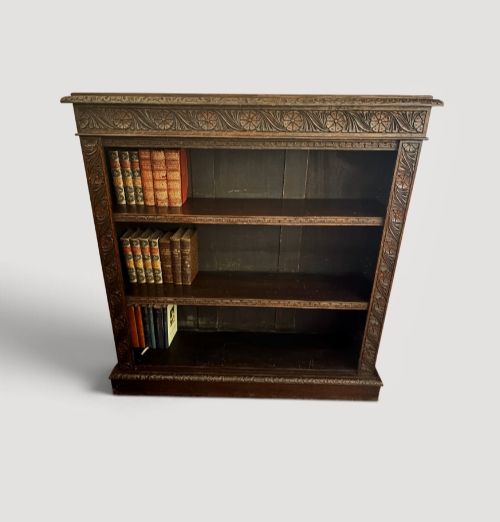
The sophistication of the hardware and secondary detailing distinguishes finer workshops. Ormolu mounts, finely carved green man motifs, and robust, operable adjustable shelving mechanisms separate bespoke library furniture from mass-produced commercial shelving.
Waring and Gillows·Globe Wernicke
The Dark Wood Library Shelving Glossary
- Breakfront
- A piece of furniture where the central section projects forward from the flanking outer sections. This configuration creates visual depth in large library bookcases.
- What-Not
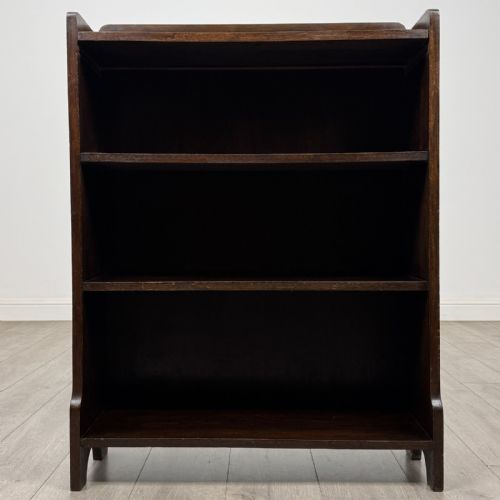
- An open-shelved tiered piece of furniture used for displaying books or decorative objects. These compact units frequently feature multiple upright supports.
- Ormolu
- Gilt bronze mounted onto furniture as decorative enrichment. This technique appears on high-status Victorian walnut pieces.
- Ebonised
- Timber treated to resemble ebony through staining or painting. This dark finish highlights carved details on Victorian dwarf bookcases.
- Sectional Bookcase
- A modular bookcase built from stackable units with glass or open fronts. This clever design gained popularity in the early twentieth century.
Dark Wood Library Shelving: Frequently Asked Questions
How do I adjust the shelves?
Most antique library shelving uses a rack-and-pinion system or slotted wooden strips inside the side panels. You simply lift the shelf slightly to release the supporting pegs or brass clips from their slots and move them to the desired height.
Older mechanisms may rely on simple wooden fillets or brass studs, so handle each board with care to avoid scratching the interior timber.
Can these bookcases support heavy books?
These pieces were built from dense hardwoods like oak, mahogany, and walnut specifically to hold heavy volumes of reference books and literature. Solid timber shelves combined with sturdy uprights provide the necessary load-bearing strength.
Over long periods, very long unreinforced shelves can develop a slight curve, so heavier folios are best placed on shorter shelves or near the fixed base.
How do I identify Victorian library shelving?
Victorian pieces often feature darker timbers like mahogany and walnut, frequently decorated with carved corbels or panel details. Look for substantial plinths and deep cornices that reflect nineteenth-century interior proportions.
Drawer linings, backboards in pine or oak, and hand-cut screws or dovetails offer further clues to the manufacturing date and workshop origin.
Where should I place a large breakfront bookcase?
Large breakfront bookcases require a long, flat wall with sufficient vertical clearance to showcase their projecting central sections and cornices. They serve well as the primary anchor in a study, library, or large drawing room.
Keep them away from direct heat sources and strong sunlight to protect the polished mahogany or rosewood surfaces from drying out or fading.