


Dark Wood Library Furniture
Dark wood library furniture comprises bookcases, writing tables, and steps designed for scholarly rooms, bringing heavy timber and practical storage into domestic spaces.
Dark Wood Library Furniture
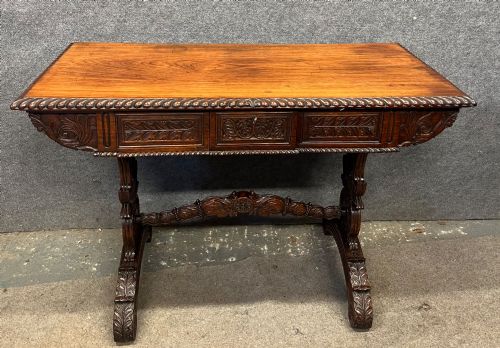
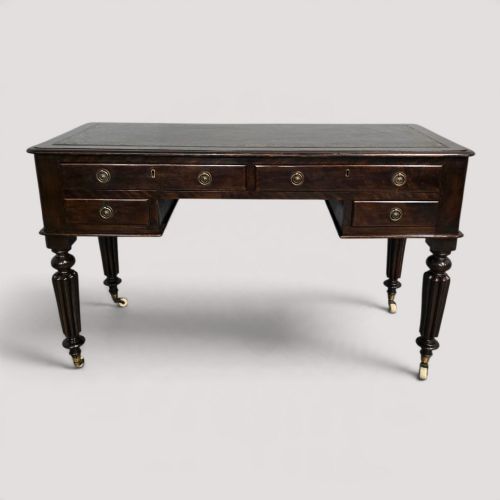
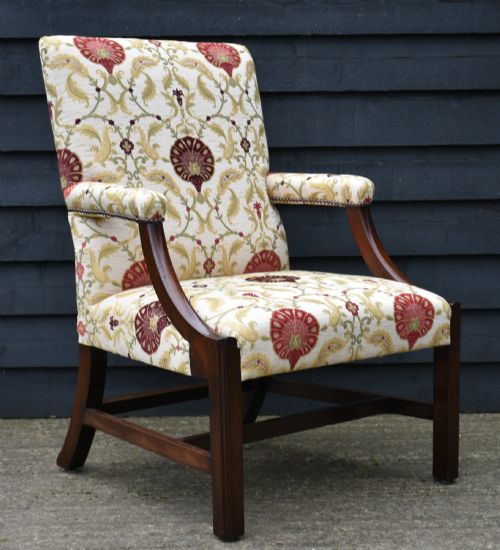
Dark wood library furniture serves study and storage needs through bookcases, desks, writing tables, and library steps. These pieces emerge primarily from Georgian, Regency, Victorian, and Edwardian periods.
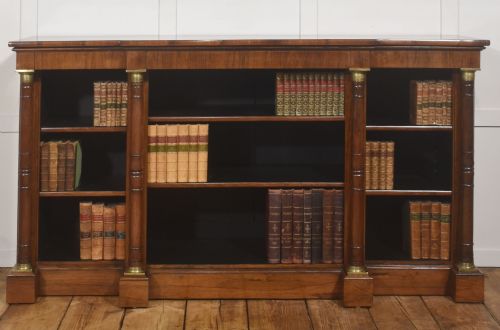
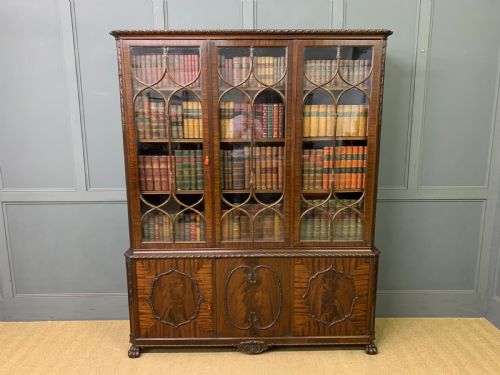
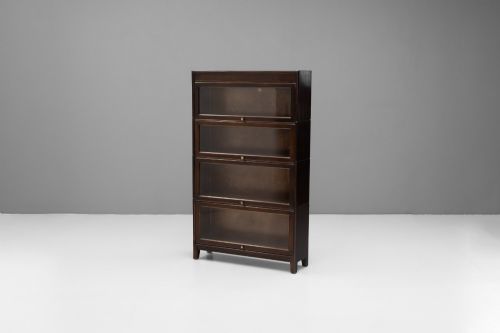
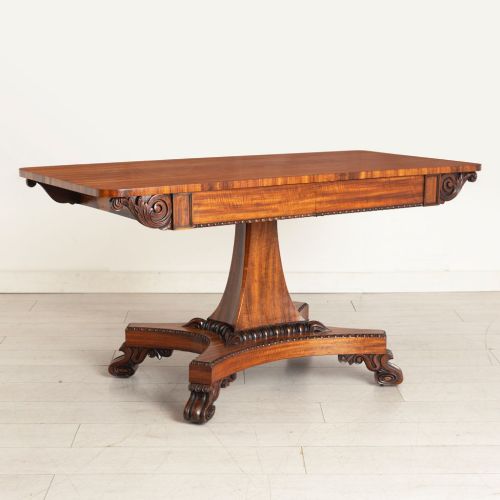
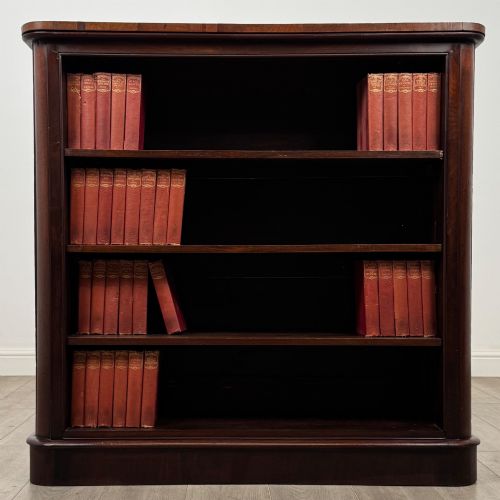
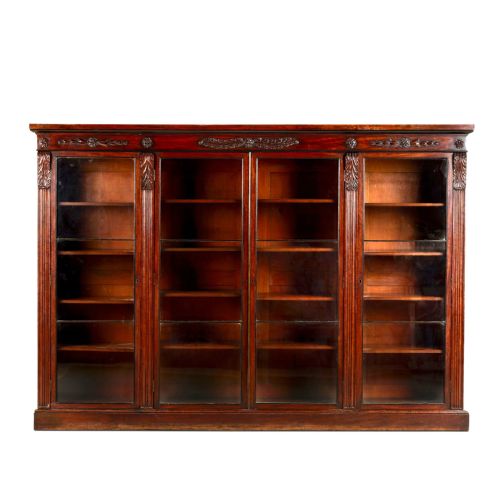
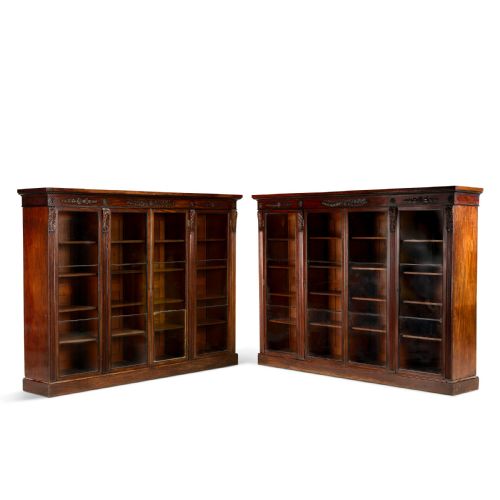
The most common examples on this page are open bookcases and revolving bookcases in mahogany and rosewood. Larger pieces include breakfront bookcases with glazed doors alongside centre tables suited for room placement.
Makers and workshops of the nineteenth and early twentieth centuries produced these furnishings to organise heavy volumes. Oak and walnut also appear alongside mahogany and rosewood within these functional forms.
Materials and construction methods
Cabinetmakers utilised dense timbers such as mahogany, rosewood, oak, and walnut to build these substantial library pieces. Brass hardware, leather inserts, and glass doors complement the dark wood structures.
Joinery methods include adjustable shelving systems, glazed framing, and revolving mechanisms on smaller bookcases. Carved details and ebonised finishes appear on specific Victorian and Edwardian examples.
Dark Wood Library Furniture Retail Price Guide 2026
Typical asking prices for dark wood library furniture among the pieces listed under this phrase on Sellingantiques today, from the lower quarter to the upper quarter. They describe what is for sale here now, not the wider market.
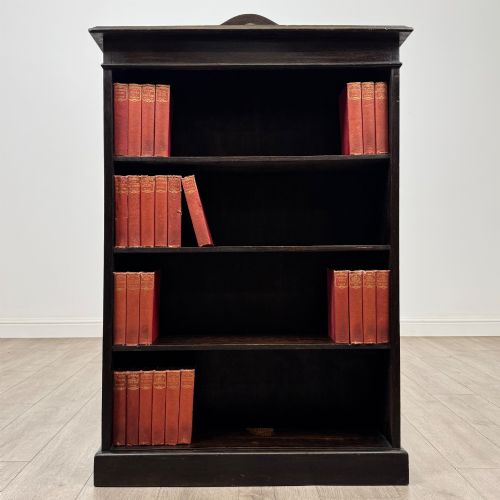
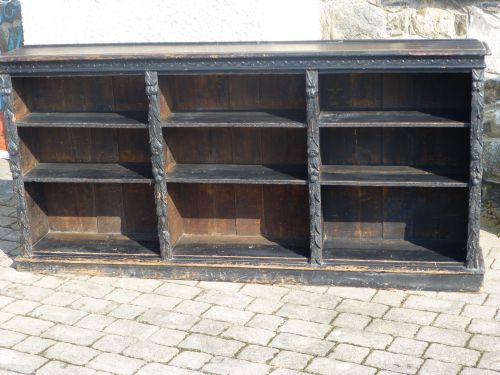
Green men peer from ebonised carved wood, guarding the open shelves of Victorian dwarf bookcases.
Distinctions in construction and timber selection
Quality rests in the choice of timber figures, such as figured mahogany or rich rosewood grain, alongside solid secondary woods. Finer workshops demonstrate superior joinery in adjustable shelving tracks and cabinet doors.
Proportion and scale dictate the success of large breakfront bookcases and library tables. The integration of maker signatures, brass fittings, and original leather surfaces elevates the standing of individual items.
Gillows·Waring and Gillows·Wylie and Lochhead·Maple and Co·Robert Strahan·Heal's·Trollope and sons
The Dark Wood Library Furniture Glossary
- Breakfront
- A piece of furniture with a central section that projects forward from the flanking wings. This architectural layout is typical of large library bookcases.
- Revolving bookcase
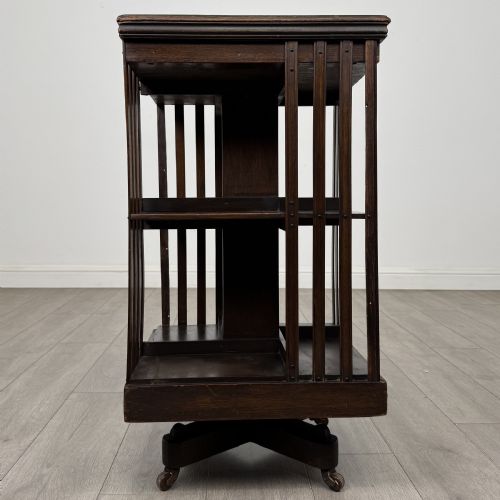
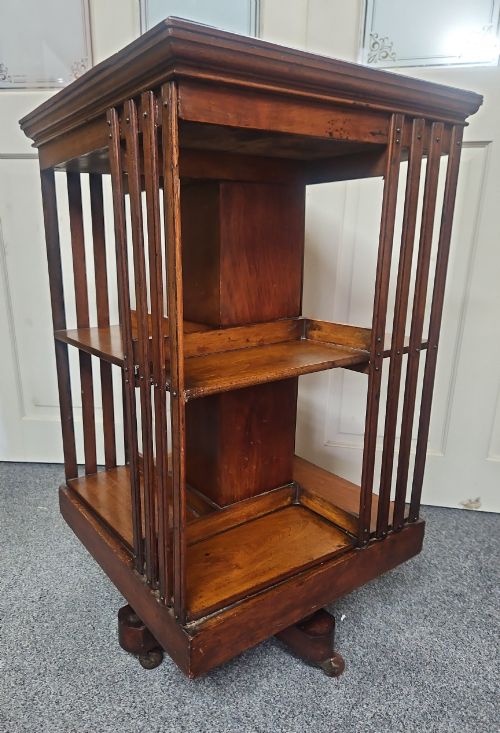
- A small, freestanding bookcase mounted on a rotating pivot base. This design allows access to volumes from a seated position.
- Secretaire
- A desk or cabinet featuring a drop-front writing flap concealing small drawers and pigeonholes. It combines storage with a pull-out writing surface.
- What-Not
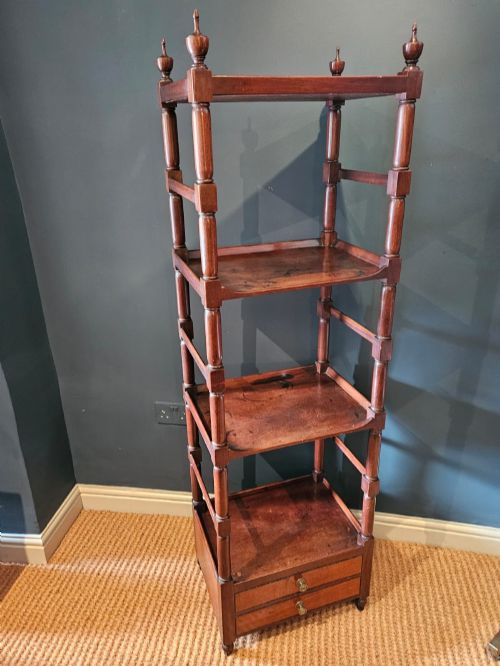
- An open set of freestanding shelves used for displaying books or objects. These tiered structures date frequently from the Regency period.
Dark Wood Library Furniture: Frequently Asked Questions
What is dark wood library furniture?
Dark wood library furniture encompasses bookcases, desks, and tables constructed from timbers like mahogany, rosewood, oak, and walnut. These items were built to hold books and provide writing surfaces in studies.
Pieces range from large breakfront bookcases with glass doors to compact revolving bookcases and library steps designed for domestic and institutional use.
How do I identify a Regency bookcase?
Regency bookcases often feature classical proportions, brass inlay, and dense mahogany or rosewood timbers. They emphasise architectural lines drawn from Greek and Roman revivals.
Many incorporate open shelves with adjustable mechanisms or tiered structures such as what-nots reflecting the early nineteenth-century aesthetic.
Where were revolving bookcases used?
Revolving bookcases sat beside armchairs or desks to keep frequently referenced volumes within arm's reach. Their rotating bases made them practical for active readers.
Cabinetmakers produced these compact items in mahogany and oak throughout the Victorian and Edwardian eras for domestic studies.