

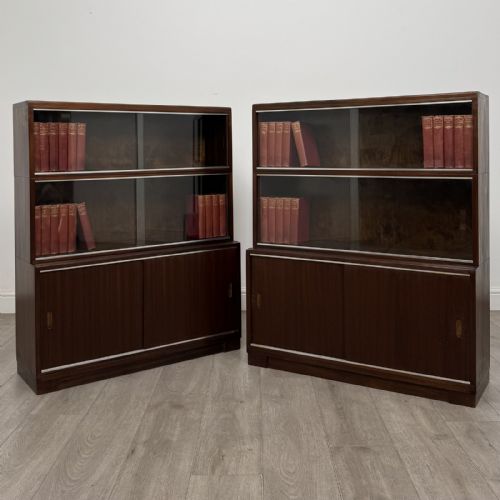
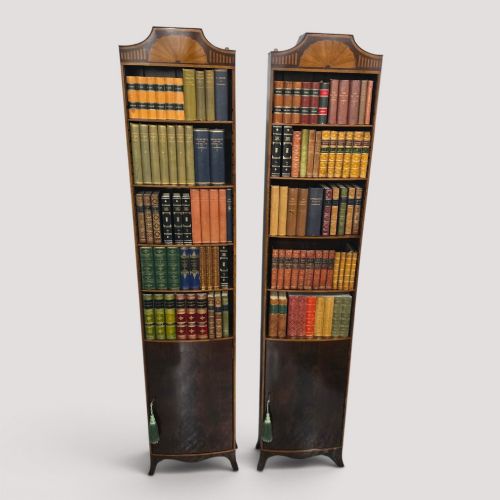
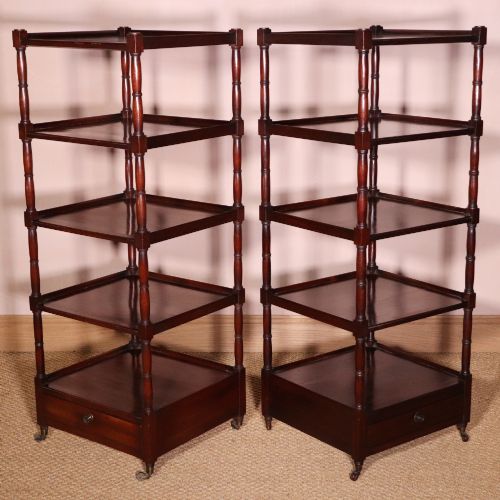
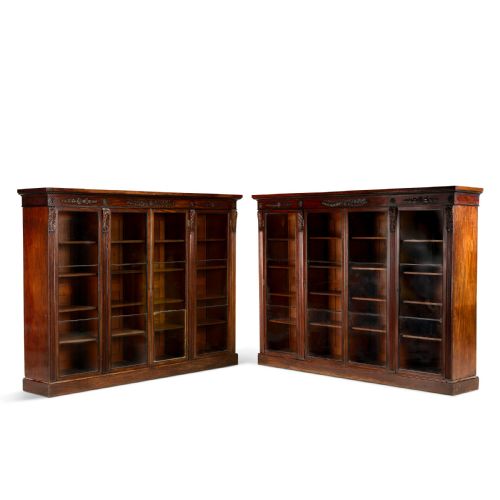


Pair Dark Mahogany Bookcases
Pair dark mahogany bookcases offer matching symmetry and rich timber tones, bringing balanced storage to a traditional library or sitting room.
Pair Dark Mahogany Bookcases
These matching items of furniture provide symmetrical shelving or enclosed storage, appearing in forms such as open shelves, side cabinets, and corner units. Most examples date from the nineteenth century, spanning Regency, Victorian, and Edwardian periods.
The selection includes waterfall designs, adjustable library shelves, and revolving formats alongside inlaid corner cabinets. They originate from British cabinet-making traditions, utilising dense tropical timber shaped into functional room dividers and wall units.
How they were made
Cabinet makers built these pieces using solid and veneered mahogany, frequently accentuating the dark timber with satinwood inlay and brass mounts. Glass doors and fabric linings appear on display variations, while internal mechanisms support adjustable shelving.
Joinery techniques from the nineteenth century relied on traditional cabinet construction, incorporating cast iron components where necessary for structural support. Marquetry work and fine stringing decorate specific Edwardian and revival iterations.
Pair Dark Mahogany Bookcases Retail Price Guide 2026
Typical asking prices for pair dark mahogany bookcases among the pieces listed under this phrase on Sellingantiques today, from the lower quarter to the upper quarter. They describe what is for sale here now, not the wider market.
Revolving bookcases let you spin your entire library with a gentle nudge.
What varies in quality
The refinement of the timber selection and the precision of the marquetry inlay determine the standing of an individual piece. Finer examples display continuous grain matching across the double doors and careful attention to structural proportions.
Makers of distinction, such as Robert Strahan or Maple and Co, demonstrate superior cabinet-making execution through crisply carved details and robust internal mechanics for adjustable shelves.
Robert Strahan·Maple and Co
The Pair Dark Mahogany Bookcases Glossary
- Regency
- A British design style spanning the early nineteenth century characterised by classical restraint and polished mahogany surfaces.
- Marquetry
- Decorative woodwork where pieces of contrasting veneer form intricate patterns across the surface of the cabinet.
- Waterfall
- A stepped shelving format where each upper tier recedes behind the one below it.
- Satinwood
- A pale exotic timber utilised alongside mahogany for contrasting stringing and decorative inlay work.
Pair Dark Mahogany Bookcases: Frequently Asked Questions
How do I identify Regency bookcases?
Regency bookcases generally display classical architectural proportions, clean lines, and dark mahogany surfaces without heavy Victorian ornamentation. They often date from the early nineteenth century and rely on fine timber grain for visual impact.
Later revival pieces sometimes adopt these characteristics, so examining the construction methods helps confirm the original period of manufacture.
Are adjustable shelves common?
Many nineteenth-century library bookcases incorporate adjustable shelving mechanisms to accommodate volumes of varying heights. These systems typically use wooden ratchets or brass shelf studs set into the interior uprights.
Original adjustable fittings indicate a piece intended for serious library use rather than purely decorative display.
What is satinwood inlay?
Satinwood inlay involves setting pale, yellow-toned timber into contrasting dark mahogany surfaces to create geometric borders or floral motifs. This decorative technique appears frequently on Edwardian and revival furniture.
The precision of the inlay work serves as a reliable indicator of the cabinet maker's overall skill.
How do corner cabinets function?
Corner cabinets are shaped with angled backs designed to fit neatly into the ninety-degree junction of two walls. They maximise room space while providing enclosed storage or display shelving.
Examples from this period often feature glazed upper doors and panelled lower cupboards.