



Mahogany Credenza with Shelves
A mahogany credenza with shelves brings rich timber grain and useful display space into a room, spanning Regency to Victorian periods.
Mahogany Credenza with Shelves
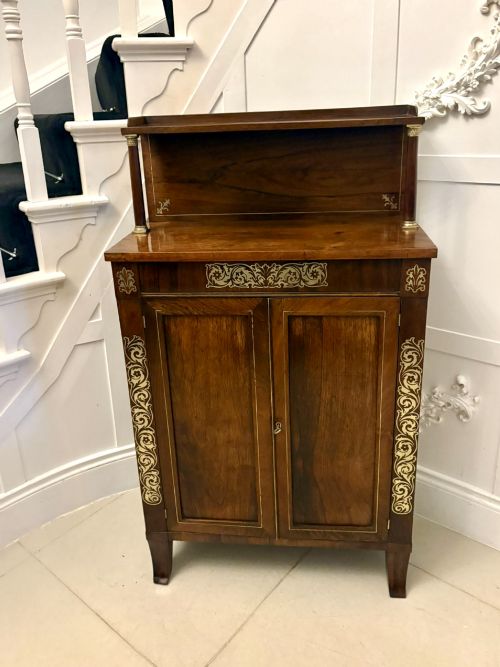
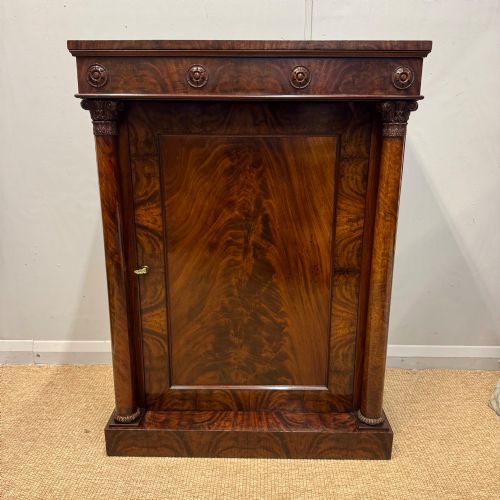
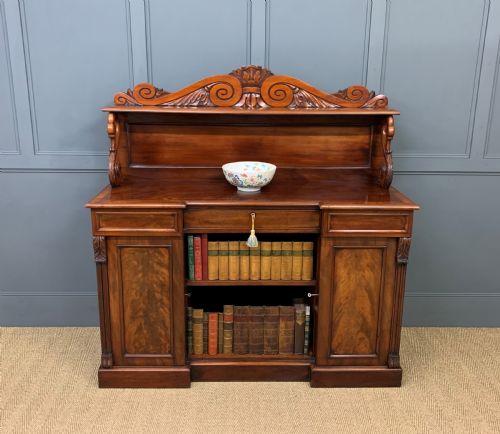
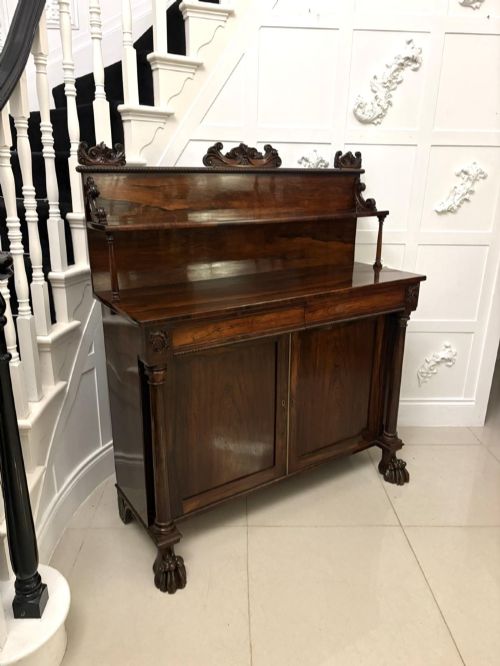
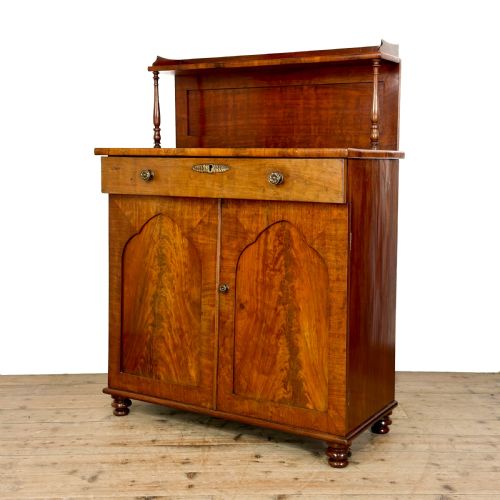
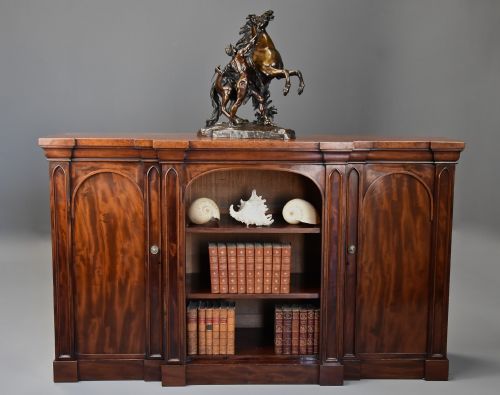
When you examine a mahogany credenza with shelves, you are looking at forms that overlap with chiffoniers, side cabinets, and bookcases from the nineteenth century. These pieces combine enclosed cupboard storage below with tiered shelving or open book shelves above, providing a practical surface for display and storage.
The versions you will most commonly meet on this page date from the Regency, George IV, William IV, and Victorian eras. They range from compact small-scale chiffoniers with two-shelf backs to larger breakfront bookcases and sideboards bearing Gothic influence or satinwood inlay.
How they were made
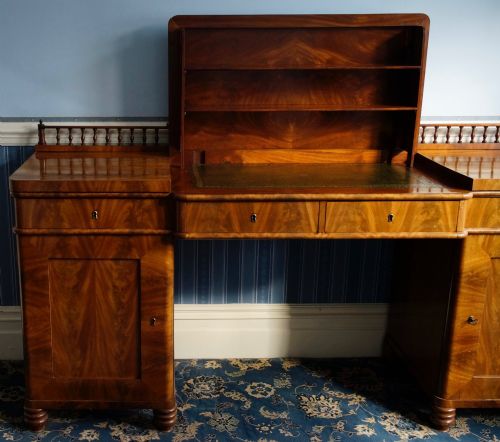
Cabinet makers utilised solid mahogany and flame mahogany veneer applied to sturdy carcases, often highlighting the timber with satinwood stringing or brass mounts. Interiors typically incorporated mahogany shelves, while specific iterations featured marble tops or fitted writing drawers.
Construction methods rely on traditional joinery suited to nineteenth-century workshop production. Finer examples balance structural timber with carefully selected veneer grains to create visual depth across the doors and shelf backs.
Mahogany Credenza with Shelves Retail Price Guide 2026
Typical asking prices for mahogany credenza with shelves among the pieces listed under this phrase on Sellingantiques today, from the lower quarter to the upper quarter. They describe what is for sale here now, not the wider market.
Materials recorded include solid mahogany, flame mahogany veneer, satinwood, marble, brass, and fabric.
What varies in quality
The distinction between ordinary and superior pieces rests on the choice of timber and the crispness of the secondary details. Figure richness in the flame mahogany veneer and the subtle inclusion of contrasting satinwood or brass work elevate an example above standard workshop output.
Proportions and scale also dictate worth, as unusually small or neatly balanced chiffoniers command attention for their pleasing presence. The integration of functional elements, such as integrated writing drawers and tiered shelf backs, reflects higher ambition in the original design.
Robert Strahan·James Shoolbred and Co
The Mahogany Credenza with Shelves Glossary
- Chiffonier
- A low sideboard or cabinet, typically featuring enclosed storage below and open shelves above. This form dominates the nineteenth-century selections on this page.
- Flame mahogany
- A veneer cut from timber where the branch meets the trunk, producing a rippling, flame-like pattern. Makers prized this material for its decorative impact on door panels and drawer fronts.
- Breakfront
- A piece of furniture whose central section projects forward from the flanking sides. This architectural arrangement adds depth and presence to larger bookcases and side cabinets.
- Satinwood
- A pale, lustrous exotic timber used extensively for contrasting inlay and stringing. It provides a bright visual accent against darker mahogany surfaces.
- Regency
- A British design period spanning the early nineteenth century, known for classical restraint and clean lines. Pieces from this era often feature elegant proportions and minimal carving.
Mahogany Credenza with Shelves: Frequently Asked Questions
What is a chiffonier?
A chiffonier is a low cabinet featuring cupboard doors below and tiered shelves above. It served as a versatile piece for serving or displaying books and ornaments in nineteenth-century rooms.
Today, these pieces function well in living spaces or dining rooms where surface display and moderate enclosed storage are required.
How do I date a piece?
Dating relies on observing stylistic markers, timber types, and construction methods associated with specific nineteenth-century reigns. Regency and George IV items often show cleaner classical lines, while Victorian examples introduce heavier proportions or Gothic influences.
Examining the secondary woods inside drawers and the cut of the veneer helps confirm the manufacturing era.
Where were they placed?
These cabinets originally stood against dining room or parlour walls to hold glassware, linens, or books. The upper shelves allowed hosts to display ceramic collections or volumes within easy reach.
In modern interiors, they fit easily into hallways, studies, or sitting rooms as practical side storage.
Are the shelves adjustable?
Most period chiffoniers and side cabinets feature fixed wooden shelves supported by internal battens or integrated side grooves. Adjustable shelving systems are less common in traditional nineteenth-century examples.
Buyers should inspect the shelf configuration to ensure it accommodates intended items like books or tall objects.