


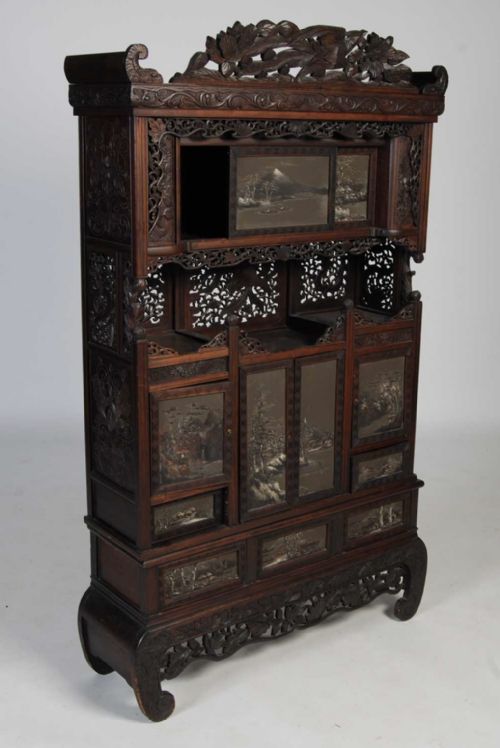


Dark Wood Japanese Cabinet
A dark wood japanese cabinet brings intricate joinery and rich grain into a room, offering both display space and hidden storage.
Dark Wood Japanese Cabinet
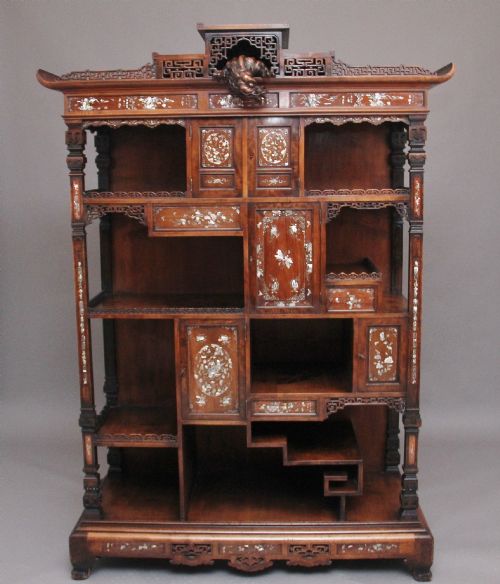
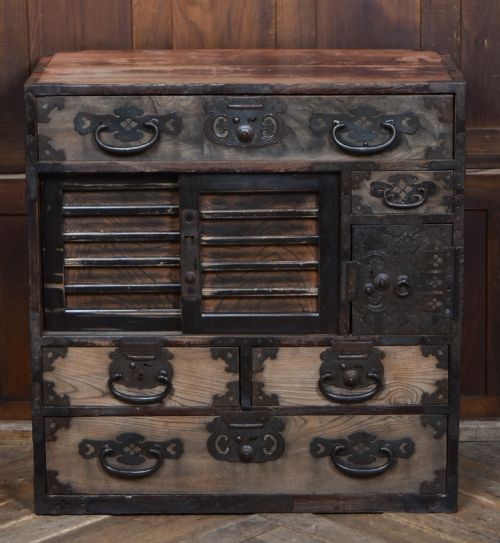
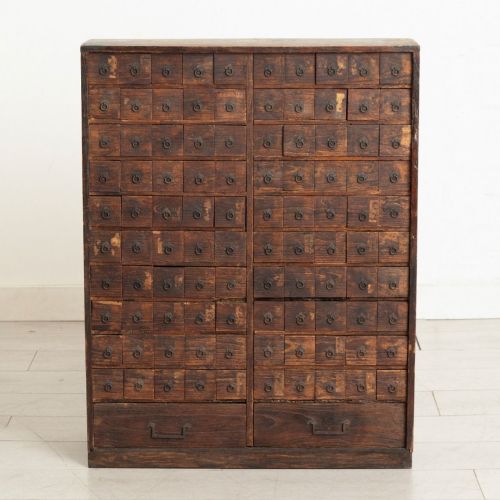
A dark wood japanese cabinet encompasses several distinct forms originating primarily from the nineteenth century, including multi-shelf shodana display units and functional merchant chests.
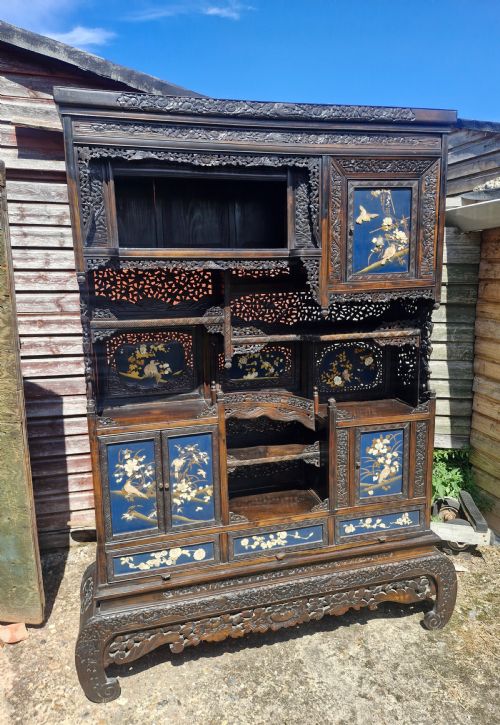
Buyers encountering this search phrase find both authentic imported pieces from the Meiji and Taisho periods and European interpretations created under the influence of Japonisme.
How they were made
Construction relies on traditional dense timbers such as cedar, rosewood, mahogany, padouk, and keyaki, providing a heavy and durable foundation.
Surfaces often incorporate intricate detailing like mother of pearl inlay, bone elements, iron hardware, and black lacquer finishes that contrast with the natural grain.
Carved wooden ornamentation and bronze animal decoration further define the surface texture of these cabinets.
The listings here span the Victorian, Meiji, and Taisho periods, using materials like cedar, rosewood, and lacquer.
What varies in quality
The degree of refinement in the carved details and the complexity of the internal shelving and drawer arrangements separate simpler utility chests from elaborate display cabinets.
Materials dictate the upper tier, where selected hardwoods and precise metalwork or inlay indicate a higher level of workshop output.
Attribution to known designers or documented European makers adds another layer of distinction to pieces created during the height of the Japonisme movement.
Gabriel-Frederic Viardot·Gabriel Viardot·E W Godwin
The Dark Wood Japanese Cabinet Glossary
- Shodana
- A Japanese display cabinet featuring asymmetrical shelving and small cupboards, designed for exhibiting curiosities. These pieces often showcase complex joinery without nails.
- Tansu
- A traditional Japanese mobile chest of drawers utilised for storage, built with sturdy iron fittings and handles for transport. Merchant and ship variants are common forms.
- Japonisme
- A nineteenth-century European artistic movement heavily influenced by Japanese art and design aesthetics. Makers adapted these motifs into furniture like occasional tables and cabinets.
- Keyaki
- A species of elm native to Japan, prized for its strong grain and durability in traditional chest construction. It forms a dense surface that takes polish well.
- Padouk
- A heavy tropical hardwood exhibiting a rich reddish-brown colour that darkens over time. European makers utilised it for high-status display furniture.
Dark Wood Japanese Cabinet: Frequently Asked Questions
What is a shodana cabinet?
A shodana is a traditional Japanese display cabinet characterised by asymmetrical shelves, sliding doors, and small compartments designed for ornaments.
These pieces were constructed to exhibit valued objects and highlight intricate woodworking skills.
How do I identify a tansu chest?
A tansu is a Japanese storage chest fitted with robust iron handles, straps, and lock plates for portability.
They were built for practical domestic or commercial use rather than formal display.
What is Japonisme furniture?
Japonisme furniture consists of European pieces created in the late nineteenth century under the aesthetic influence of Japanese design.
These works often combine European cabinetmaking forms with eastern decorative motifs and dark ebonised woods.
Where do I place a tabletop cabinet?
A tabletop cabinet sits securely on a larger surface such as a sideboard, desk, or table to organise small items.
They bring concentrated detail and storage to spaces without requiring floor area.