
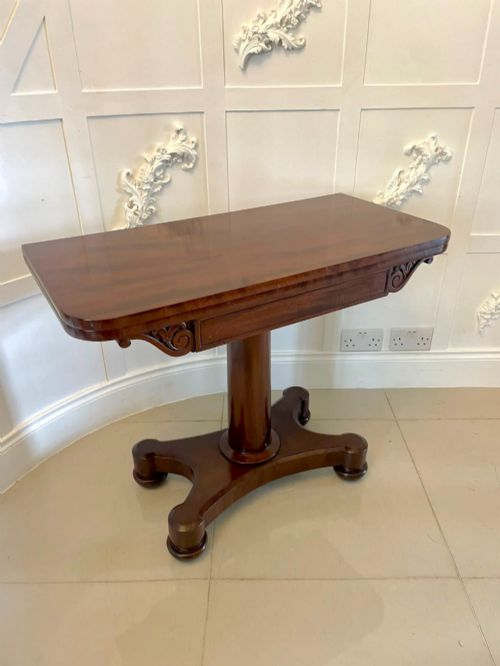
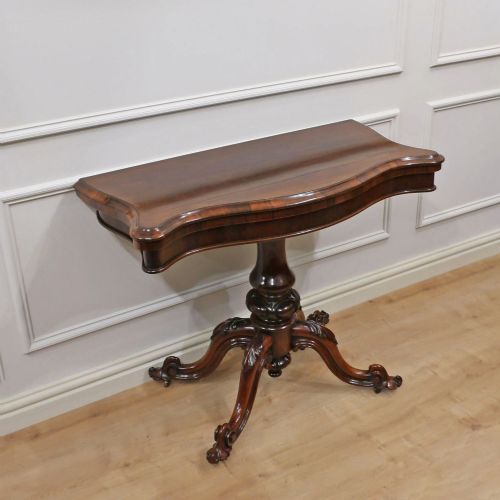
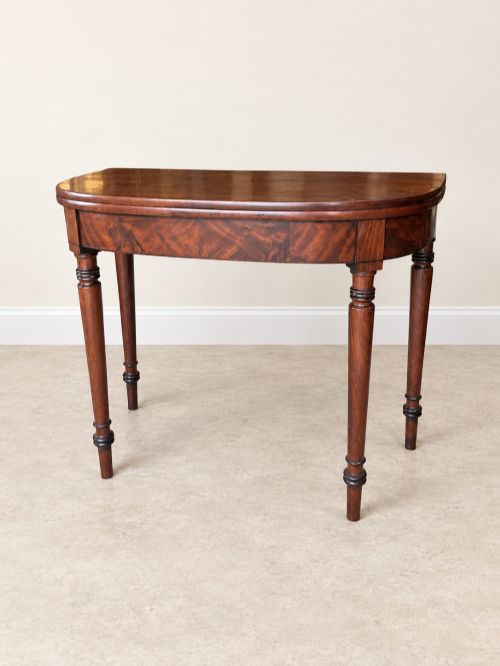


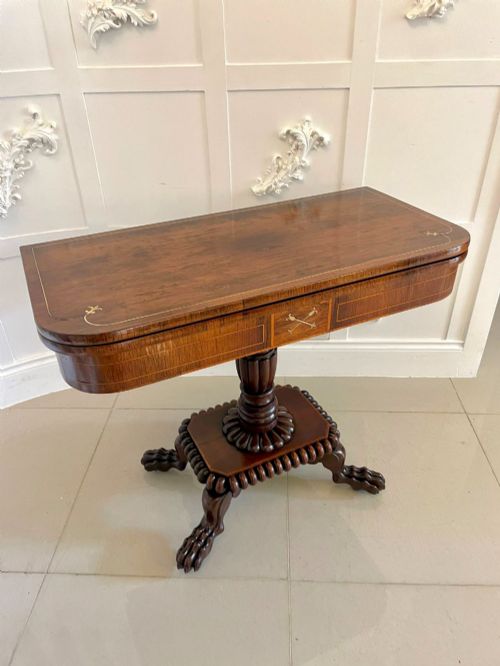
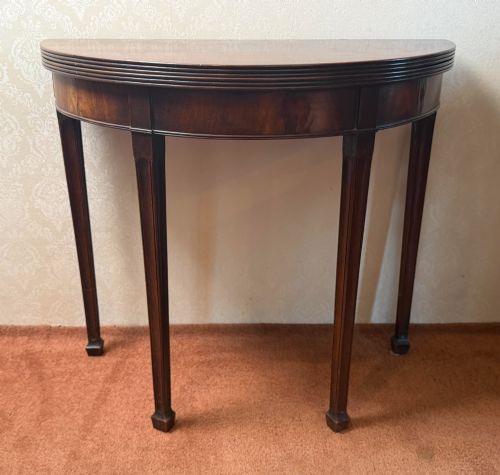
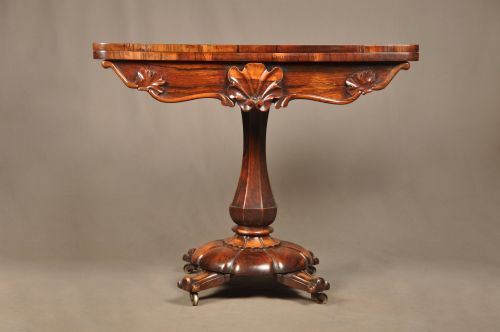
Dark Wood Fold Over Table
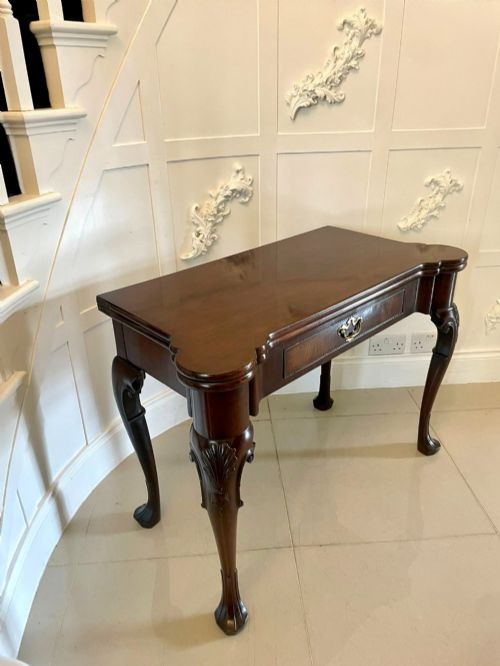
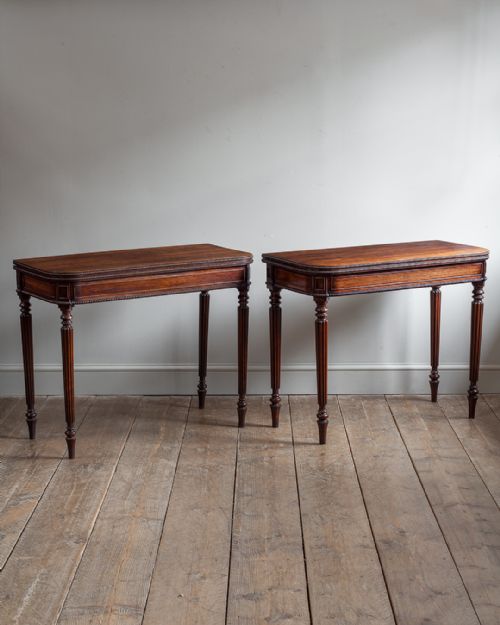
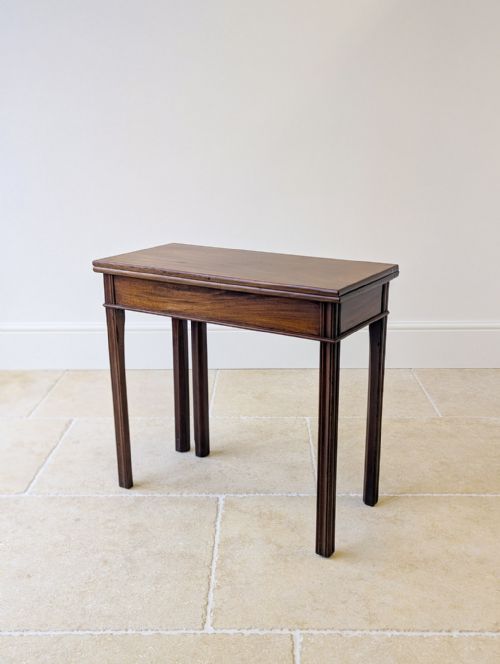
A dark wood fold over table offers clever utility and formal presence, adapting from a compact console to a card or tea surface.
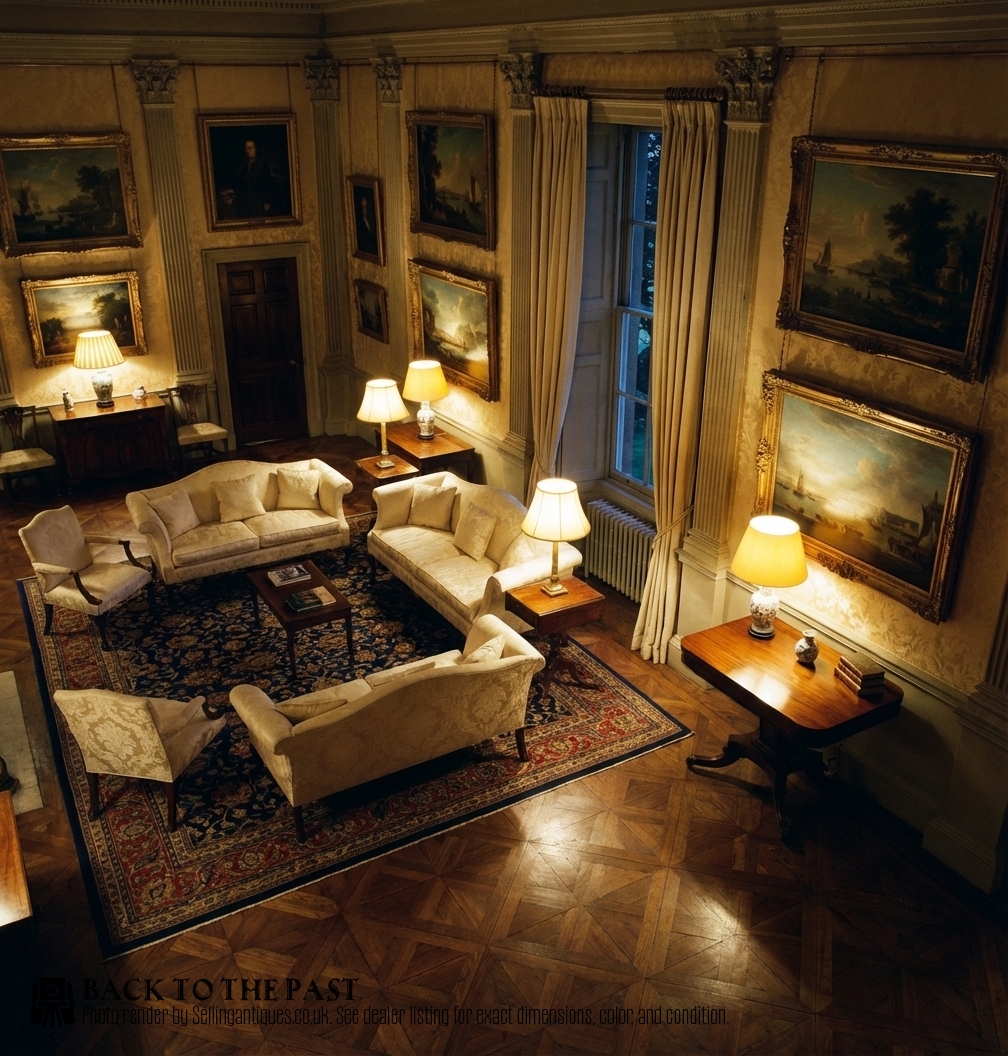
Dark Wood Fold Over Table
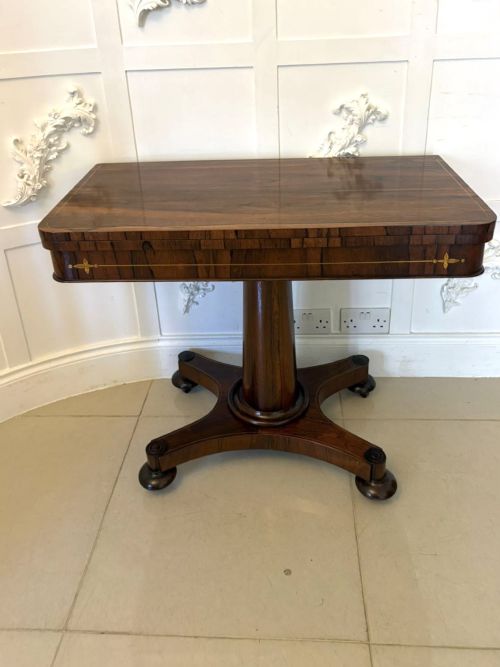
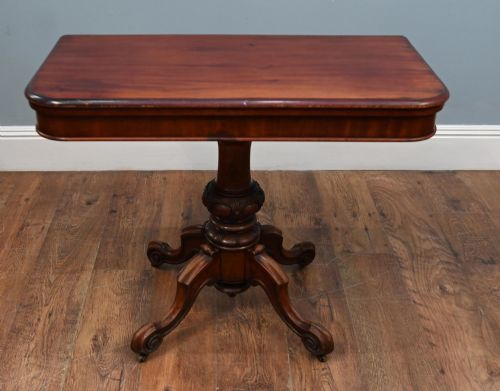
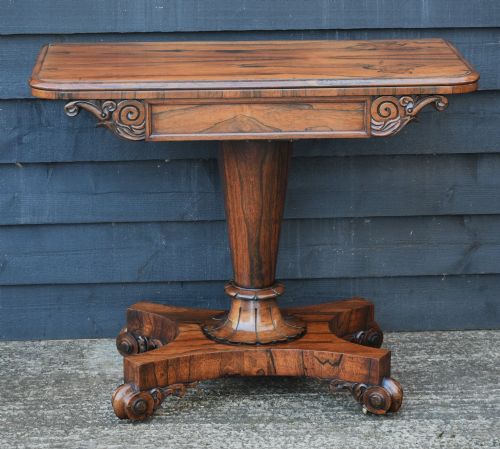
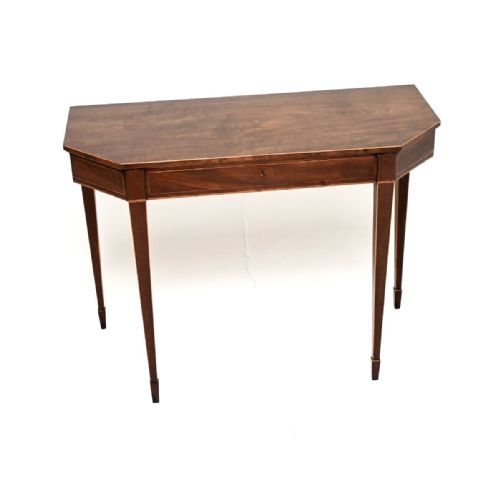
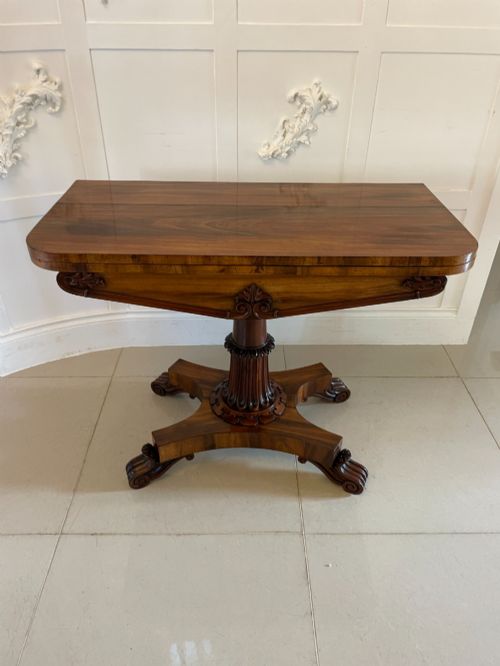
A dark wood fold over table primarily takes the form of card tables, tea tables, and games tables originating from the eighteenth and nineteenth centuries. Buyers searching for a dark wood fold over table encounter Georgian, Regency, and Victorian pieces constructed in mahogany and rosewood.
The selection ranges from George III serpentine designs to Regency rosewood examples featuring brass inlay and Victorian figured mahogany turnover tops. Edwardian and later traditions also appear, offering demilune formats and occasional utility.
Materials and construction
Cabinetmakers utilised solid timbers and veneers such as mahogany, rosewood, walnut, and satinwood, often supported by flame mahogany veneer over secondary woods. Brass inlays, ormolu mounts, and baize playing surfaces complete the primary construction of these folding tops.
Concertina actions, pedestal bases, and carved dolphin supports demonstrate the mechanical and decorative techniques employed to sustain the weight of the turnover leaves.
Some tables hide compartments beneath the folding top, keeping secret stashes of counters close at hand for late-night card games.
Quality factors
The calibre of a piece depends on the choice of timber figuring, the precision of brass inlay work, and the crispness of carved details such as pedestal bases and foliage. Finer examples display superior joinery in the pivoting mechanism of the fold over top and harmonious proportions between the closed console base and the open playing surface.
George Bullock·Gillows
The Dark Wood Fold Over Table Glossary
- Demilune
- Half-moon shape. This semicircular format allows the furniture to sit flat against a wall when folded.
- Concertina action
- An expanding frame. This mechanism supports the unfolded top evenly by pulling outward like an accordion.
- Baize
- A woven woollen fabric. This material lines the interior of card and games tables to provide a soft playing surface.
- Turnover top
- A hinged wooden leaf. This component rotates and folds out to double the surface area of the table.
Dark Wood Fold Over Table: Frequently Asked Questions
What is a fold over table used for?
These pieces functioned historically as tea tables for social gatherings or as card and games tables for evening entertainment.
Today, they serve as versatile console tables against a hallway or living room wall that open up when extra surface area is needed.
How do I tell a tea table from a card table?
Tea tables typically feature plain wooden interiors designed to hold porcelain and tea equipment during the eighteenth and nineteenth centuries.
Card tables generally reveal lined baize interiors inside the folding leaf, often accompanied by corner indents for counters or candlesticks.
How do I care for rosewood and mahogany surfaces?
Keep these timbers away from direct sunlight and excessive heat sources to prevent the wood veneers from drying out or splitting.
Dust gently with a dry cloth and apply occasional appropriate wax polish to maintain the sheen of the polish.
How do I identify a Regency period table?
Regency pieces often incorporate rosewood veneers paired with contrasting brass inlay, lyre supports, or carved pedestal bases influenced by classical motifs.
They date from the early nineteenth century and frequently utilise concertina or swing-leg mechanisms to support the folded top.