
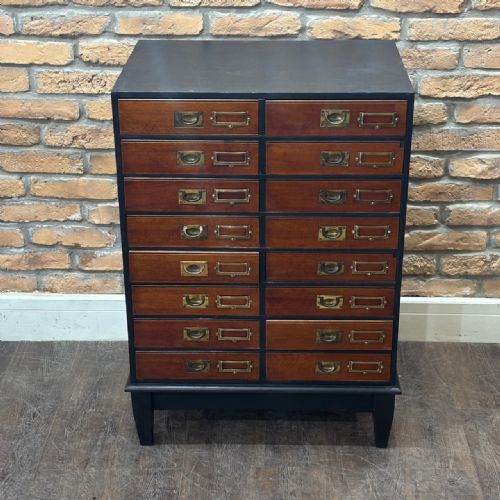

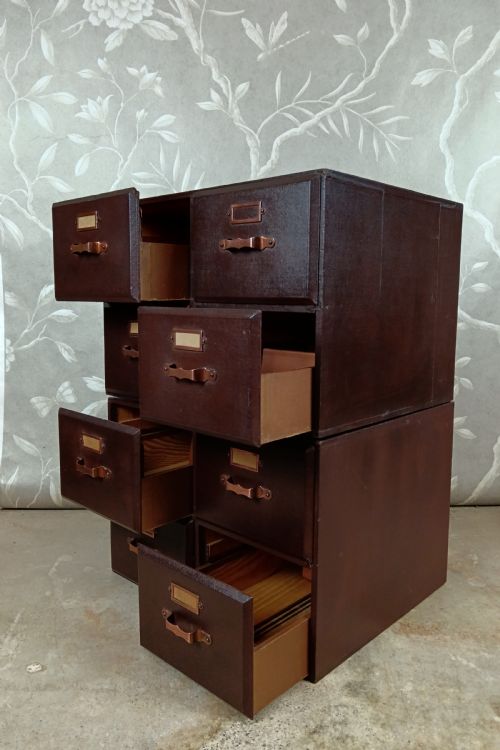


Dark Wood Filing Drawers
Dark wood filing drawers bring practical storage and rich grain into a room, offering sturdy banks and cabinets built to last.
Dark Wood Filing Drawers
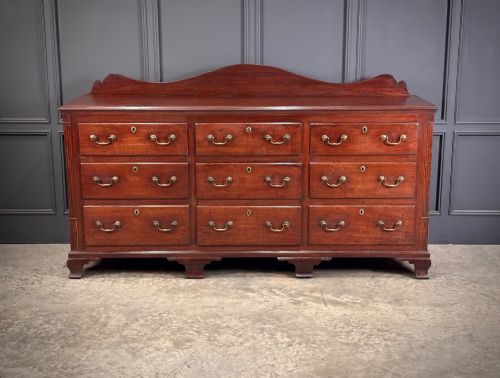
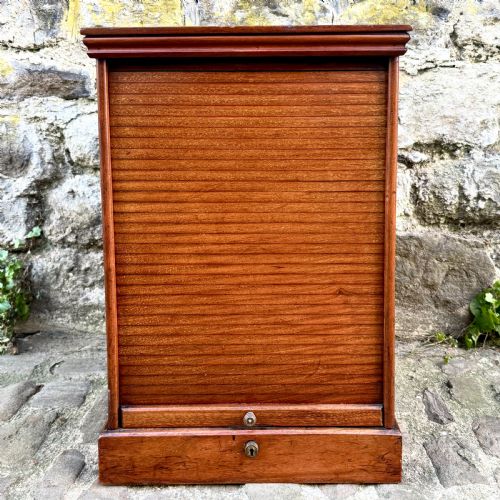
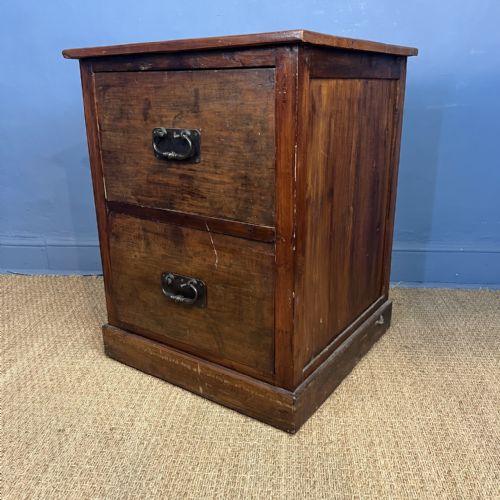
When you search for dark wood filing drawers, you encounter solid pieces designed for systematic storage, ranging from library card sets to large workshop banks. The selection spans the eighteenth century through to the 1930s, taking forms such as multi-drawer cabinets, plan chests, and collectors' cabinets. Mahogany, teak, and walnut dominate the offerings, providing deep natural tones and robust construction.
You are most likely to meet mahogany and teak examples dating from the Victorian and Edwardian eras, often featuring numerous small drawers suited to sorting papers or letters. These items originate from domestic studies, libraries, and commercial offices, retaining their functional compartmentalisation. The proportions vary from narrow bedside chests to wide banks intended for heavy daily use.
What varies in quality
The distinction between tiers rests upon the choice of timber and the complexity of the internal arrangement, such as graduated drawers or specialised patent filing mechanisms. Superior examples display carefully selected grain patterns and robust original hardware that remains fully functional.
Construction details dictate longevity, separating standard commercial furniture from bespoke cabinet work intended for professional offices or collectors. The survival of original labels, handles, and polished finishes elevates the standing of a piece within its period.
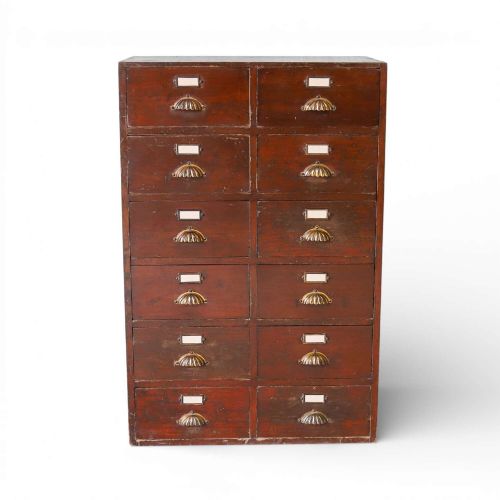
Some cabinets retain tiny brass label holders designed to tell you precisely where the lost stationery went.
The Dark Wood Filing Drawers Glossary
- Bank of drawers
- A large set of numerous storage drawers built into a single housing, commonly utilised in commercial or workshop settings. These pieces offer extensive compartmentalisation for documents and small items.
- Shell pull
- A convex, semi-circular handle resembling a seashell, frequently stamped from brass and mounted onto office furniture. This fitting often incorporates a small slot to hold a paper identification label.
- Graduated drawers
- A vertical stack of drawers that decrease in depth from bottom to top, creating a balanced visual progression. This layout was standard in nineteenth-century shop chests and pedestal units.
- Collectors cabinet
- A specialised piece of furniture featuring many shallow drawers designed for storing specimens, coins, or small artefacts. These units exhibit fine joinery to protect delicate contents.
Dark Wood Filing Drawers: Frequently Asked Questions
How do I date a filing cabinet?
Dating relies upon timber choice, construction methods, and hardware styles associated with specific periods like the Victorian era or the 1920s. Examining the drawer dovetails and internal linings provides clear clues regarding age.
Patent marks or manufacturer stamps also help narrow down the decade of production for office and library storage pieces.
Are these drawers suitable for modern paper?
Many historical filing drawers accommodate modern documents, though older formats like card indexes or letter files were tailored to specific historic sizes. Measuring the internal dimensions ensures your files fit comfortably inside.
Some pieces, such as plan chests or large banks, easily hold contemporary paper sheets and folders.
What is the difference between teak and mahogany here?
Teak offers a dense, oily resilience well suited to heavy commercial environments and colonial or industrial use. Mahogany provides a smoother, reddish-brown grain favoured in domestic libraries and formal offices.
Both timbers deliver exceptional durability, but their visual textures create distinct stylistic impressions within a room.
How should I maintain the wood finish?
Routine dusting with a soft, dry cloth preserves the polished surface of walnut, mahogany, and rosewood pieces. Avoid placing furniture in direct sunlight or near heat sources to prevent the timber from drying out.
Occasional application of appropriate wax feed maintains the natural lustre of the antique grain.