
Dark Wood Dresser Drawers
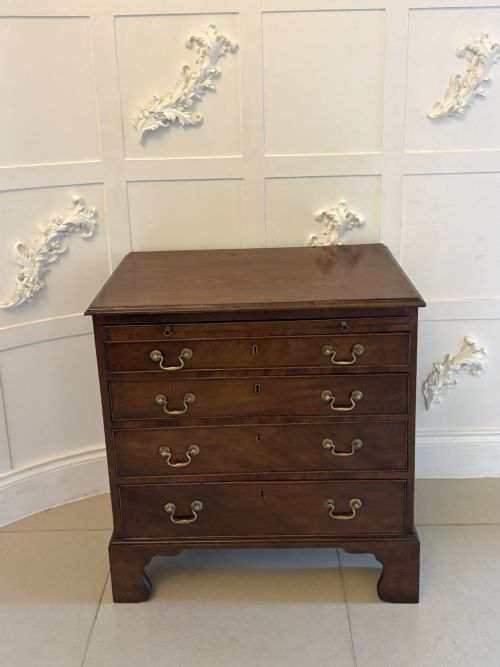
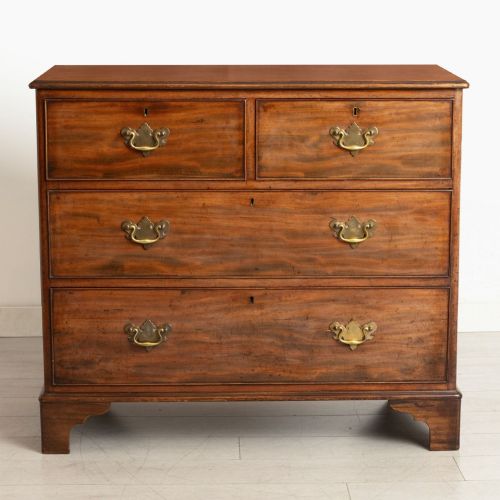
Dark wood dresser drawers bring rich tones and solid storage to a room, spanning periods from the seventeenth century onward.
Dark Wood Dresser Drawers
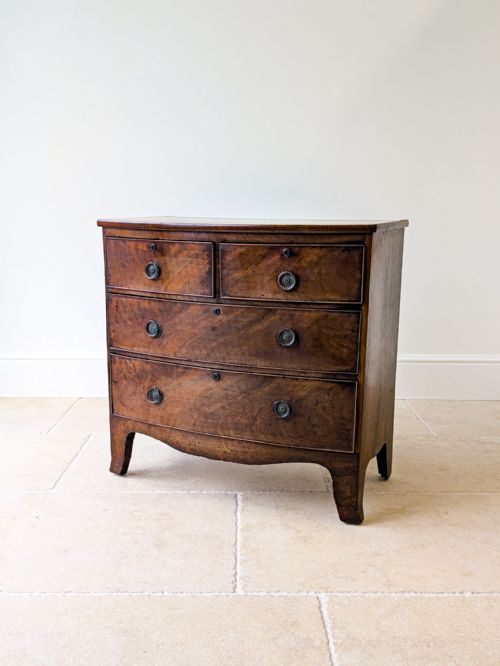
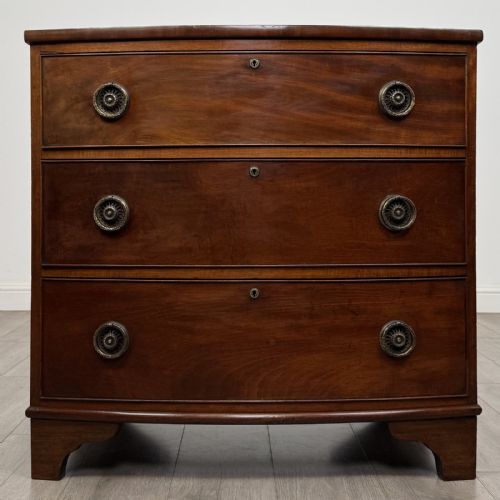
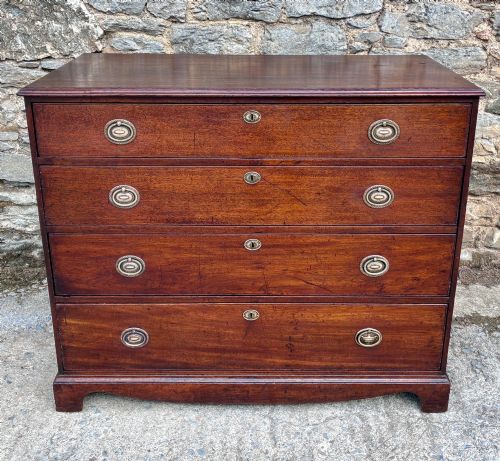
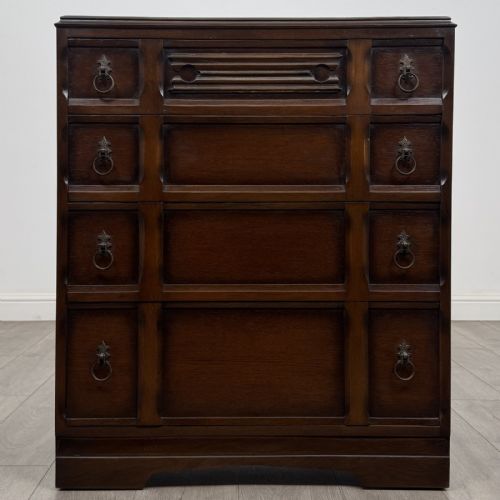
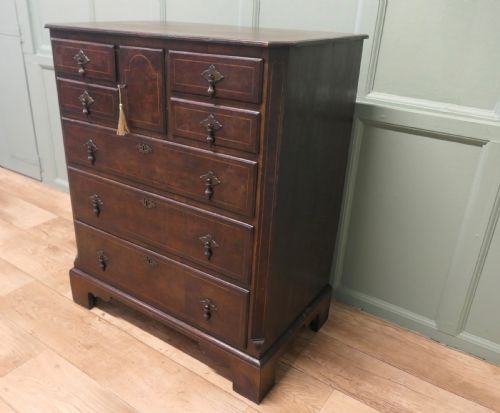
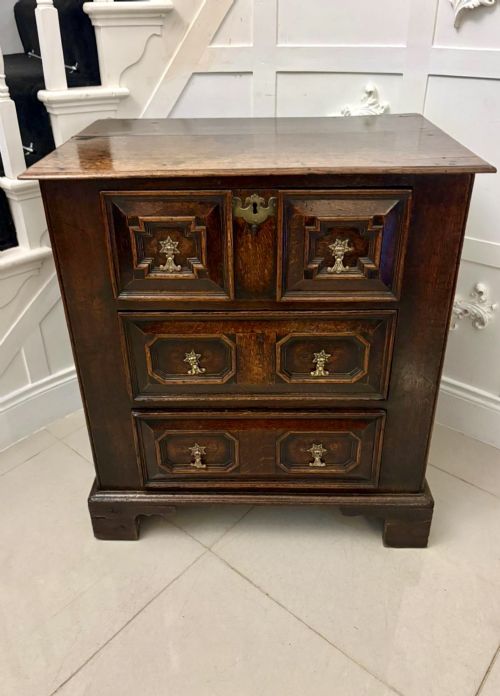
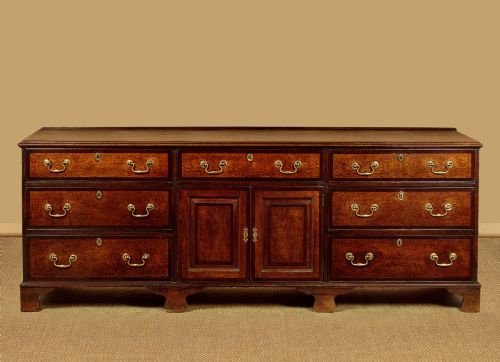
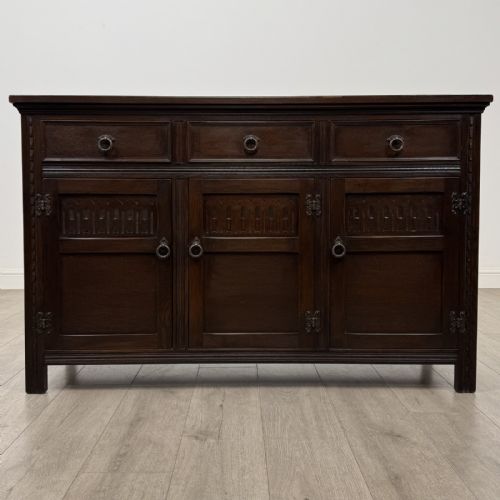
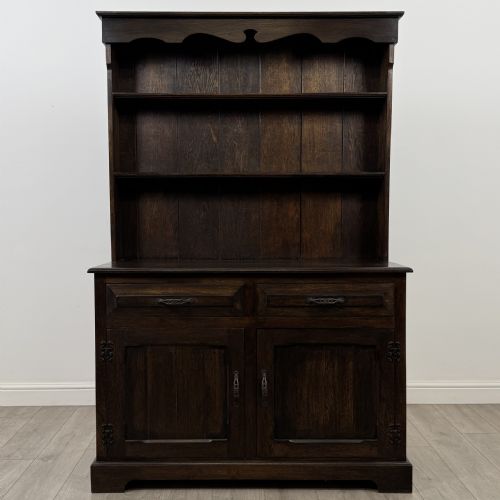
When searching for dark wood dresser drawers, buyers typically encounter classic chests of drawers, alongside sideboards, dresser bases, and Welsh dressers with open plate racks. These pieces appear in durable timbers like mahogany, oak, and walnut, presenting deep natural grain and rich patination.
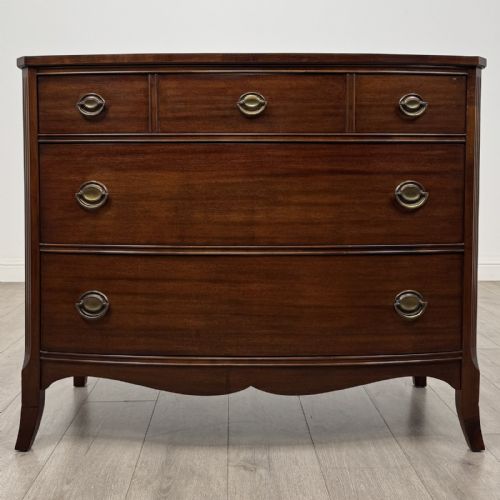
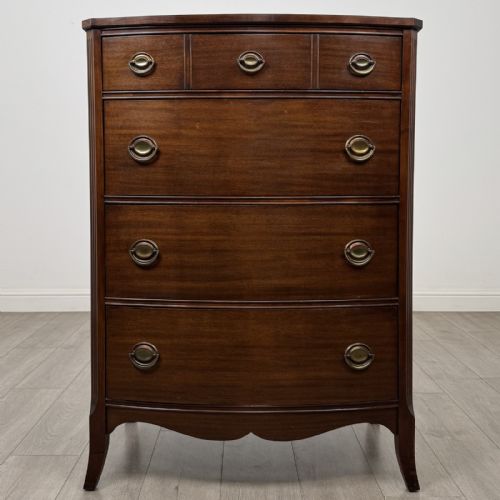
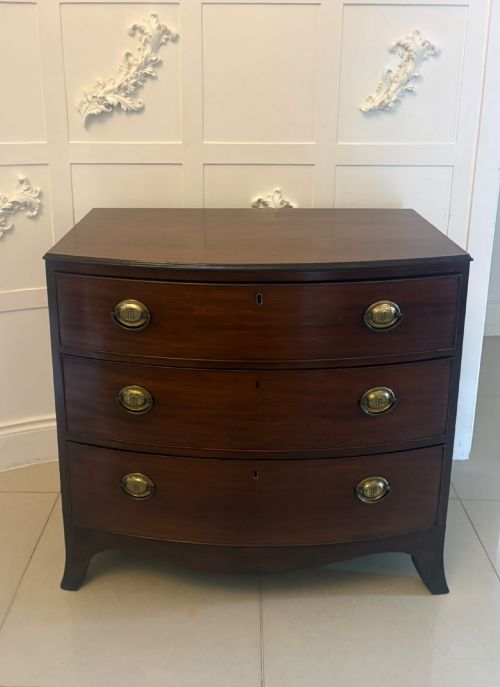
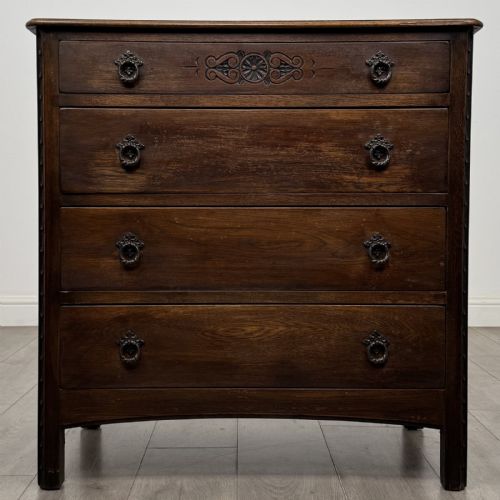
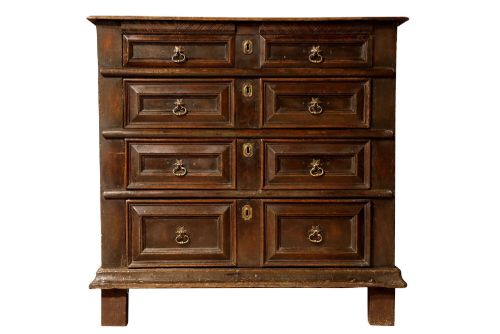
The selection on this page stretches from early seventeenth-century Charles II oak pieces to Georgian, Victorian, and Edwardian iterations, including serpentine fronts, bow fronts, and tall Wellington chests. Buyers find both formal mahogany designs with crossbanded tops and sturdy country oak furniture featuring carved detailing.
Forms vary from compact two-over-three drawer configurations to large banks of drawers and sideboard combinations. Regional variations also emerge, such as Scottish pieces and Welsh dresser bases, providing functional storage suited to traditional and contemporary interiors alike.
Materials and construction methods
Cabinetmakers utilised solid timbers such as oak for seventeenth and eighteenth-century pieces, later turning to mahogany, flame mahogany veneer, and walnut for finer formal furniture. Pine often served as a secondary wood for drawer linings and internal framing.
Construction relied on traditional joinery, including dovetail joints for drawer boxes and mortise and tenon frames. Surfaces were finished with hand-carved mouldings, crossbanding, and applied veneers, complemented by brass handles, drop pulls, and iron hardware.
Materials span solid oak, mahogany, walnut, pine, and flame mahogany veneer, supplemented by brass and iron hardware.
Distinguishing quality in dark wood furniture
Quality rests upon the selection of timber and the precision of the cabinetmaker's joinery, particularly in the tightness of dovetail joints and the bookmatching of veneers. Superior pieces display thoughtful proportions, unwarped drawer movement, and original brass or iron hardware.
Subtleties in carving execution and timber figure separate standard utility items from high-status commissions. The integrity of the secondary woods and the preservation of the original surface patination further define the standing of each piece.
Whytock & Reid·T & G Seddon
The Dark Wood Dresser Drawers Glossary
- Bow front
- A convex, curved front on a chest of drawers that projects outward in the centre. This style gained popularity during the Georgian and Regency periods.
- Serpentine
- A front configuration shaped with a central convex curve flanked by two concave curves. It requires advanced woodworking skill to execute cleanly.
- Wellington chest
- A tall, narrow chest typically featuring seven drawers secured by a hinged locking side stile. This form originates from the nineteenth century.
- Brushing slide
- A pull-out shelf integrated into the upper section of a chest of drawers, historically used for writing or brushing clothes.
- Crossbanding
- A decorative border of veneer laid around the perimeter of a tabletop or drawer front with the grain running perpendicular to the centre.
Dark Wood Dresser Drawers: Frequently Asked Questions
How do I identify a Georgian chest of drawers?
Georgian pieces often feature solid mahogany or oak construction, hand-cut dovetails, and proportioned bracket feet or splayed legs. Hardware generally consists of brass plate handles or drop pulls matching the period.
Examining the secondary woods inside the drawer boxes helps confirm the age, as pine or oak was standard before later industrial replacements.
What is the difference between a dresser and a chest of drawers?
A chest of drawers is a dedicated vertical storage unit with multiple horizontal drawers stacked from top to bottom. A dresser or dresser base often includes counter space on top, sometimes paired with an open plate rack.
Both forms utilise dark woods like oak and mahogany depending on the era of manufacture.
Can I use an antique chest of drawers in a modern bedroom?
These pieces provide deep storage capacity and durable wooden surfaces that anchor contemporary room schemes. Their rich dark tones introduce warmth and texture against neutral walls.
Ensuring the drawer runners operate smoothly allows for daily use with modern clothing and belongings.
What does a serpentine front mean?
A serpentine front describes a curved cabinet face featuring an outward-curving middle section flanked by inward-curving sides. This sophisticated silhouette requires precise carpentry.
Cabinetmakers applied this technique primarily to high-end Georgian and Victorian mahogany furniture.
How should I care for antique mahogany and oak?
Maintenance involves dusting with a soft, dry cloth and avoiding placement near direct heat sources or strong sunlight. Natural beeswax applied sparingly helps nourish the timber and preserve the historic finish.
Keeping indoor humidity stable prevents the solid wood and veneers from cracking or warping.