

Dark Wood Dining Seats
Dark wood dining seats provide the solid seating around a table, spanning centuries of timber framing from elm kitchen chairs to mahogany sets.
Dark Wood Dining Seats
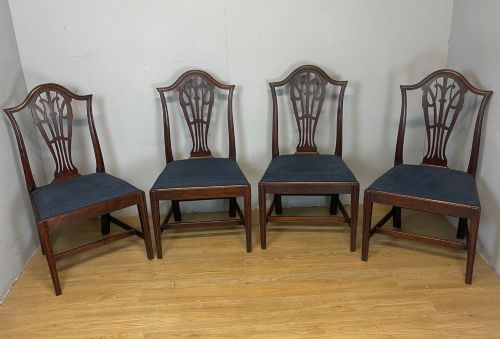
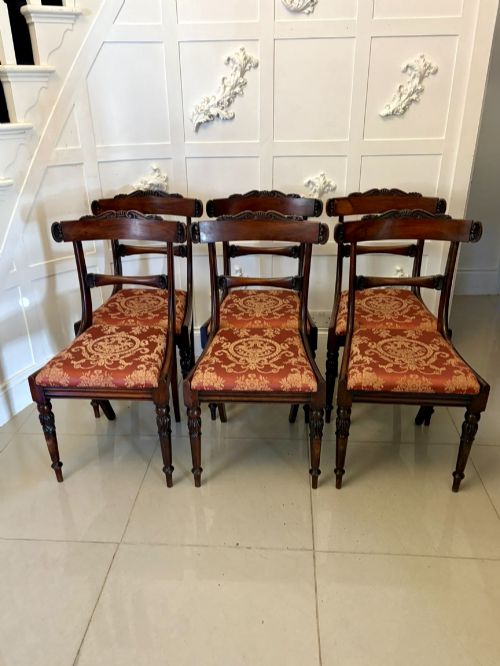
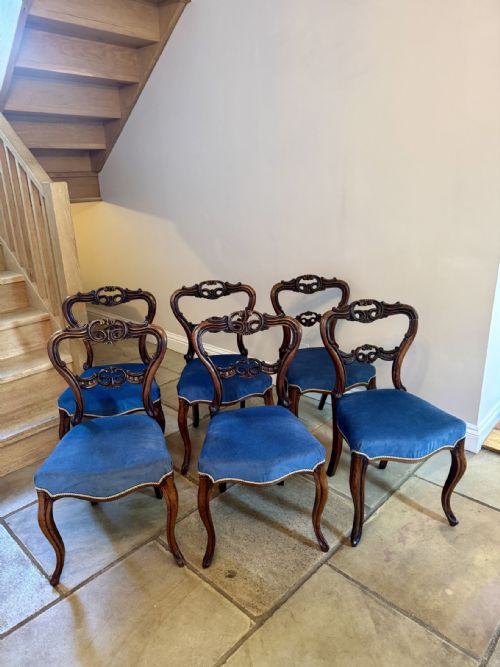
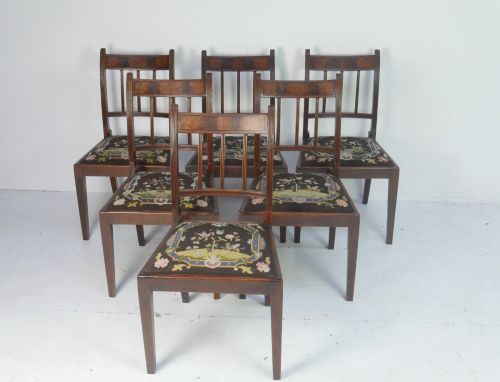
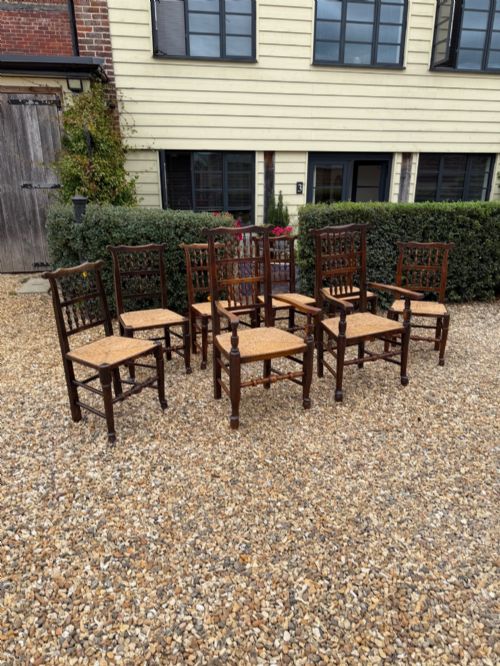
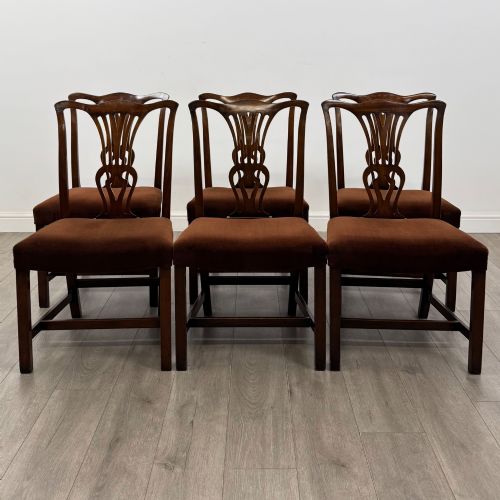
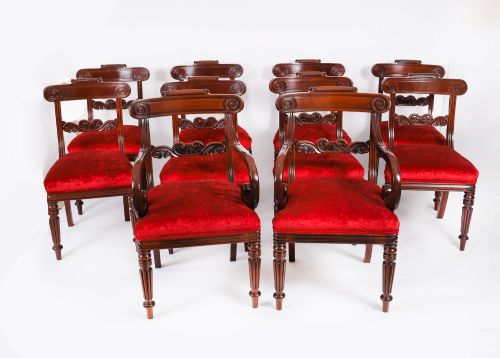
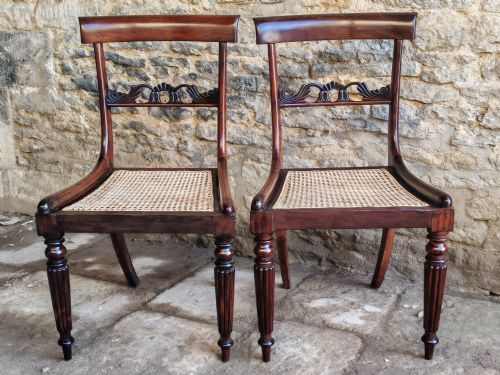
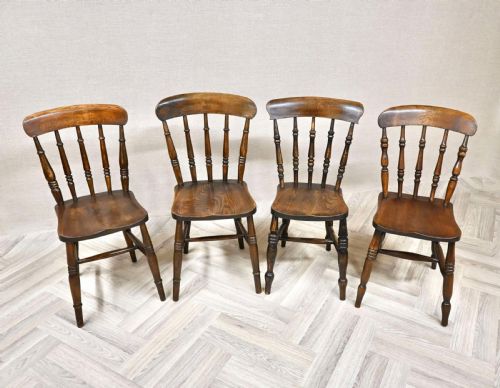
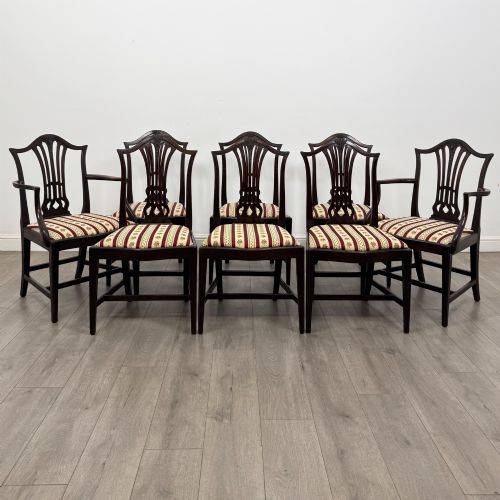
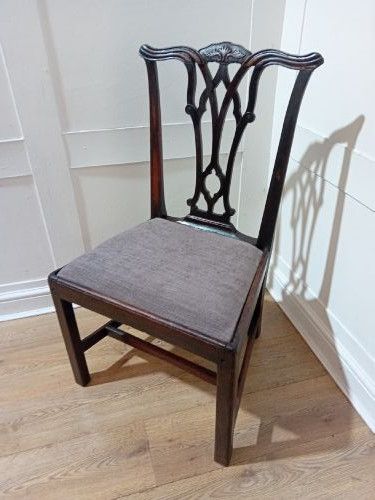
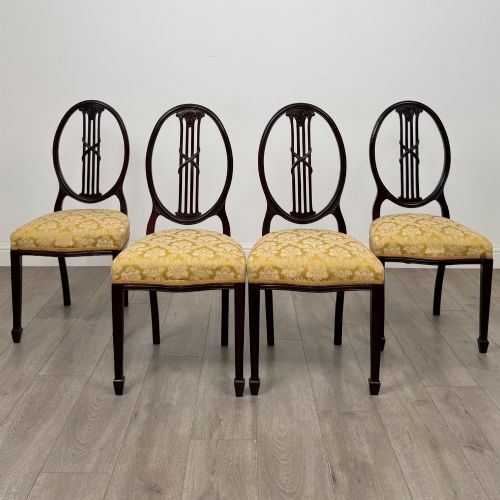
The most common examples on this page are mahogany dining chairs dating from the nineteenth century, often found in sets of six or eight. Buyers also encounter vernacular Windsor chairs in elm and beech, alongside formal Georgian and Regency designs featuring shield backs or ladder backs.
Materials and Construction
Makers utilised dense hardwoods like mahogany and oak for structural integrity, shaping rails and legs through turning and mortise and tenon joinery. Regional country chairs relied on local timbers such as elm for seats and beech for spindles, steam-bent or turned to shape.
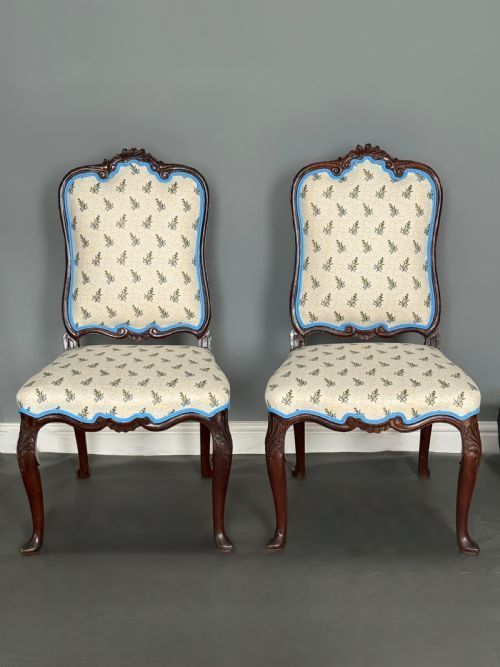
Surface finish depended on hand-applied polish, wax, or oil to bring out the deep grain of the timber. Seats frequently incorporated drop-in pads upholstered in fabric, cane weaving, or rush matting.
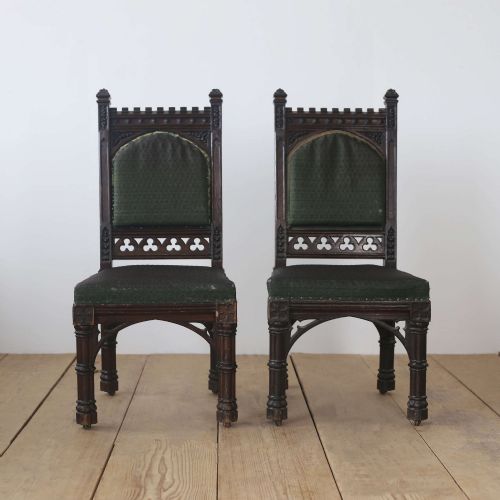
Dining forms span formal library chairs, hall chairs, and country kitchen Windsor seats alongside matching sets.
Assessing Quality
Quality rests in the crispness of the carving on the back splats and the integrity of the underlying timber joints. A superior set displays consistent grain matching across the chairs and retains rigid frames without excessive timber shrinkage.
Original surfaces and untouched finish elevate a piece above examples that have suffered heavy refinishing. Matching sets of six or more command greater attention than assembled groups of similar design.
Gillows·Thonet·Codina
The Dark Wood Dining Seats Glossary
- Carver
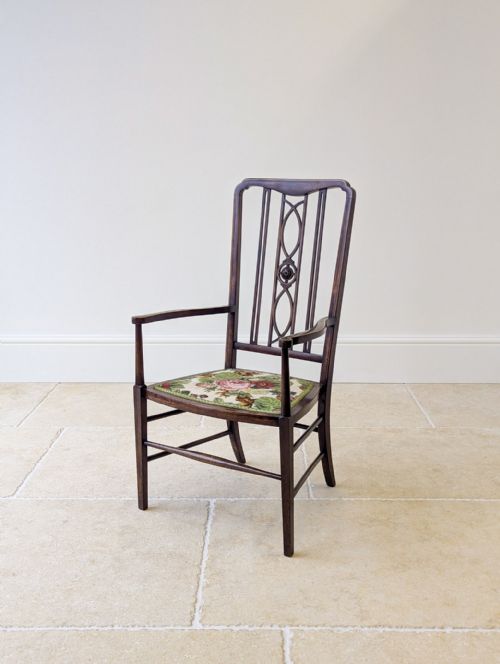
- An armchair intended for the head of the dining table, featuring supportive armrests. It typically matches a set of single side chairs.
- Cane
- Split rattan woven into an open mesh pattern to form lightweight seat panels. It provides a resilient and breathable surface for sitting.
- Ladder-back
- A chair back constructed with horizontal transverse rails resembling the rungs of a ladder. This form appears in both rustic country seating and refined formal variations.
- Windsor
- A traditional wooden chair built with a solid saddle-shaped seat into which the legs and back spindles are wedged directly. These sturdy seats developed from vernacular English woodworking traditions.
Dark Wood Dining Seats: Frequently Asked Questions
How do I care for antique wooden dining chairs?
Clean the timber surfaces periodically with a soft, dry cloth and apply a quality beeswax to nourish the wood grain. Avoid placing chairs near direct heat sources to prevent the timber from splitting.
Check the joints regularly for movement and tighten any loose fixings carefully. Protect upholstered or cane seats from direct sunlight to preserve the fabric and natural fibres.
Can I mix different styles around my dining table?
Blending different styles of dark wood seating creates an eclectic interior scheme that highlights individual craftsmanship. Pairing rustic elm Windsor chairs with a formal mahogany table adds historical contrast.
Keep a unifying element such as timber tone or seat height to maintain visual balance across the arrangement. Armchairs work well placed at opposite ends of the table with side chairs along the flanks.
What is the difference between a carver and a side chair?
A carver includes integrated armrests designed for added comfort, traditionally designated for the host at the head of the table. Side chairs lack arms, allowing multiple seats to fit compactly alongside the table rails.
Dining sets historically paired a set of side chairs with two matching carvers to complete the seating configuration. Both share identical leg and back styling to ensure a cohesive appearance.
How can I date a wooden dining chair?
Examine the construction marks, tool traces, and joint types visible underneath the seat frame. Hand-cut joinery and old timber patination generally point towards eighteenth or nineteenth-century origins.
Compare the backrest profile and decorative motifs against established period styles like Regency or Edwardian designs. Secondary timbers used in the seat blocks often provide further clues to the manufacturing era.