

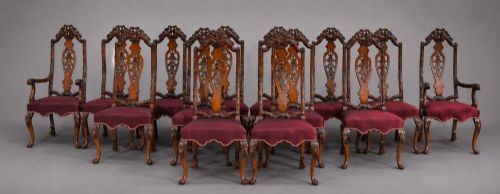
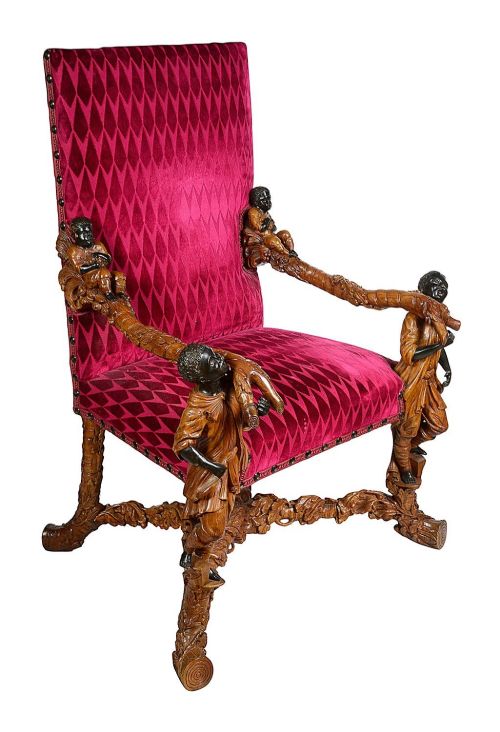
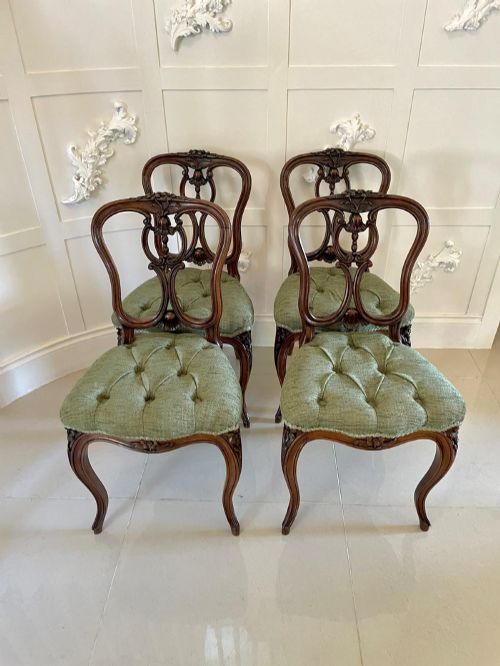


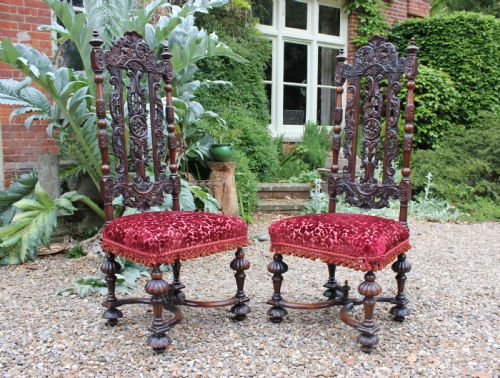
Ornate Walnut Side Chairs
These ornate walnut side chairs bring profound presence to a room through dense carving and rich timber.
Ornate Walnut Side Chairs
Ornate walnut side chairs span multiple centuries, appearing in forms from dining chairs to hall chairs and sgabello chairs. The listings show a strong representation of nineteenth century revival styles alongside eighteenth century examples.
Buyers encounter heavy carvings, marquetry inlay, and high-backed profiles across continental and British traditions. Materials such as red velvet and upholstery fabric frequently complement the dark wood frames.
The selection ranges from pairs and sets to singular statement pieces, drawing heavily on Baroque, Renaissance Revival, and Rococo Revival aesthetic influences.
How they were made
Makers utilised solid walnut timber as the primary structural and decorative medium, allowing for deep relief carving and complex silhouettes. Metal tacks frequently secure the fabric and velvet upholstery directly to the wooden frames.
Specialised techniques include intricate marquetry inlay and bone inlay work, particularly visible on specific continental seating variants from the nineteenth century. Hand-carved elements define the ornamental surfaces of high-backed and side chairs.
Ornate Walnut Side Chairs Retail Price Guide 2026
Typical asking prices for ornate walnut side chairs among the pieces listed under this phrase on Sellingantiques today, from the lower quarter to the upper quarter. They describe what is for sale here now, not the wider market.
One exceptional nineteenth century example even incorporates a musical mechanism inside its walnut marquetry frame.
What varies in quality
Depth and crispness of the wood carving separate standard production from finer work, as seen in the detailing of high-backed and arm chairs. The complexity of inlaid decoration, such as marquetry or bone work, indicates the level of artisan skill involved.
Condition of the walnut timber and the integrity of the original joints dictate structural longevity. The quality of textile elements, from plain fabric to rich red velvet, reflects the overall grade of the piece.
The Ornate Walnut Side Chairs Glossary
- Sgabello chair
- A traditional Italian Renaissance wooden chair featuring a distinct box-like base and an ornately carved backrest. These pieces function primarily as decorative hall seating.
- Marquetry
- The art of applying pieces of veneer to a structure to form decorative patterns. This technique frequently incorporates varied timber tones.
- Renaissance Revival
- An architectural and decorative style drawing inspiration from fifteenth and sixteenth century Italian forms. Furniture in this category utilises heavy carving and formal symmetry.
- Baroque
- A flamboyant artistic style marked by elaborate ornamentation and dramatic movement. Walnut seating from this period displays rich, sweeping decorative motifs.
- Hall chair
- A rigid wooden seat traditionally placed in an entryway or hallway. These examples often emphasise carved heraldry or striking silhouette over cushioned comfort.
Ornate Walnut Side Chairs: Frequently Asked Questions
Where should I place an ornate walnut side chair?
These chairs suit hallways, drawing rooms, or bedrooms where their carved profiles can stand against a neutral wall.
Avoid placing them in areas of heavy daily use to protect delicate upholstery and detailed woodwork.
How do I care for antique walnut furniture?
Keep walnut furniture away from direct sunlight and heat sources to prevent the timber from drying out or splitting.
Dust the carved surfaces regularly with a soft cloth and consult a specialist regarding historic fabric care.
Are these chairs comfortable for long sitting?
Most antique side and hall chairs prioritise formal posture and decorative impact over deep cushioning.
They function best as occasional seating or sculptural elements rather than primary lounging chairs.