
Dark Wood Commode Drawers
Dark wood commode drawers bring rich timber tones and practical storage to a room, offering sturdy utility packaged in classical forms.
Dark Wood Commode Drawers
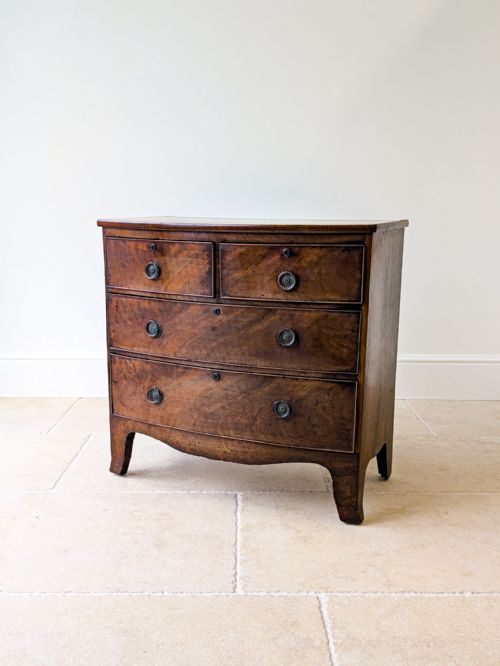
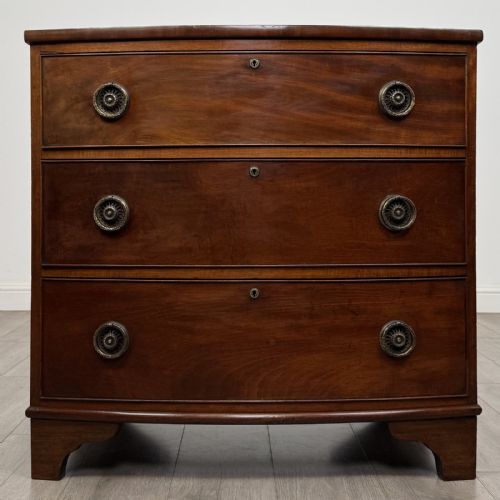
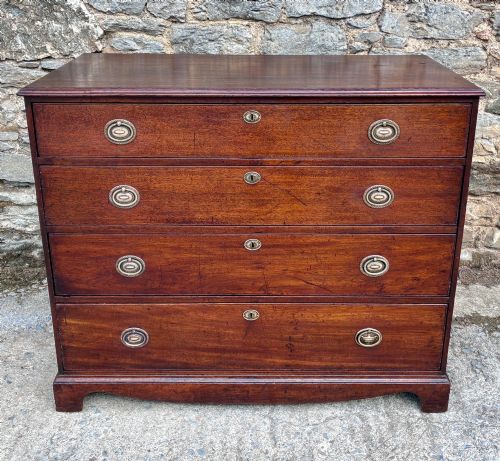
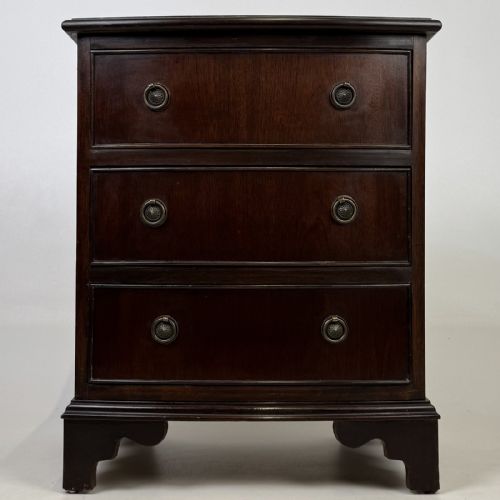
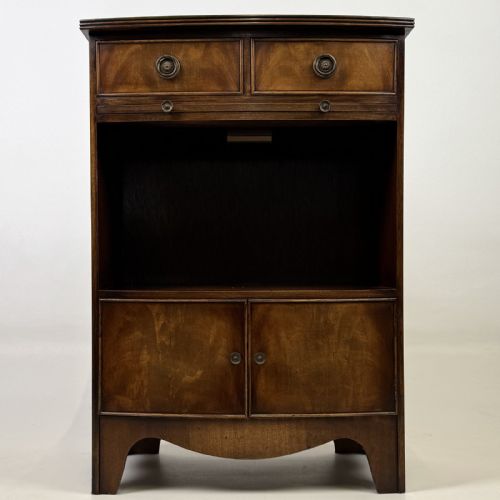
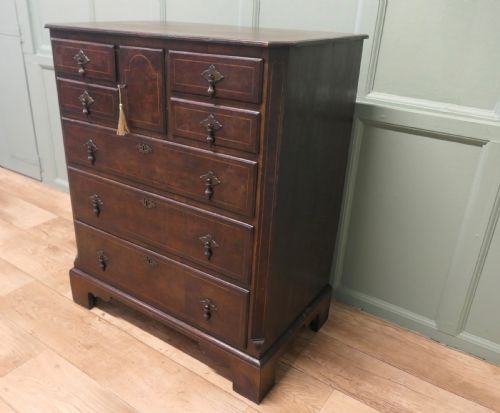
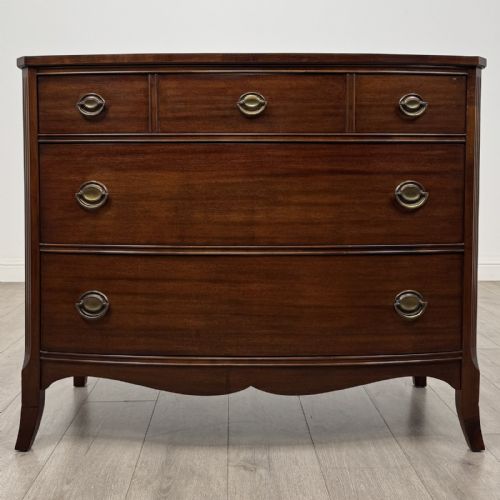
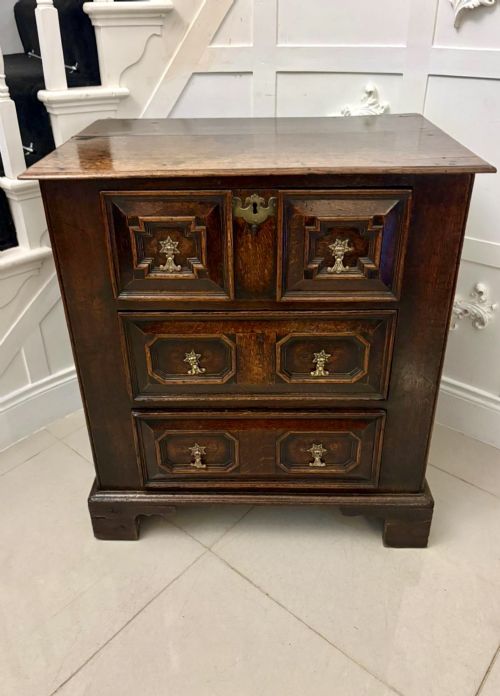
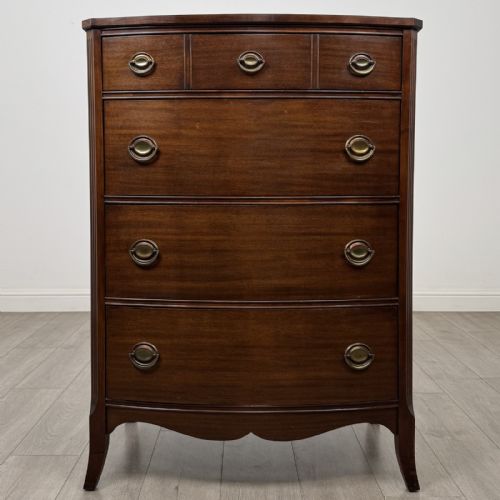
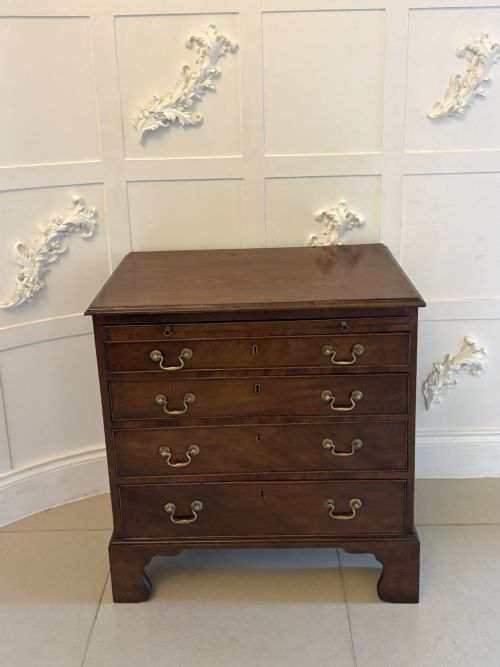
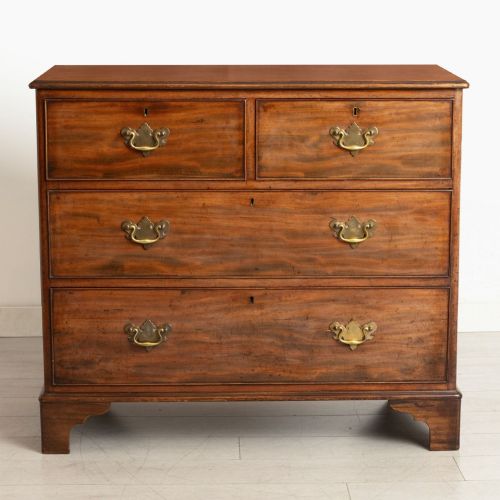
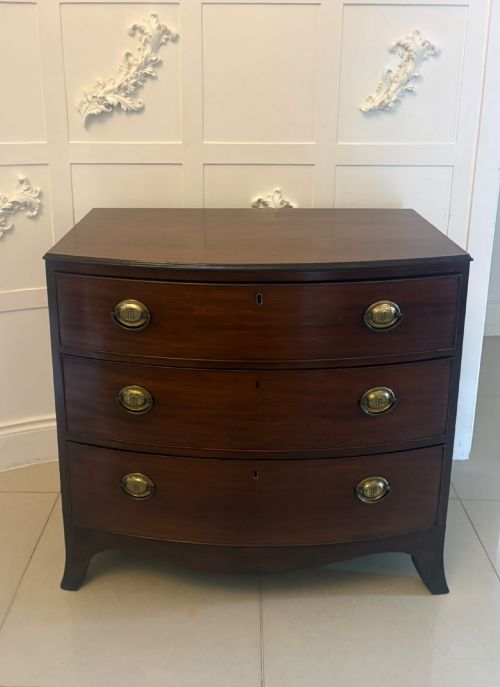
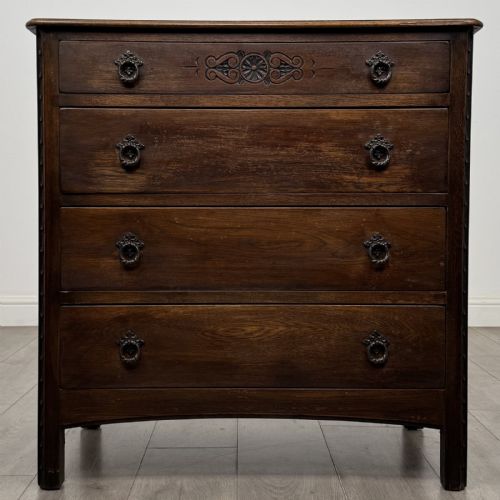
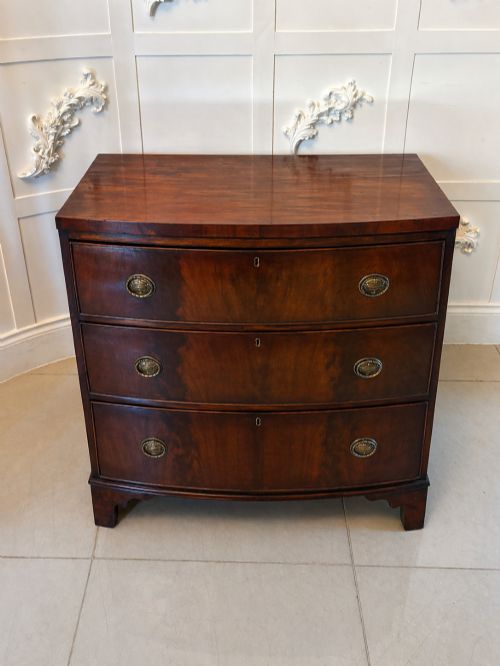
Dark wood commode drawers appear primarily as chests of drawers and bedside cabinets shaped by Georgian, Regency, Victorian, and Edwardian hands. These pieces emerge in styles ranging from straightforward bow fronts and serpentine contours to Dutch bombe profiles and French provincial forms.
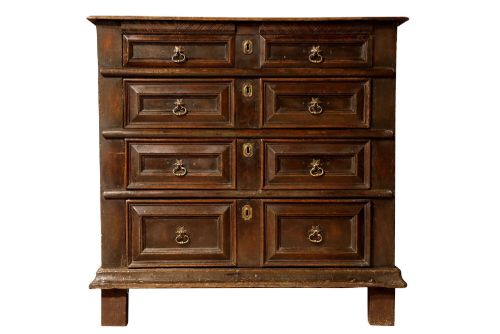
The selection draws heavily on timber varieties like mahogany, oak, and pine, often finished with flame mahogany veneer or accented by satinwood banding. Early examples date back to the seventeenth century in oak, while eighteenth and nineteenth-century pieces dominate the selection with rich mahogany grains.
Materials and Technique
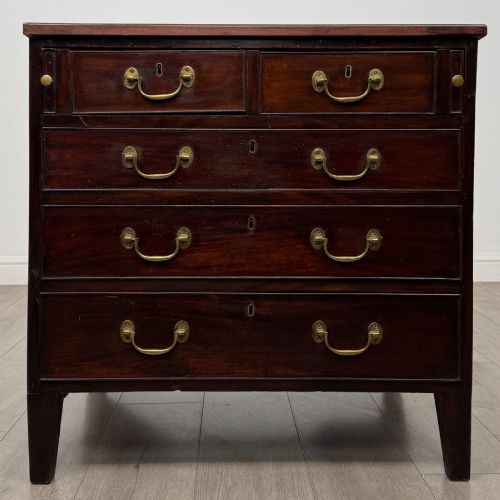
Cabinetmakers constructed these pieces using solid timbers like oak and mahogany, frequently applying flame mahogany veneer to primary surfaces for visual depth. Brass hardware such as handles and escutcheons complemented the dark wood grains.
Joinery involved traditional techniques suited to heavy timber, ensuring rigid carcases capable of supporting multiple tiers of drawers. Interiors often utilised secondary woods like pine for drawer linings and internal framing.
The selection spans four centuries, running from seventeenth-century oak pieces up to twentieth-century Edwardian interpretations.
Judging Quality
Quality rests in the selection of timber and the precision of the cabinetmaker's geometry, visible in the matching of veneer grains and the snug fit of each drawer within its aperture. Superior examples display carefully chosen flame mahogany or figured walnut that flows continuously across the drawer fronts.
The sophistication of the silhouette defines the upper tier of pieces, where complex serpentine or bombe shapes require advanced woodworking skill. Simpler rectilinear forms rely entirely on the depth of the timber's patina and the restraint of brass mounts to distinguish themselves.
Whytock & Reid
The Dark Wood Commode Drawers Glossary
- Serpentine
- A front contour curving outward in the centre and inward at the sides. This shape demands considerable skill from the cabinetmaker.
- Bow front
- A convex, outward-curving front profile popular during the Georgian and Regency periods. It softens the boxy lines of a standard chest.
- Flame mahogany veneer
- A thin slice of timber cut from the fork of a mahogany tree to produce a flickering, flame-like grain pattern. It adorns the most decorative drawer fronts.
- Bombe
- An exaggerated swelling or bulging profile characteristic of continental furniture. Dutch and French examples utilise this rounded form.
- Satinwood
- A pale, lustrous exotic timber utilised for contrasting inlay and banding on darker mahogany carcases. It provides a crisp visual border.
Dark Wood Commode Drawers: Frequently Asked Questions
What is a commode drawer?
A commode drawer refers to a low chest of drawers or cabinet designed for domestic storage. These pieces typically feature multiple horizontal tiers for clothing or household goods.
The term encompasses British and continental forms from various centuries, unified by their wooden construction and functional storage capacity.
How do I date a mahogany chest?
Dating relies on observing construction methods, timber choices, and stylistic details such as bracket feet, apron shapes, and handle hardware. Georgian and Regency pieces show specific dovetailing and drawer lining traits distinct from later Edwardian revivals.
Secondary woods and the type of veneer also offer clear chronological clues for the experienced eye.
Where should I place a bedside cabinet?
Bedside cabinets fit naturally beside a bed to provide enclosed surface space and concealed storage for night-time essentials. Their compact proportions suit smaller rooms while maintaining period character.
Matching the timber tone to surrounding furniture helps integrate the piece into the bedroom layout.
What is flame mahogany?
Flame mahogany is a highly figured veneer sliced from where a branch meets the main trunk of the tree. This produces a distinctive repeating pattern resembling flickering fire.
Cabinetmakers reserved this prized material for the primary facade surfaces of high-status chests.