

Dark Wood Commode Cabinet
A dark wood commode cabinet is a substantial storage piece built from rich timber, offering practical utility and period character for any interior.
Dark Wood Commode Cabinet
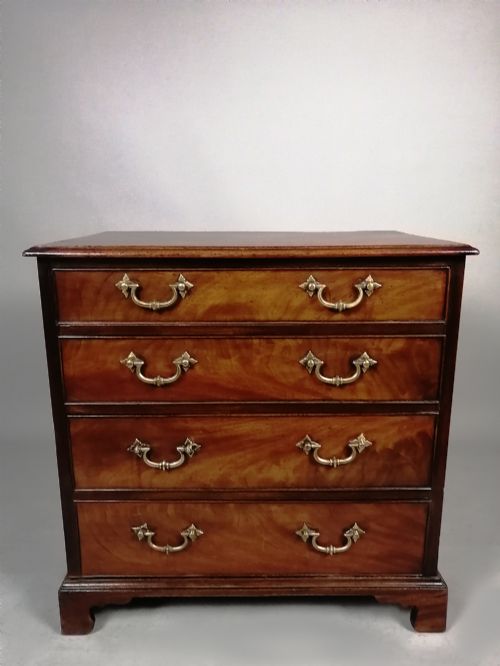
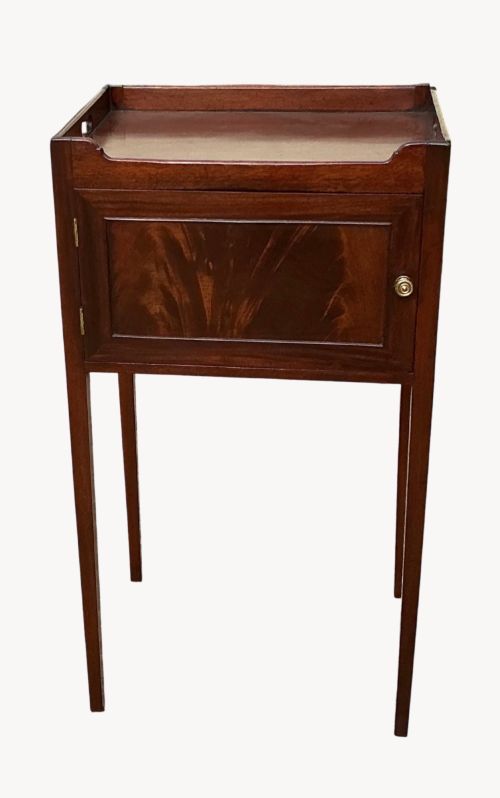
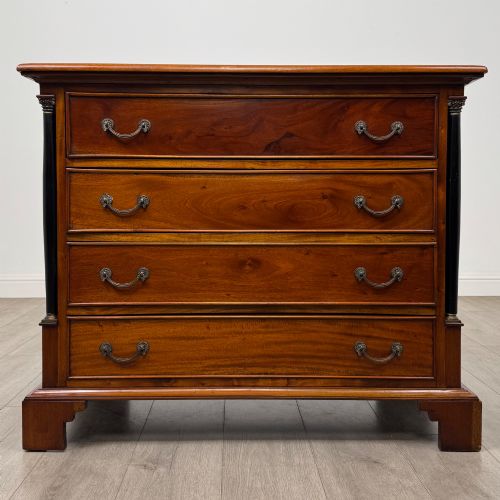
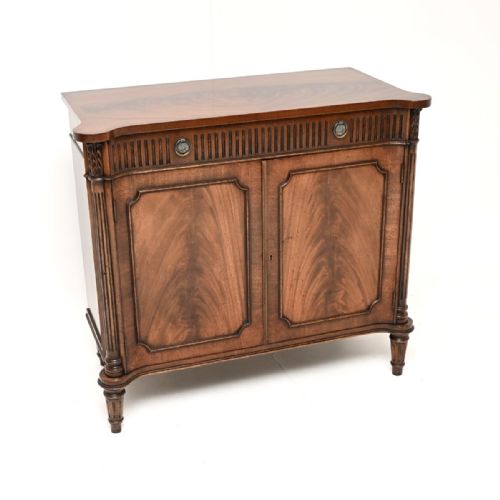
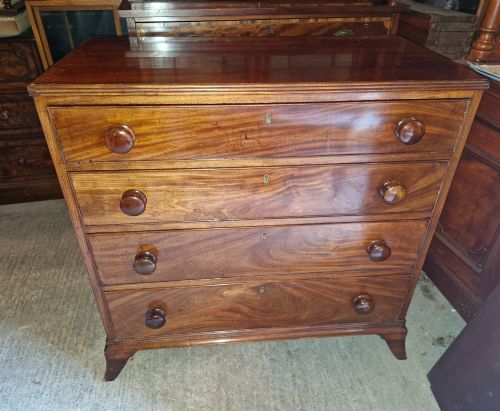
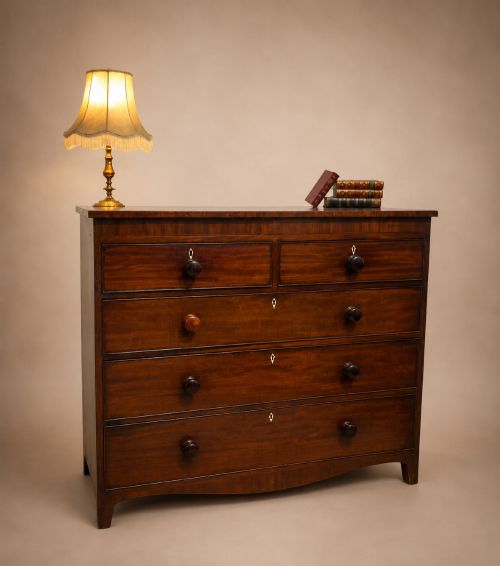
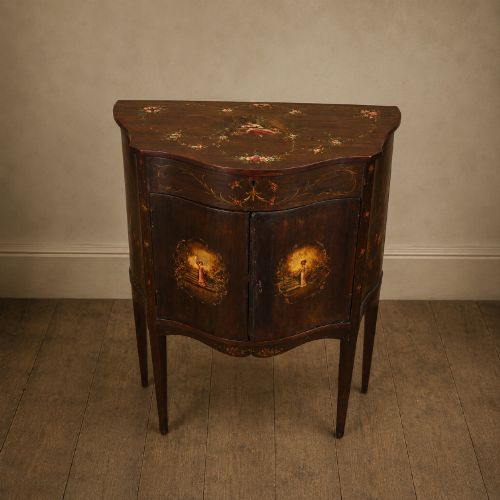
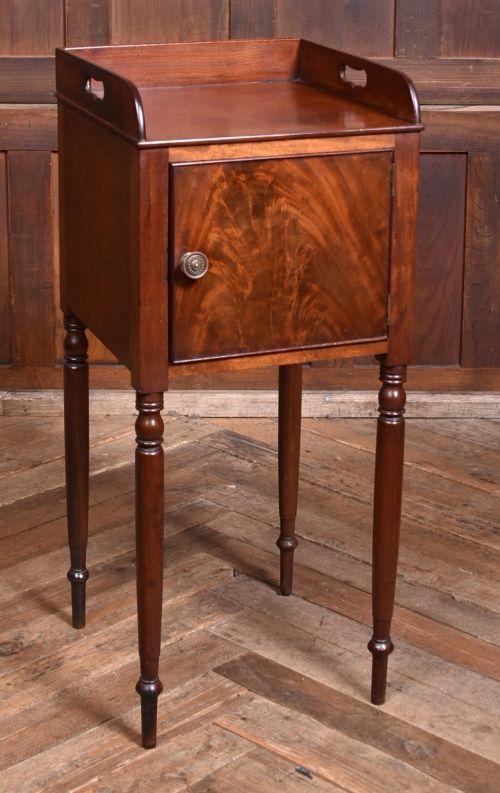
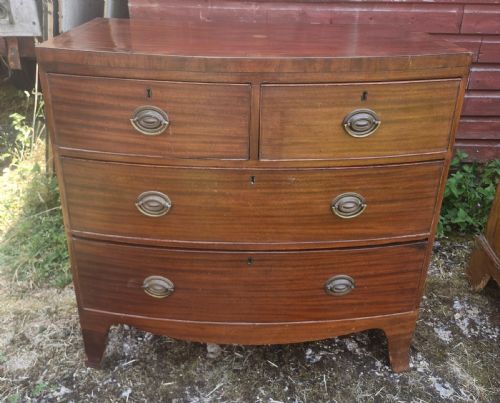
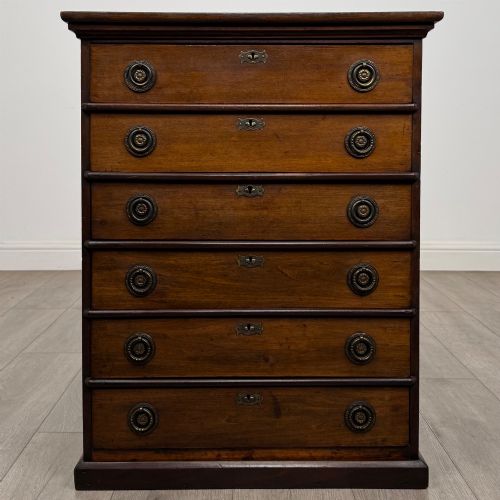
A dark wood commode cabinet typically appears as a chest of drawers, bedside cupboard, or nightstand originating from the 17th, 18th, or 19th centuries. The selection on this page leans heavily toward Georgian and Victorian interpretations, encompassing George III and Regency examples.
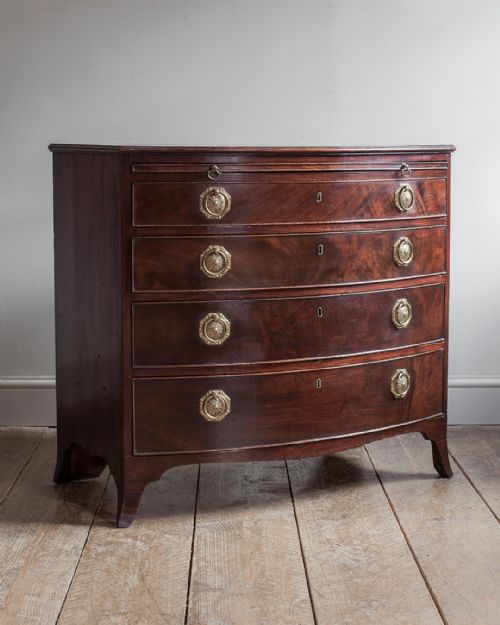
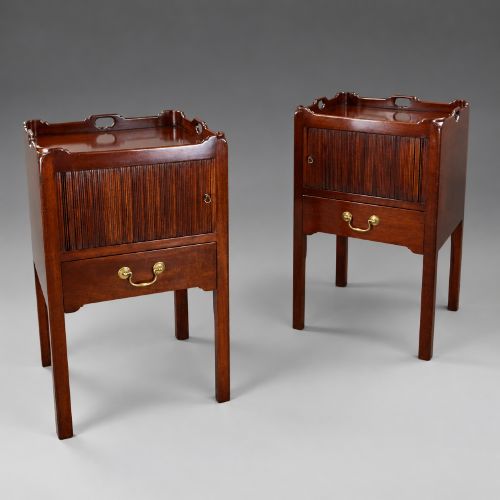
Buyers encounter various formats including bow front chests, tray top commodes, and compact bedside cabinets. These range from substantial bedroom storage units down to miniature furniture and side cabinets.
Geographic origins span British workshops, Irish pieces, and French provincial examples. Cabinetmakers of these periods utilised robust forms suited to daily domestic service.
Materials and construction
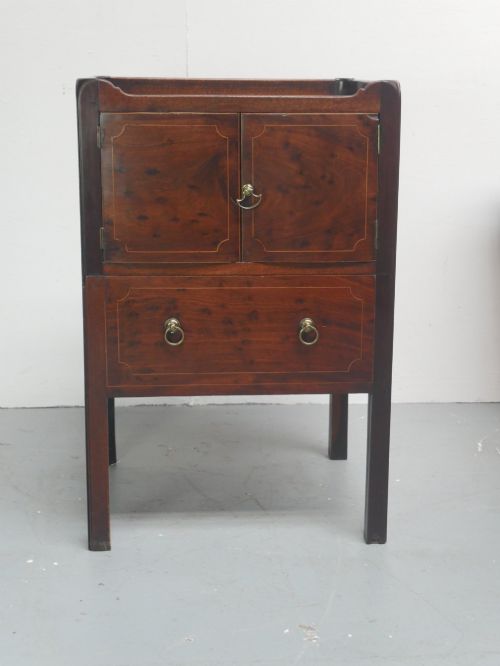
Mahogany serves as the primary timber, frequently seen as Cuban mahogany or flame mahogany, complemented by secondary woods such as oak and walnut. Cabinetmakers also incorporated rosewood and boxwood inlay for decorative contrast.
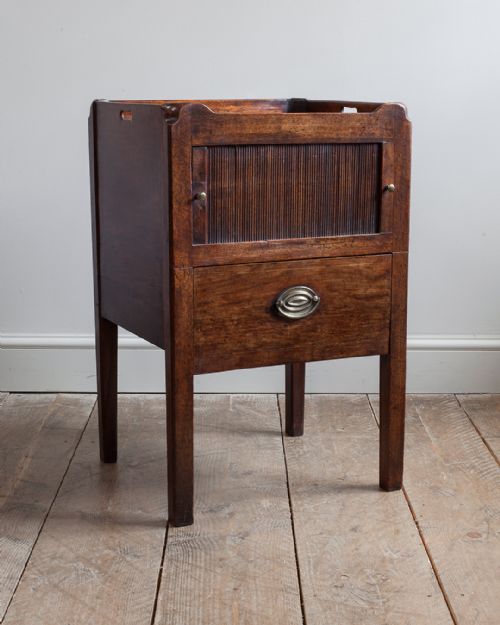
Hardware and detailing typically include brass fixtures, turned handles, and tambour fronts. Craftsmanship relies on traditional joinery methods suited to heavy daily use.
Listings feature mahogany, oak, walnut, rosewood, and boxwood inlay across 17th, 18th, 19th, and 20th-century periods.
Assessing craftsmanship
Quality rests upon the selection of timber grain, such as the use of figured flame mahogany or intricate marquetry patterns. Finer pieces demonstrate precision in boxwood inlay and the execution of serpentine or bow front contours.
The integrity of original brass hardware, stable drawer construction, and well-fitted doors or tambour slides distinguish superior examples. Subtleties in proportion and crispness of carved or turned details separate standard utility items from masterwork pieces.
Mawer and Stephenson
The Dark Wood Commode Cabinet Glossary
- Commode cabinet
- A low storage unit, frequently fitted with doors or drawers, historically used for bedside or chamber placement. These pieces function as versatile bedside tables or side cabinets in modern interiors.
- Tray top
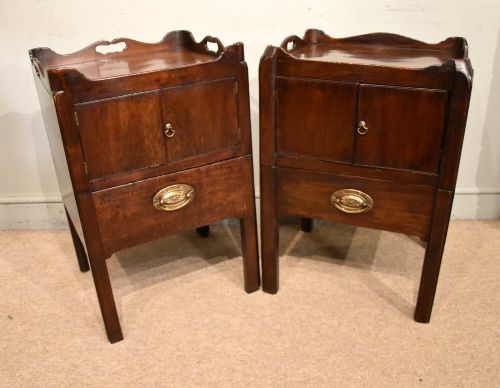
- A raised rim around the upper surface of a small table or cabinet designed to prevent items from rolling off. This feature is common on Georgian nightstands and pot cupboards.
- Tambour front
- Flexible shutters constructed from narrow strips of wood glued to a canvas backing, allowing doors to slide smoothly around a curved track. This technique appears on specific George III commodes.
- Bow front
- A convexly curved cabinet or chest front that projects outward in the centre. This design softens the profile of large storage pieces and improves spatial flow.
- Marquetry
- Decorative veneer work arranged in intricate pictorial patterns using various coloured woods. Examples include floral motifs set into 17th-century carcases.
Dark Wood Commode Cabinet: Frequently Asked Questions
How were these cabinets used historically?
Historically, these cabinets served in bedrooms and private chambers as bedside tables, nightstands, or pot cupboards to hold washing gear and personal items.
Larger variants functioned as commodes or chests of drawers for storing linens and apparel.
How do I style a period commode cabinet?
These cabinets suit living spaces, hallways, and bedrooms where their dark timber tones anchor the room's colour scheme.
Use the flat top surface for lamps or decorative objects while utilising the internal drawers and cupboards for concealed storage.
How can I tell a Georgian piece from a Victorian one?
Georgian pieces, particularly those from the George III era, often display restrained classical proportions, finer mahogany selections, and subtle boxwood stringing.
Victorian iterations frequently feature heavier moulded details, bolder turnings, and more robust construction suited to later 19th-century domestic interiors.