





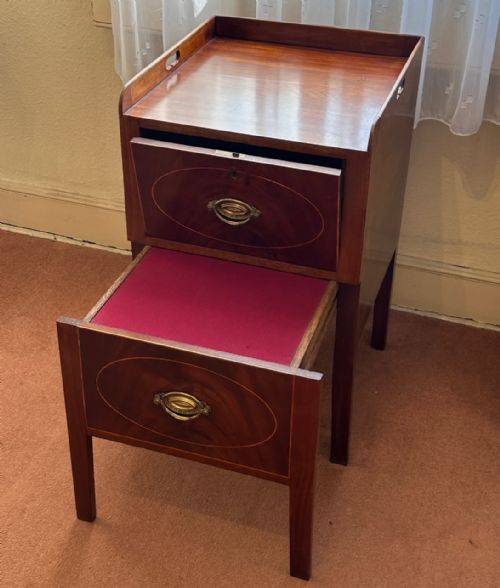


Georgian Period Bedside Cabinet
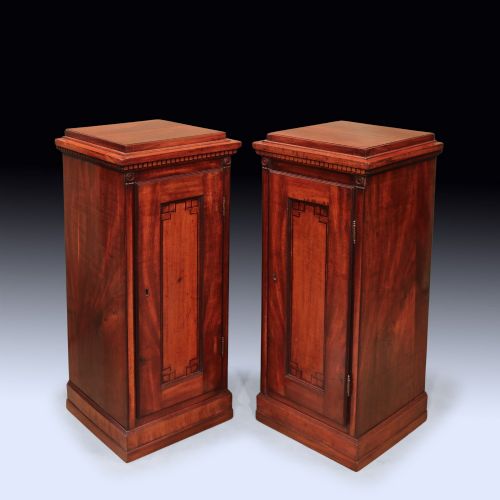
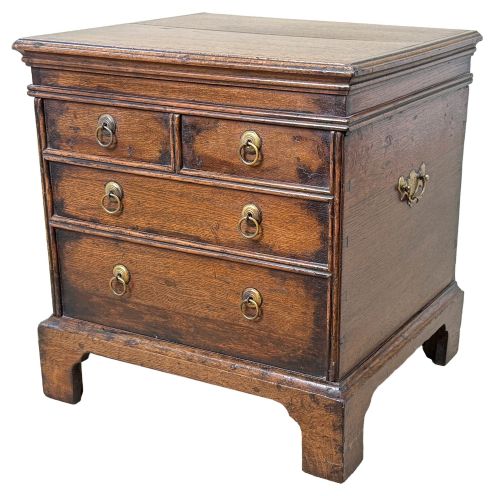
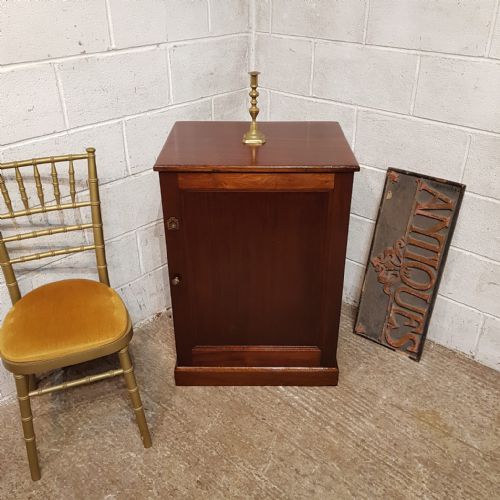
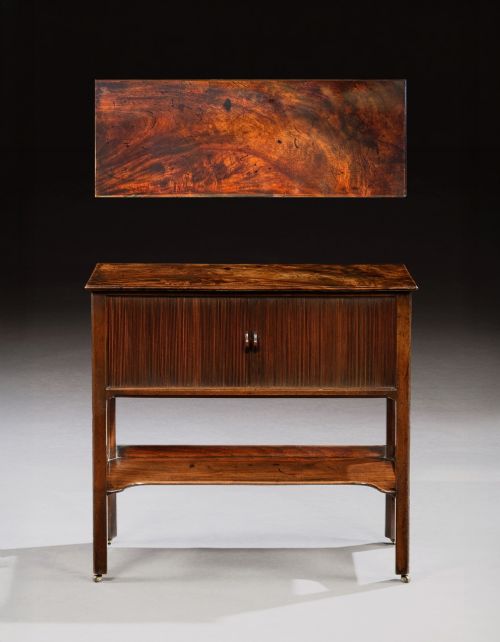
These georgian period bedside cabinet examples bring practical storage and period character to a room, ranging from tray top commodes to pedestal cupboards.
How they were made
Cabinet makers of the era relied heavily on mahogany and its figured variant, flame mahogany, often pairing them with secondary timbers like oak and elm for internal construction. Brass hardware, such as handles and fittings, frequently complements the timber work.
Construction techniques include the framing of tray tops, the shaping of serpentine and bowfront structures, and the integration of functional mechanisms like pull-out steps or fitted interiors for close stools.
What varies in quality
The choice of timber creates a distinct separation in quality, with finely figured flame mahogany and well-selected solid mahogany standing apart from simpler utility woods. Subtle decorative details, such as architectural column designs or precise Chippendale carving, indicate a higher level of workshop execution.
Proportion and form heavily influence the standing of a piece, distinguishing standard utilitarian cupboards from more ambitious architectural or serpentine bedside cabinets.
Georgian Period Bedside Cabinet Retail Price Guide 2026
Typical asking prices for georgian period bedside cabinet among the pieces listed under this phrase on Sellingantiques today, from the lower quarter to the upper quarter. They describe what is for sale here now, not the wider market.
Mahogany is the predominant timber across the listed pieces, supplemented by oak, elm, and satinwood.
The Georgian Period Bedside Cabinet Glossary
- Tray top commode
- A bedside cabinet featuring a raised gallery edge around the top surface to prevent items from sliding off. This form is frequently associated with the Georgian period.
- Close stool
- A piece of furniture designed to enclose a chamber pot, often disguised as a small chest or cabinet to maintain bedroom discretion. Eighteenth-century examples frequently employ oak or elm.
- Flame mahogany
- A veneer cut from the fork of a mahogany tree, displaying a distinctive flamed or mottled grain pattern. Regency cabinets often utilise this timber for visual impact.
- Pedestal cupboard
- A tall, narrow freestanding cabinet designed to stand beside a bed or in a corner. These often feature single doors and architectural or column details.
Georgian Period Bedside Cabinet: Frequently Asked Questions
What is a georgian period bedside cabinet used for?
These pieces served practical storage needs in historical bedrooms, often concealing chamber pots or holding washing equipment.
Today, they function well as compact bedside tables or small accent cupboards in living spaces.
How do I distinguish George III from Regency styles?
George III pieces frequently display classical proportions and Chippendale influences, with attention to tray tops and straightforward cabinetry.
Regency examples often introduce bolder veneers like flame mahogany, cylindrical shapes, or architectural column details.
What timber was used most often?
Mahogany dominates the selection, appearing in both solid form and as figured veneers on cabinet exteriors.
Oak and elm also occur, particularly in earlier eighteenth-century pieces and interior elements of close stools.
Are all these cabinets actually from the eighteenth century?
The pieces span the Georgian and Regency eras, covering the eighteenth century through to the early nineteenth century.
Makers continued producing these traditional forms into the nineteenth century with evolving stylistic details.